













Covington & Slidell Independent Insurance Agents
Louisiana auto body shop insurance has to cover more than a standard garage policy. It should address paint booth fire and pollution exposure, protect customer vehicles parked for weeks, respond to faulty repair claims, and account for hail and flood damage to cars in your care. The right mix depends on how your shop actually operates.
Picture a Slidell shop in late August. Six customer cars sit in the lot waiting on backordered quarter panels, a fresh coat of clearcoat is curing in the booth, and the forecast shows a tropical system turning toward the Northshore. Every one of those details is an insurance question, and most body shop owners don't find out which ones their policy answers until a claim lands.
Body shops in St. Tammany Parish carry a strange mix of risk. You handle flammable chemicals like a small industrial plant, you hold other people's property like a storage facility, and you put your name on safety-critical work like a contractor. Then the weather adds hail, wind and rising water on top of it all.
A generic business owner's policy usually wasn't built for that combination. Gaps tend to show up in the same places: pollution exclusions, garagekeepers limits set years ago, and weather losses to cars you don't own. The sections below walk through each exposure so you can see where your current coverage stands before you renew.
Protecting Your Louisiana Auto Body Shop
A body shop's insurance program typically starts with three building blocks: general liability, property coverage for your building and equipment, and garagekeepers for customer vehicles. Workers' compensation and commercial auto usually round it out. From there, the policy needs tailoring to the specific hazards of collision and paint work.
The mistake we see most often is buying the package once and never revisiting it. A shop that added a second booth, started doing ADAS calibrations, or doubled its car count since the last renewal may be carrying limits that no longer match reality. Insurance written for a four-bay shop in 2019 can leave a much busier 2026 operation exposed.
Think of your policy as a list of promises with exceptions. The exceptions matter as much as the coverage. That's why each risk in this guide deserves its own look rather than a quick glance at the declarations page.

On this page
Aubert Insurance Agency is a local, independent agency, licensed to serve individuals and businesses across Louisiana, Mississippi, Florida and Texas.
We serve clients from our offices in Covington and Slidell and throughout St. Tammany Parish — working with dozens of carriers and wholesale markets to help homeowners, drivers, contractors, restaurant owners, property investors, auto shops, professional practices and many other personal and commercial clients find coverage that fits.
Licensed in Louisiana #3661 · Mississippi #15039075 · Florida #W0772236 · Texas #2381820
Many St. Tammany families end up with both: standalone coverage for the land, plus an umbrella over the home and vehicles.
Comparison: Standalone Liability vs. Umbrella Coverage
Understanding the Named Storm Deductible
A named storm deductible works differently than the flat $500 or $1,000 deductible on your regular claims. In Louisiana, it's often calculated as 2% to 5% of the insured value of your personal property. On a policy with $40,000 in contents coverage, a 5% deductible means the first $2,000 of a hurricane loss is yours.
There's some good news in state law. Louisiana's one-deductible-per-year rule (La. R.S. 22:1337) means you generally pay the named storm deductible only once per calendar year, even if two storms hit your rental. Ask your agent to show you that deductible in dollars, not just a percentage, so you can set aside the right amount in an emergency fund.
| Factor | Standalone Liability | Umbrella Policy |
|---|---|---|
| Underlying policy required | No | Yes, home and auto typically |
| When it pays | First dollar of a covered claim | After underlying limits run out |
| Typical use | Vacant land, hunting tracts, specific risks | Broad extra protection across policies |
| Cost structure | Priced by acreage, use, and limit | Priced by number of homes, cars, drivers |
| Scope | Narrow, tied to named property or risk | Wide, follows underlying coverage |
| Common limits | $300,000 to $1 million | $1 million and up |
People use the two terms as if they mean the same thing. They do not.
A true umbrella policy may provide broader coverage than the policies below it. In some cases it can "drop down" to cover a claim the primary policy excludes, usually subject to a self-insured retention, often $10,000 or $25,000. An excess policy is typically "follow form," which means it copies the terms and exclusions of the underlying policy and simply adds more limit.
Here is why that matters. If your general liability policy excludes a certain type of claim, a follow-form excess policy will generally exclude it as well. Higher limits do not repair a weak foundation. We go through the endorsements on each layer with clients before binding, because the wording on page 14 of the policy is what decides whether a claim gets paid.
Managing Paint Booth Fire and Pollution Exposure
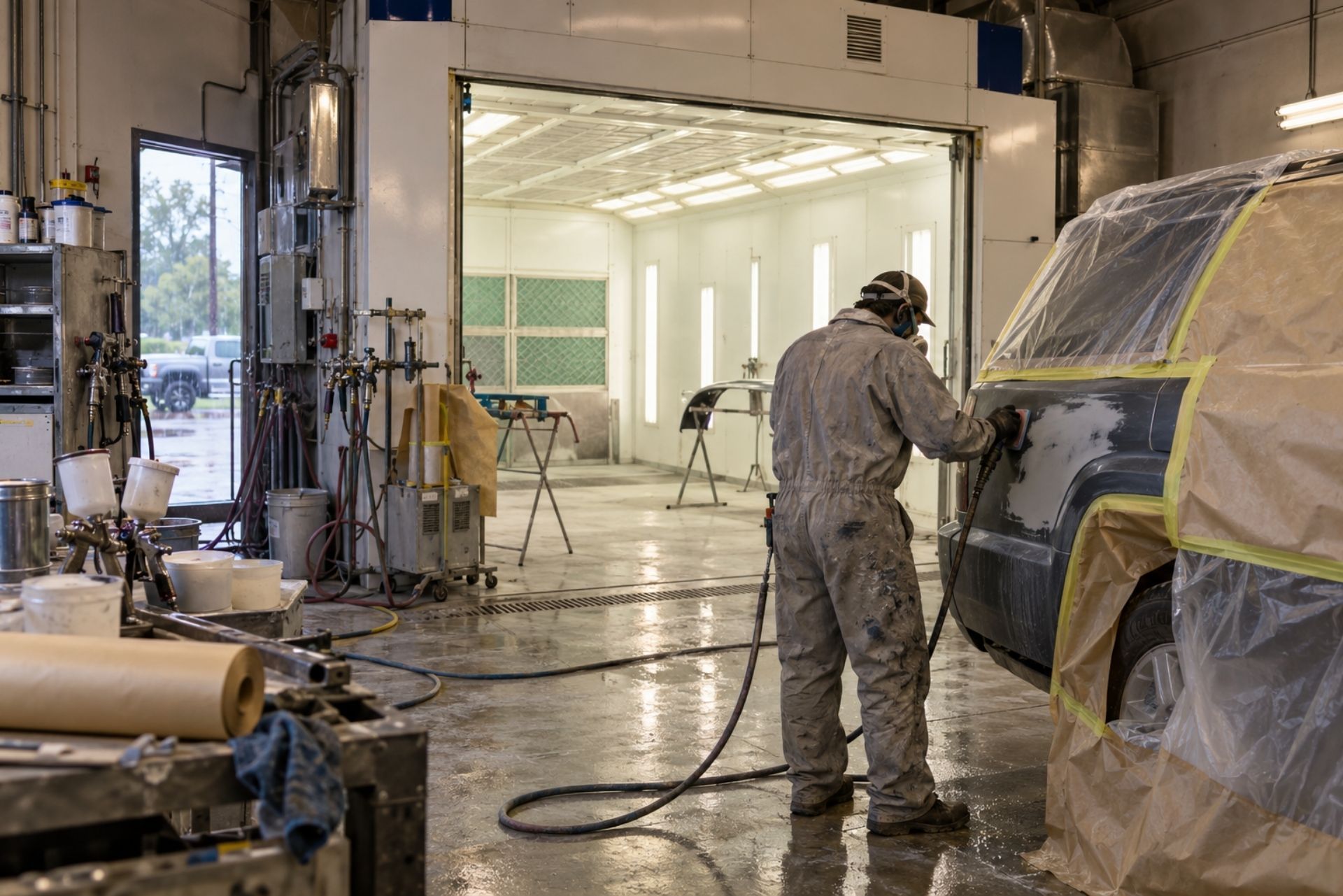
Spray operations are the single biggest fire hazard in most body shops. Atomized paint, solvent vapor and overspray buildup on filters create an environment where one spark can do serious damage. The 2024 edition of NFPA 33 requires fire suppression systems interlocked with booth power and ventilation, so the system shuts things down automatically when it discharges. Underwriters may ask about suppression inspections, filter change schedules and how you store thinners and reducers.
Pollution is the quieter risk. Most general liability policies contain a pollution exclusion, which means a solvent spill that seeps into soil or a drainage ditch may not be covered at all. Louisiana shops also face air permitting rules: you need an air permit if booth emissions exceed 5 tons per year of a single criteria pollutant or 15 tons per year combined.
A few ways to reduce both exposures:
- Separate chemical storage: Keep flammables in rated cabinets away from the booth and welding areas.
- Document maintenance: Logged filter changes and suppression inspections can help at underwriting and claim time.
- Ask about pollution coverage: A standalone policy or endorsement may cover cleanup costs and third-party claims that GL typically excludes.
With no lender to satisfy, the decision is yours, and so is the entire loss. A total rebuild in this parish runs well into six figures.
Homeowners who own outright
Your lender requires coverage at least equal to the loan, and will buy a policy on your behalf at your expense if yours lapses.
Homeowners with a mortgage
How Sublimits Affect Overtime and Minimum Wage Disputes
Auto Liability vs. General Liability for Mobile Equipment
Garagekeepers Coverage for Vehicles Held for Weeks
Five years ago, a typical collision repair might have been in and out in a week or two. Now, with parts delays, structural repairs, insurer approvals and calibration work, it's common for a car to sit at your shop for a month or longer. Every extra day is another day that vehicle is your responsibility.
Garagekeepers coverage protects customer vehicles in your care, custody and control. It's separate from general liability, which typically excludes damage to property you're holding. If a car is stolen off your lot, vandalized overnight or damaged in a shop fire, garagekeepers is usually the coverage that responds.
The catch is limits. Garagekeepers is often written per location, and the limit has to cover the total value of every car on your property at peak capacity. Here's a quick way to check yours:
- Count the most vehicles you've held at one time in the past year.
- Estimate their average value. A late-model pickup or EV can easily run well into five figures.
- Multiply the two. If the result is higher than your garagekeepers limit, you're underinsured.
Shops that store cars for weeks often find their limit was set when turnaround times were shorter and vehicle values were lower.

The roof
Age, material and shape drive the wind rate more than any other factor. A fortified roof designation opens markets that would otherwise decline the house.
| Scenario | Dwelling limit | All-other-perils deductible | Named-storm deductible |
|---|---|---|---|
| Newer build, inland St. Tammany | $350,000 | $1,000 | 2% |
| Newer build, higher wind zone | $350,000 | $1,000 | 5% |
| Older home, updated roof | $275,000 | $2,500 | 2% |
| Older home, original roof | $275,000 | $2,500 | 5% |
| Fortified roof designation | $400,000 | $1,000 | 2% |
| Rebuilt after a prior claim | $400,000 | $2,500 | 5% |
| Bundled with auto | $350,000 | $1,000 | 2% |
Exact terms vary by carrier, so treat this as a starting point for comparing quotes.
Addressing Faulty Repair Allegations
A customer picks up their SUV, and three months later a wheel bearing fails or a door seal leaks and ruins the interior. They say your shop did the work wrong. Now you're facing a claim for the repair cost, the damaged property, and possibly bodily injury if an accident followed.
Coverage here gets tricky. Standard general liability may cover injury or property damage caused by your completed work, but it typically won't pay to redo the faulty repair itself. Some carriers offer garage-specific endorsements or errors and omissions coverage that may help with claims tied to the quality of your workmanship. Policy language varies a lot from carrier to carrier, so the details matter.
Modern repairs raise the stakes. Improperly calibrated sensors, missed OEM repair procedures and structural welds done outside specifications can all become liability claims if a vehicle later underperforms in a crash. Keeping written repair orders, pre- and post-scan reports and photos of every stage gives you a defense when a customer's memory and your records don't match. Ask your agent specifically how your policy treats faulty workmanship, because this is one of the gaps owners are most surprised by.
Working capital matters more than almost anything else. Underwriters look at current assets minus current liabilities, because cash and receivables are what keep a job moving when a payment runs late. Equity in equipment or real estate helps, but it doesn't pay a subcontractor on Friday.
Expect requests for CPA-prepared financial statements once you seek larger limits. Personal credit counts heavily for smaller firms, since owners typically sign personal indemnity. Clean books, a solid bank line of credit, and low debt can raise your capacity faster than any sales pitch.
Protecting Customer Cars from Hail and Flood
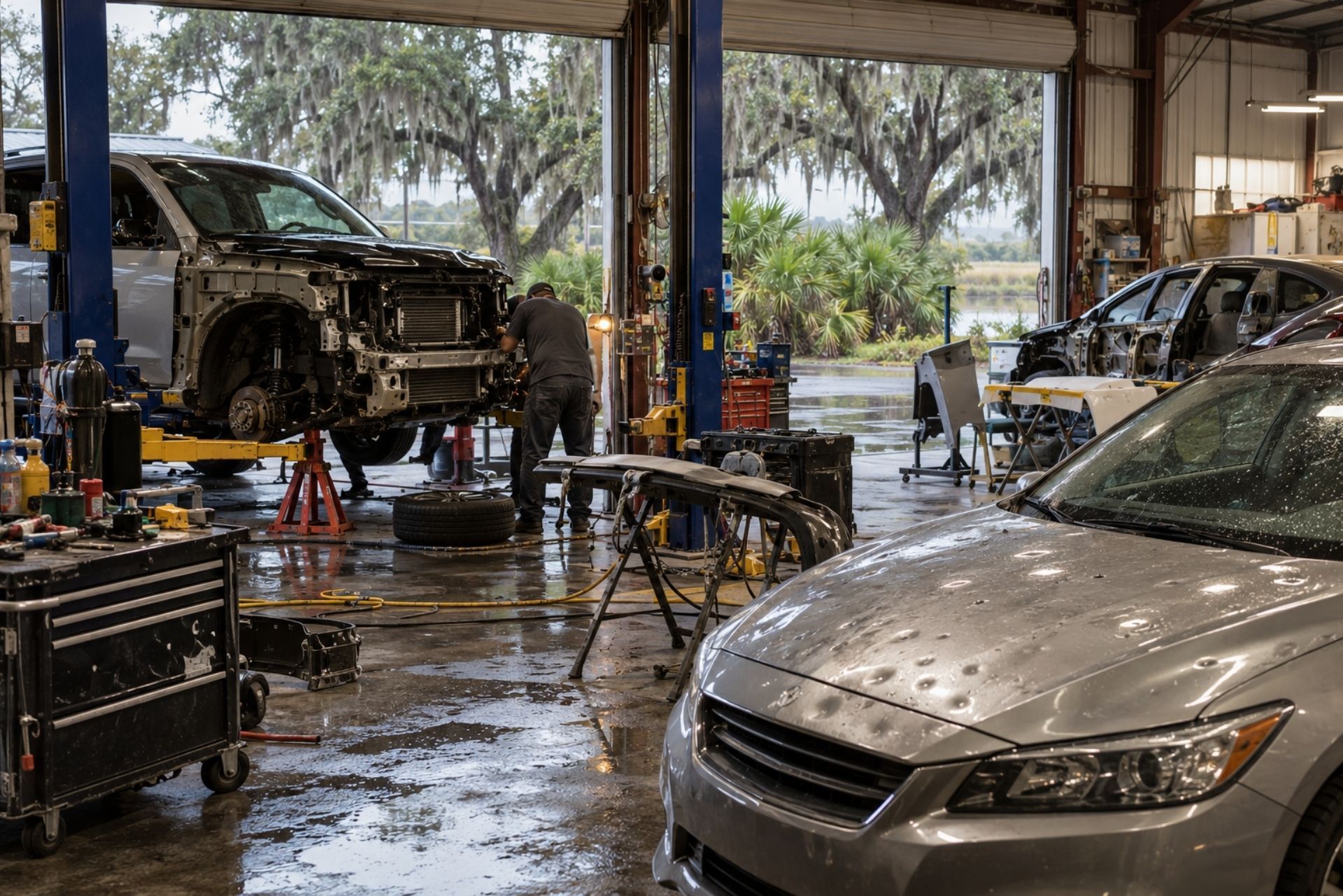
Louisiana weather doesn't wait for your parts to arrive. Spring hailstorms roll across St. Tammany Parish, and hurricane season can push water onto lots that never flooded before. If six customer cars take hail damage in your lot, who pays depends entirely on which garagekeepers option you bought.
Garagekeepers legal liability only pays if your shop was legally responsible for the damage. Hail and flood are usually considered acts of nature, so unless you were negligent, the claim may go back to the customer's own auto insurer. That's technically fine, but it can mean angry customers, deductibles they blame on you, and lost goodwill.
Direct primary garagekeepers typically pays for covered damage regardless of fault. It tends to cost more, but customers get taken care of without a fight. Flood losses also carry real consequences: under Louisiana law, a
vehicle declared a total loss due to flooding must receive a Certificate of Destruction and cannot be rebuilt or resold. Have a written plan for moving cars to higher ground when storms approach, and confirm that your policy's comprehensive perils include flood.
The roof
Age, material and shape drive the wind rate more than any other factor. A fortified roof designation opens markets that would otherwise decline the house.
Comparing Essential Body Shop Coverages
These three coverages get confused constantly, and the differences show up fast at claim time. Here's how they typically compare:
| Feature | General Liability | Garagekeepers Legal Liability | Garagekeepers Direct Primary |
|---|---|---|---|
| What it protects | Third-party injury and property damage from your operations | Customer vehicles in your care | Customer vehicles in your care |
| Fault required? | Yes, you must be liable | Yes, you must be negligent | No, pays regardless of fault |
| Covers customer cars on your lot? | Usually excluded | Yes, if you're at fault | Yes |
| Hail or flood to customer cars | No | Usually not (act of nature) | Typically yes, if peril is covered |
| Customer relations | N/A | Customer may need to file with own insurer | Shop handles claim directly |
| Relative cost | Base cost | Lower | Higher |
For most Louisiana collision shops holding cars for extended periods, direct primary is worth pricing out. The added premium may be modest compared to the reputation cost of telling a customer their hail-dented car is their own insurer's problem.
Common Questions About Body Shop Insurance
How much does auto body shop insurance cost in Louisiana? Premiums vary widely based on payroll, revenue, number of bays, paint booth setup, claims history and the garagekeepers limits you choose. The only reliable way to know is to get quotes from several carriers using your actual numbers.
Does my insurance cover hail damage to customer cars on my lot? It depends on your garagekeepers option. Direct primary coverage typically pays for hail damage regardless of fault, while legal liability coverage usually doesn't because hail is an act of nature.
Do I need pollution coverage if I only do small paint jobs? Even small shops store solvents and dispose of waste, and standard general liability usually excludes pollution. A spill or improper disposal claim could be costly, so it's worth asking about an endorsement.
What happens if a customer car floods while waiting for parts? If you have direct primary garagekeepers with comprehensive perils that include flood, the policy may cover it. If the car is declared a flood total loss, Louisiana law requires it to receive a Certificate of Destruction.
Will my policy pay to redo a bad repair? Generally not. General liability may cover resulting injury or property damage, but redoing the work itself is typically excluded unless you carry a specific endorsement.
How often should I review my garagekeepers limit? At least once a year, and any time your car count, average vehicle value or repair turnaround times change significantly.
The roof
Age, material and shape drive the wind rate more than any other factor. A fortified roof designation opens markets that would otherwise decline the house.
| Bond Type | Who Requires It | 2026 Amount | What It Guarantees |
|---|---|---|---|
| Contractor License | LSLBC | $10,000 | Compliance with licensing law |
| Permit Bond | Parish or city | Varies by jurisdiction | Work meets local codes |
| Bid Bond | Public owner | Set by bid documents | You'll sign if awarded |
| Performance Bond | Public owner | Set by contract | Project gets completed |
| Notary (non-attorney) | Secretary of State | $50,000 | Lawful notarial acts |
| Motor Vehicle Dealer | State licensing | Confirm with regulator | Lawful title and sales handling |
Making the Right Choice for Your Shop
The coverages in this guide only work if they fit how your shop actually runs. Paint booth fires, pollution exclusions, cars stuck waiting on parts, faulty repair claims and Gulf Coast storms each need a deliberate answer, not a default checkbox. Getting the protection right for a Louisiana collision shop means reading the exclusions as closely as the coverage.
That's where a local agent earns their keep. Aubert Insurance Agency has been insuring what matters to Covington, Slidell and St. Tammany Parish since 1910, and as an independent agency, we compare options from multiple carriers instead of steering you toward one. We also take the time to explain what your policy covers and what it excludes, so there are no surprises when hail hits your lot or a customer disputes a repair.
The process is simple: start online, we shop for you, and you pick the plan that fits. If your last policy review predates your second booth or your current backlog, it's time for a fresh look.
Ready to see where your shop stands? Start a Quote today and get coverage built around the real risks of running a body shop in Louisiana.

About the Author
Kyle Beerbohm
President
We've been independent since 1910, and four generations of local ownership have kept us that way. We're one of the oldest agencies in St. Tammany Parish and the fourth oldest business in the City of Covington. I treat that history as a responsibility rather than a plaque on the wall. My job is to keep us answering to the families and business owners who walk through our doors, and to keep serving this parish for another hundred years.
Louisiana Insurance Questions, Answered
Questions clients ask us
Short, plain answers to what people ask before they call. Anything else, phone the office and ask.
What does an independent insurance agency do?
We represent you, not one insurance company. We gather your information once, then compare coverage and price across the carriers we hold contracts with. You get choices, and one agent handles the paperwork.
Which types of insurance does Aubert offer?
We write 13 personal lines, including home, auto, flood, boat, and life. We write 15 commercial lines, including business owners policies, general liability, workers compensation, and commercial property.
Do I need flood insurance in St. Tammany Parish?
Your homeowners policy excludes flood, and much of the Northshore has flooded outside mapped high-risk zones. Lenders require it inside those zones. We check your flood zone and quote NFIP and private options.
Which states are you licensed in?
We hold licenses in Louisiana, Mississippi, Florida, and Texas. License numbers appear in the footer of every page on this site.
How do you find me a competitive rate?
We take your details once and market them to the carriers and wholesale brokers that fit your risk. We compare the offers, explain the differences in coverage, and recommend the strongest fit.
How do I file a claim or request a certificate?
Call the office or use the Client Center on this site. We report the claim, follow the adjuster, and send certificates of insurance to whoever needs them.

Personal Insurance in Louisiana
Coverage for your home, your vehicles, and your family
Thirteen personal lines sit under one roof. Start with the coverage you need most, and we price it across our markets.
Home Insurance
Protect your house, its contents, and your liability with a policy priced across many Louisiana homeowners carriers.
Car Insurance
Cover every driver and vehicle in your household, and compare limits and deductibles side by side before you buy.
Flood Insurance
Standard home policies exclude flood. We write NFIP and private flood coverage for St. Tammany Parish properties.
Umbrella Insurance
Add a layer of liability above your home and auto limits, so one serious claim never reaches your savings.
Boat Insurance
Cover your hull, motor, trailer, and liability on the lake, the river, and the Gulf, wherever you launch.
Life Insurance
Replace your income for the people who depend on it, with term and permanent options we quote across carriers.
Business Insurance in Louisiana
Coverage for the business you built
Fifteen commercial lines, written for the payrolls, fleets, and buildings that Louisiana carriers ask hard questions about.
Contractors Insurance
General contractors, trade contractors and specialty crews. We cover the liability, tools, vehicles and workers your jobs depend on.
Business Owners (BOP)
One policy bundling property and liability for a small business. Straightforward cover for the building, the contents and the risk.
Professional Liability
Protection when your advice or professional work is challenged. A staple of any commercial package for a service business.
Commercial Property
Landlords and commercial real estate investors. We insure the building, the habitation risk and the income it produces.
Workers Compensation
Protecting your employees protects your business. Medical costs and lost wages covered when someone is hurt on the job.
Commercial Auto
Trucks, vans and fleets. We shop a wide range of commercial auto markets to match your vehicles and your drivers.
Business Insurance by Industry
We protect hundreds of businesses of all shapes and sizes
We know the exposures, the contract language, and the markets that write these trades on the Northshore.

General Contractors
Builders risk, general liability, and comp for homebuilders and remodelers working across St. Tammany Parish.

Plumber Insurance
Plumbers, electricians, roofers, and painters get liability, tools, and auto coverage that satisfies job requirements.

Restaurants
Property, liquor liability, spoilage, and comp for kitchens, bars, and cafés, including Louisiana association programs.
5-Star Rated by St. Tammany Clients
What Our Clients Say
Neighbours, business owners, and families across Covington and Slidell tell the story better than we can.


Insurance Tips & Local News
Insurance tips for Louisiana homes and businesses
Practical reading on flood zones, hurricane deductibles, and the coverage questions local business owners raise.
Request Your Free Insurance Quote
Tell us what you need covered
Send the form or call the office. A licensed agent in Covington or Slidell answers you directly.
614 E. Boston St., Covington, LA 70433. (985) 892-3101
58418 Tyler Drive, Slidell, LA 70461 · (985) 641-0520
Call
614 E. Boston St., Covington, LA 70433
58418 Tyler Drive, Slidell, LA 70461













