













Covington & Slidell Independent Insurance Agents
Louisiana flooring contractors typically need three core policies working together: General Liability for property damage and client claims, Workers Compensation for crew injuries like knee and back strain, and Inland Marine for tools and materials on the move. Together, they address the moisture failures, job site accidents and transit losses that hit this trade hardest.
Picture a crew finishing 1,800 square feet of engineered hardwood in a Covington home. Six months later, the boards are cupping, the homeowner is furious, and a lawyer is asking who pays for the tear-out, the new floor, and the baseboards that came off with it. That call is one most flooring contractors in St. Tammany Parish will get at some point.
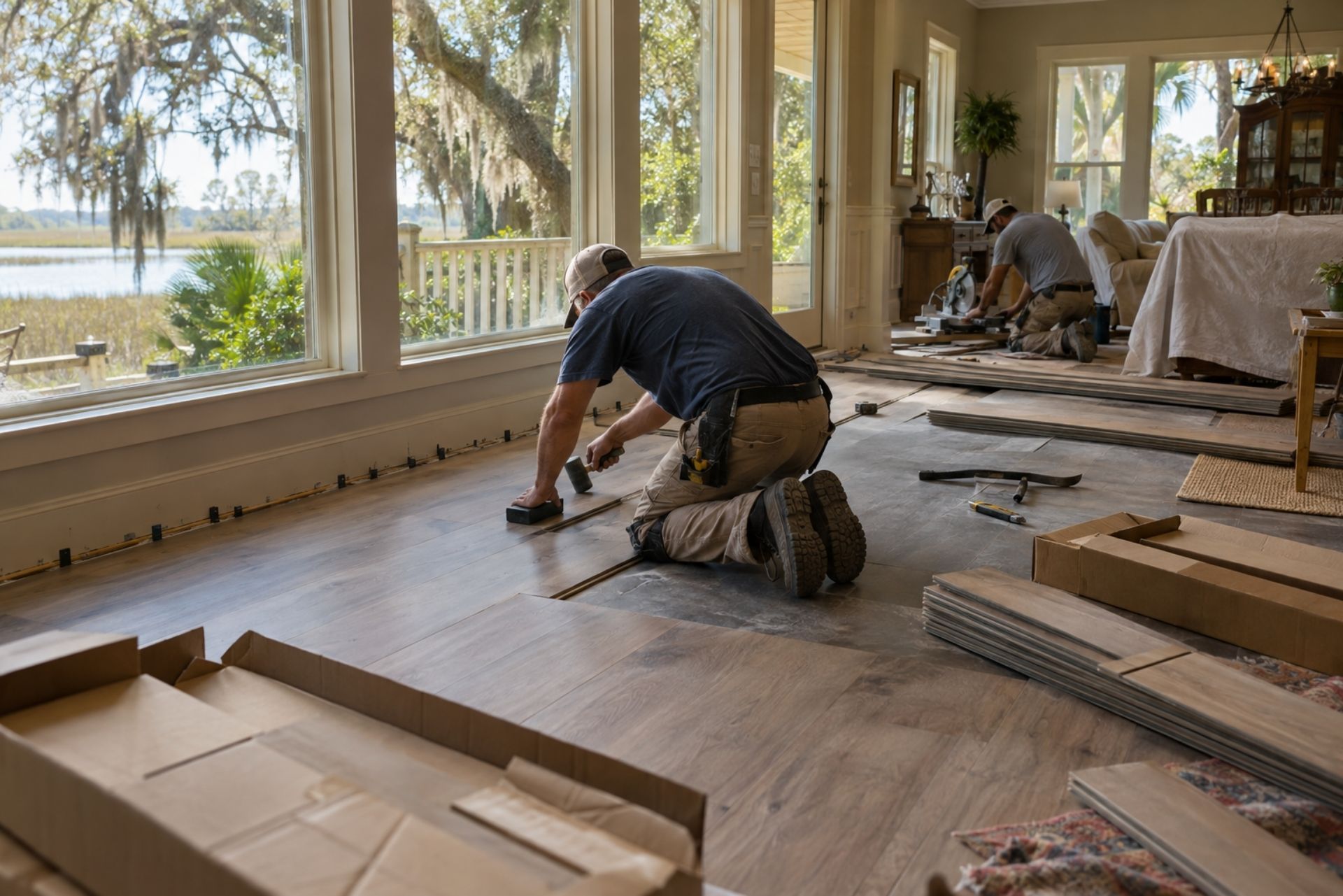
Flooring work looks straightforward from the outside. The risks are layered, though. You work inside finished homes, carry expensive product across the parish, spend your days on your knees, and install over slabs that never fully stop breathing moisture. Each of those exposures lands on a different policy, and the gaps between them are where contractors get hurt financially.
Understanding Louisiana Flooring Contractor Insurance Requirements
Louisiana has tightened the rules for residential and home improvement contractors in 2026, and flooring installers working under those license classes need to pay attention. As of August 1, 2026, residential construction and home improvement contractors in the state are required to carry at least $500,000 in general liability insurance. That figure is a floor, not a recommendation for every business.
The paperwork side changed too. Starting the same date, the Louisiana State Licensing Board for Contractors must be listed as the Certificate Holder on all insurance policies for residential and home improvement contractors. Policies also need to provide a minimum of six months of continuous coverage without exclusions for licensed operations.
One common mistake: contractors buy a policy that technically meets the dollar limit but carries exclusions for the exact work they perform. If your policy excludes certain residential operations, it may not satisfy the board, and it certainly won't help when a claim arrives. Review the exclusions page before you sign, not after a homeowner files a complaint.

On this page
Aubert Insurance Agency is a local, independent agency, licensed to serve individuals and businesses across Louisiana, Mississippi, Florida and Texas.
We serve clients from our offices in Covington and Slidell and throughout St. Tammany Parish — working with dozens of carriers and wholesale markets to help homeowners, drivers, contractors, restaurant owners, property investors, auto shops, professional practices and many other personal and commercial clients find coverage that fits.
Licensed in Louisiana #3661 · Mississippi #15039075 · Florida #W0772236 · Texas #2381820
The jump from minimum limits to 100/300/100 often costs less than riders expect, because liability is typically priced per added layer rather than doubling with the limits. Ask for quotes at two or three levels side by side before you decide.
Here's a common scenario: you misjudge a curve and clip a late-model pickup, injuring the driver. A single ambulance ride, ER visit, and follow-up imaging can eat through $15,000 quickly. Anything above your limit can become your personal responsibility, which may put your savings, wages, or home at risk.
| Scenario | Dwelling limit | All-other-perils deductible | Named-storm deductible |
|---|---|---|---|
| Newer build, inland St. Tammany | $350,000 | $1,000 | 2% |
| Newer build, higher wind zone | $350,000 | $1,000 | 5% |
| Older home, updated roof | $275,000 | $2,500 | 2% |
| Older home, original roof | $275,000 | $2,500 | 5% |
| Fortified roof designation | $400,000 | $1,000 | 2% |
| Rebuilt after a prior claim | $400,000 | $2,500 | 5% |
| Bundled with auto | $350,000 | $1,000 | 2% |
Moisture and Slab Vapor Failures: Protecting Your Work
Humidity in Covington and Slidell routinely sits high for much of the year, and concrete slabs on the Northshore can push moisture vapor upward long after the pour. When that vapor meets glue-down hardwood, luxury vinyl plank, or laminate without a proper barrier, you get cupping, adhesive failure, mold under the planks, and sometimes a complete replacement job.
The state is paying attention to water problems in construction. On May 5, 2026, the Louisiana State Uniform Construction Code Council issued an emergency rule amending the residential code on water intrusion and underlayment, effective June 1, 2026. While that rule targets the building envelope, it signals how seriously moisture damage is being treated across the trades.
Here's the policy nuance that catches people off guard. Standard General Liability typically does not pay to fix your own faulty work. If your floor fails because you skipped a moisture test, the cost of replacing the flooring itself may be excluded. What GL may cover is resulting damage to other property, such as ruined drywall, cabinets, or a homeowner's furniture, under products and completed operations coverage.
That distinction matters enormously. Some carriers offer endorsements or a separate contractors errors and omissions policy that may respond to workmanship claims, but terms vary widely. Protect yourself on the job side too: document calcium chloride or RH test results with photos, follow manufacturer moisture specs, and get signed acknowledgments when a client refuses a vapor barrier.
With no lender to satisfy, the decision is yours, and so is the entire loss. A total rebuild in this parish runs well into six figures.
Homeowners who own outright
Your lender requires coverage at least equal to the loan, and will buy a policy on your behalf at your expense if yours lapses.
Homeowners with a mortgage
Managing Risk During Installation and Transit
Flooring jobs carry two separate physical exposures that people tend to lump together. One happens inside the client's home while you work. The other happens on the road before you ever unload a box. They're covered by different policies, so it pays to think about them separately.
Damage to Finished Homes During Install
Most flooring work in St. Tammany happens in occupied or nearly finished homes. That means fresh paint, installed cabinets, glass shower doors, and expensive trim are all within reach of a dolly or a flooring nailer. A pneumatic nailer blowing through a radiant heat line or a saw cord knocking over a homeowner's antique are the kinds of claims General Liability is built for.
GL typically covers accidental damage to a client's property during your operations, subject to policy wording. Watch for the "care, custody or control" exclusion, which may limit coverage for property you're actively working on. A dropped pallet that cracks a tiled kitchen floor in an adjoining room is usually treated differently than damage to the subfloor you're installing over. Ask your agent exactly how your policy reads on this point.
Protecting Material in Transit
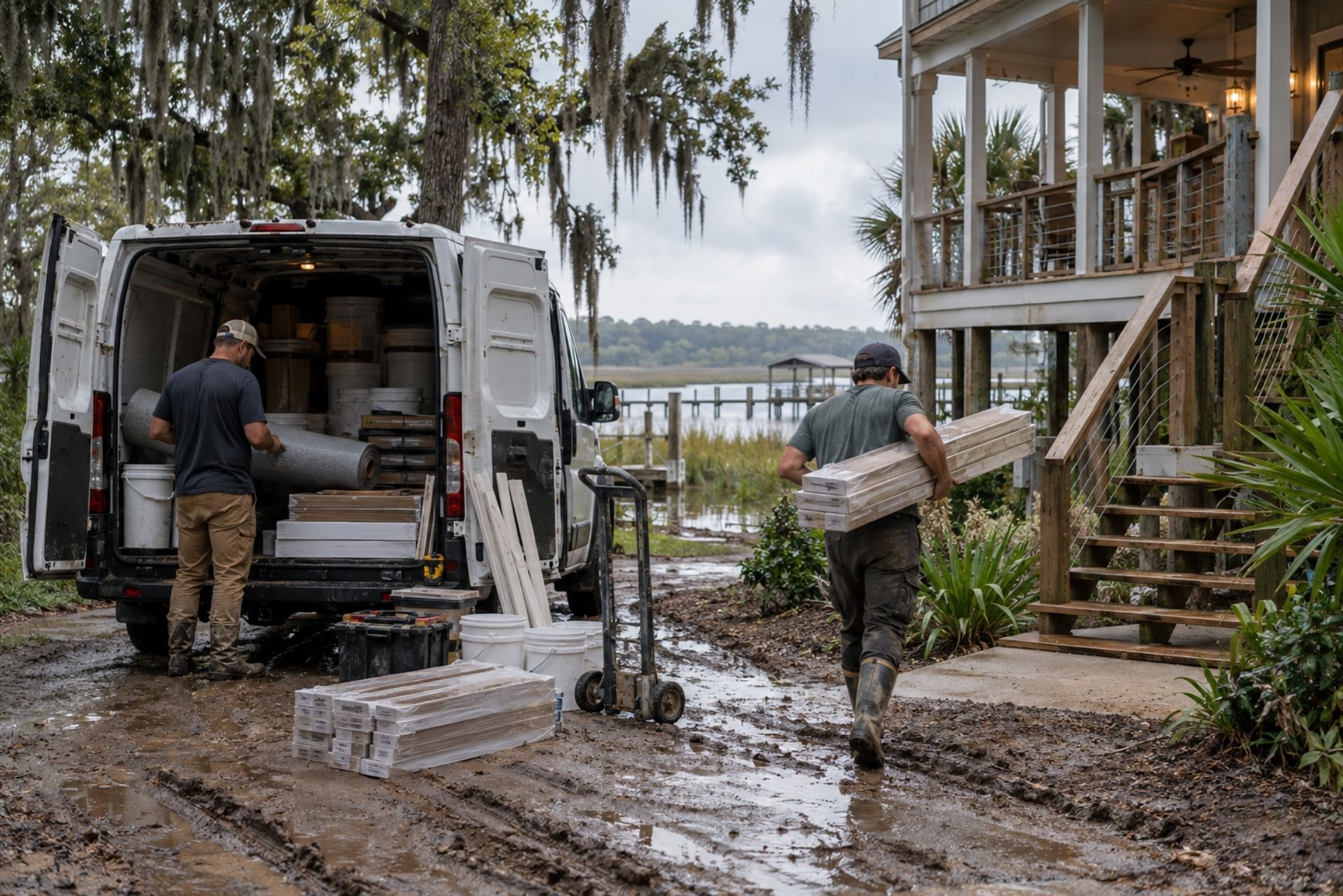
A truckload of hardwood, tile, or LVP can easily run into thousands of dollars before labor. If that load slides off a trailer on I-12 or gets stolen from a job site in Slidell overnight, your General Liability policy typically won't pay for it. Commercial auto usually won't either, since it focuses on the vehicle and liability rather than cargo.
This is where Inland Marine coverage comes in. An installation floater or contractors equipment policy may cover materials in transit, materials stored at the job site before installation, and tools like saws, sanders, and moisture meters. Coverage often ends once materials become part of the structure, so confirm when the protection hands off. Also check whether theft from an unlocked trailer is excluded, since that's a frequent claim denial.

The jump from minimum limits to 100/300/100 often costs less than riders expect, because liability is typically priced per added layer rather than doubling with the limits. Ask for quotes at two or three levels side by side before you decide.
Picture a summer ride across the Lake Pontchartrain Causeway or down Highway 190 through Covington. The bike is tuned, the weather is perfect, and then a distracted driver drifts into your lane. In that moment, the policy you picked months ago decides whether you recover financially or spend years paying off a crash you didn't cause.
This guide covers Louisiana motorcycle insurance from the ground up: the legal minimums, the helmet rules, and the optional coverages that matter most to St. Tammany Parish riders.
Managing Knee and Back Injuries on the Job
Ask any installer with 15 years in the trade about their knees, and you'll get a story. Flooring work means kneeling for hours, lifting 50-pound boxes, hauling rolls of carpet up stairs, and bending over sanders all day. Chronic knee bursitis, meniscus tears, herniated discs, and repetitive strain injuries are common, and they rarely come from one dramatic moment.
Workers Compensation typically covers medical bills and lost wages for job-related injuries, including conditions that build up over time. Repetitive trauma claims can be harder to prove than an acute injury, so documentation matters. Encourage workers to report pain early, keep injury logs, and make sure your carrier knows what tasks each employee performs. Misclassified payroll is one of the most common reasons contractors face surprise bills at audit.
Acute accidents add up quickly too. The average workers comp claim for a flooring-related slip or fall in 2026 is estimated between $40,000 and $50,000 in direct costs. For a small crew, one uncovered injury at that level could wipe out a year of profit.
A few practical steps reduce both claims and premiums:
- Require quality knee pads with hard caps and replace them when worn
- Use team lifts for full pallets, rolls and heavy tile boxes
- Rotate tasks so no one spends an entire day kneeling
- Train on sander and stripper handling to cut back and shoulder strain
Each policy below covers a specific slice of risk. None of them overlap completely, which is why contractors who carry only one usually find the gap the hard way.
General liability covers physical harm: fires, shocks, and property damage from your work. Professional liability, sometimes called errors and omissions, may cover financial loss from design mistakes or bad advice, such as an undersized service you specified on a load calculation. Electricians who do design-build work, panel sizing for solar, or consulting often need both, because a general liability policy typically will not respond to a pure financial loss.
Gaps Worth Knowing About
Comparing Essential Coverage for Flooring Professionals
Each policy below covers a specific slice of risk. None of them overlap completely, which is why contractors who carry only one usually find the gap the hard way.
| Feature | General Liability | Inland Marine | Workers Compensation |
|---|---|---|---|
| What it protects | Third-party property damage and injuries | Tools, equipment and materials | Your employees |
| Typical flooring claim | Scratched cabinets, flood from cut water line | Hardwood stolen from trailer | Torn meniscus, back strain |
| Moisture failures | May cover resulting damage, not your work itself | Not applicable | Not applicable |
| Materials in transit | Typically no | Typically yes | No |
| Required in Louisiana? | Yes, $500,000 minimum for residential contractors | Not required | Generally required with employees |
| Who usually asks for proof | Licensing board, homeowners, GCs | Lenders, equipment lessors | GCs, state |
For context on cost, annual general liability premiums for solo flooring operators in Louisiana range from $700 to $1,300. Your actual price depends on revenue, claims history, and the type of flooring you install. Comparing multiple carriers often reveals meaningful differences in exclusions, not just price.
The roof
Age, material and shape drive the wind rate more than any other factor. A fortified roof designation opens markets that would otherwise decline the house.
Coverage details vary by carrier, and some policies may bundle these into a business owner's package. That is where working with an independent agency helps. Aubert Insurance Agency compares options from multiple carriers in one place, so you can see side by side which policies exclude residential work, solar, or generator installs before you commit.
Common Questions About Flooring Insurance in Louisiana
Do I need insurance if I work alone? Yes. Residential and home improvement contractors in Louisiana generally need at least $500,000 in general liability, and solo installers still face property damage claims and tool theft.
Will my liability policy pay to redo a floor that failed from slab moisture? Usually not for the flooring itself, since GL typically excludes your own work. It may cover damage the failure causes to other parts of the home.
Does my truck insurance cover the flooring I'm hauling? Typically no. Commercial auto focuses on the vehicle, so you'll likely need Inland Marine coverage for materials in transit.
Can a worker file comp for knee pain that built up over years? Often yes. Workers comp may cover repetitive strain injuries if they're tied to job duties, though these claims need good documentation.
What does it mean that the licensing board must be the certificate holder? It means your insurer sends proof of coverage directly to the board. If your policy lapses, the board finds out.
How long does my policy need to stay active? Louisiana requires at least six months of continuous coverage for licensed operations, without exclusions for the work you're licensed to do.
Making the Right Choice for Your Business
Flooring contractors on the Northshore deal with a specific mix of problems: slabs that sweat, homes full of finished surfaces, expensive product bouncing around in trailers, and bodies that wear down from years on the floor. General Liability, Inland Marine, and Workers Compensation each handle one part of that picture. Leaving any of them out tends to show up at the worst possible time.
Aubert Insurance Agency has been insuring Covington, Slidell, and St. Tammany Parish families and businesses since 1910. As an independent agency, we compare options from multiple carriers and walk you through what your policy actually covers, including the exclusions that matter for moisture claims and installation damage. You'll know where the gaps are before you sign.
Ready to see how your coverage stacks up against the new 2026 requirements? Start a Quote today, and let us shop the market so you can get back to laying floors.

About the Author
Kyle Beerbohm
President
We've been independent since 1910, and four generations of local ownership have kept us that way. We're one of the oldest agencies in St. Tammany Parish and the fourth oldest business in the City of Covington. I treat that history as a responsibility rather than a plaque on the wall. My job is to keep us answering to the families and business owners who walk through our doors, and to keep serving this parish for another hundred years.
Louisiana Insurance Questions, Answered
Questions clients ask us
Short, plain answers to what people ask before they call. Anything else, phone the office and ask.
What does an independent insurance agency do?
We represent you, not one insurance company. We gather your information once, then compare coverage and price across the carriers we hold contracts with. You get choices, and one agent handles the paperwork.
Which types of insurance does Aubert offer?
We write 13 personal lines, including home, auto, flood, boat, and life. We write 15 commercial lines, including business owners policies, general liability, workers compensation, and commercial property.
Do I need flood insurance in St. Tammany Parish?
Your homeowners policy excludes flood, and much of the Northshore has flooded outside mapped high-risk zones. Lenders require it inside those zones. We check your flood zone and quote NFIP and private options.
Which states are you licensed in?
We hold licenses in Louisiana, Mississippi, Florida, and Texas. License numbers appear in the footer of every page on this site.
How do you find me a competitive rate?
We take your details once and market them to the carriers and wholesale brokers that fit your risk. We compare the offers, explain the differences in coverage, and recommend the strongest fit.
How do I file a claim or request a certificate?
Call the office or use the Client Center on this site. We report the claim, follow the adjuster, and send certificates of insurance to whoever needs them.

Personal Insurance in Louisiana
Coverage for your home, your vehicles, and your family
Thirteen personal lines sit under one roof. Start with the coverage you need most, and we price it across our markets.
Home Insurance
Protect your house, its contents, and your liability with a policy priced across many Louisiana homeowners carriers.
Car Insurance
Cover every driver and vehicle in your household, and compare limits and deductibles side by side before you buy.
Flood Insurance
Standard home policies exclude flood. We write NFIP and private flood coverage for St. Tammany Parish properties.
Umbrella Insurance
Add a layer of liability above your home and auto limits, so one serious claim never reaches your savings.
Boat Insurance
Cover your hull, motor, trailer, and liability on the lake, the river, and the Gulf, wherever you launch.
Life Insurance
Replace your income for the people who depend on it, with term and permanent options we quote across carriers.
Business Insurance in Louisiana
Coverage for the business you built
Fifteen commercial lines, written for the payrolls, fleets, and buildings that Louisiana carriers ask hard questions about.
Contractors Insurance
General contractors, trade contractors and specialty crews. We cover the liability, tools, vehicles and workers your jobs depend on.
Business Owners (BOP)
One policy bundling property and liability for a small business. Straightforward cover for the building, the contents and the risk.
Professional Liability
Protection when your advice or professional work is challenged. A staple of any commercial package for a service business.
Commercial Property
Landlords and commercial real estate investors. We insure the building, the habitation risk and the income it produces.
Workers Compensation
Protecting your employees protects your business. Medical costs and lost wages covered when someone is hurt on the job.
Commercial Auto
Trucks, vans and fleets. We shop a wide range of commercial auto markets to match your vehicles and your drivers.
Business Insurance by Industry
We protect hundreds of businesses of all shapes and sizes
We know the exposures, the contract language, and the markets that write these trades on the Northshore.

General Contractors
Builders risk, general liability, and comp for homebuilders and remodelers working across St. Tammany Parish.

Plumber Insurance
Plumbers, electricians, roofers, and painters get liability, tools, and auto coverage that satisfies job requirements.

Restaurants
Property, liquor liability, spoilage, and comp for kitchens, bars, and cafés, including Louisiana association programs.
5-Star Rated by St. Tammany Clients
What Our Clients Say
Neighbours, business owners, and families across Covington and Slidell tell the story better than we can.


Insurance Tips & Local News
Insurance tips for Louisiana homes and businesses
Practical reading on flood zones, hurricane deductibles, and the coverage questions local business owners raise.
Request Your Free Insurance Quote
Tell us what you need covered
Send the form or call the office. A licensed agent in Covington or Slidell answers you directly.
614 E. Boston St., Covington, LA 70433. (985) 892-3101
58418 Tyler Drive, Slidell, LA 70461 · (985) 641-0520
Call
614 E. Boston St., Covington, LA 70433
58418 Tyler Drive, Slidell, LA 70461













