













Covington & Slidell Independent Insurance Agents
Why Your Homeowners Policy Rarely Covers Your Side-by-Side
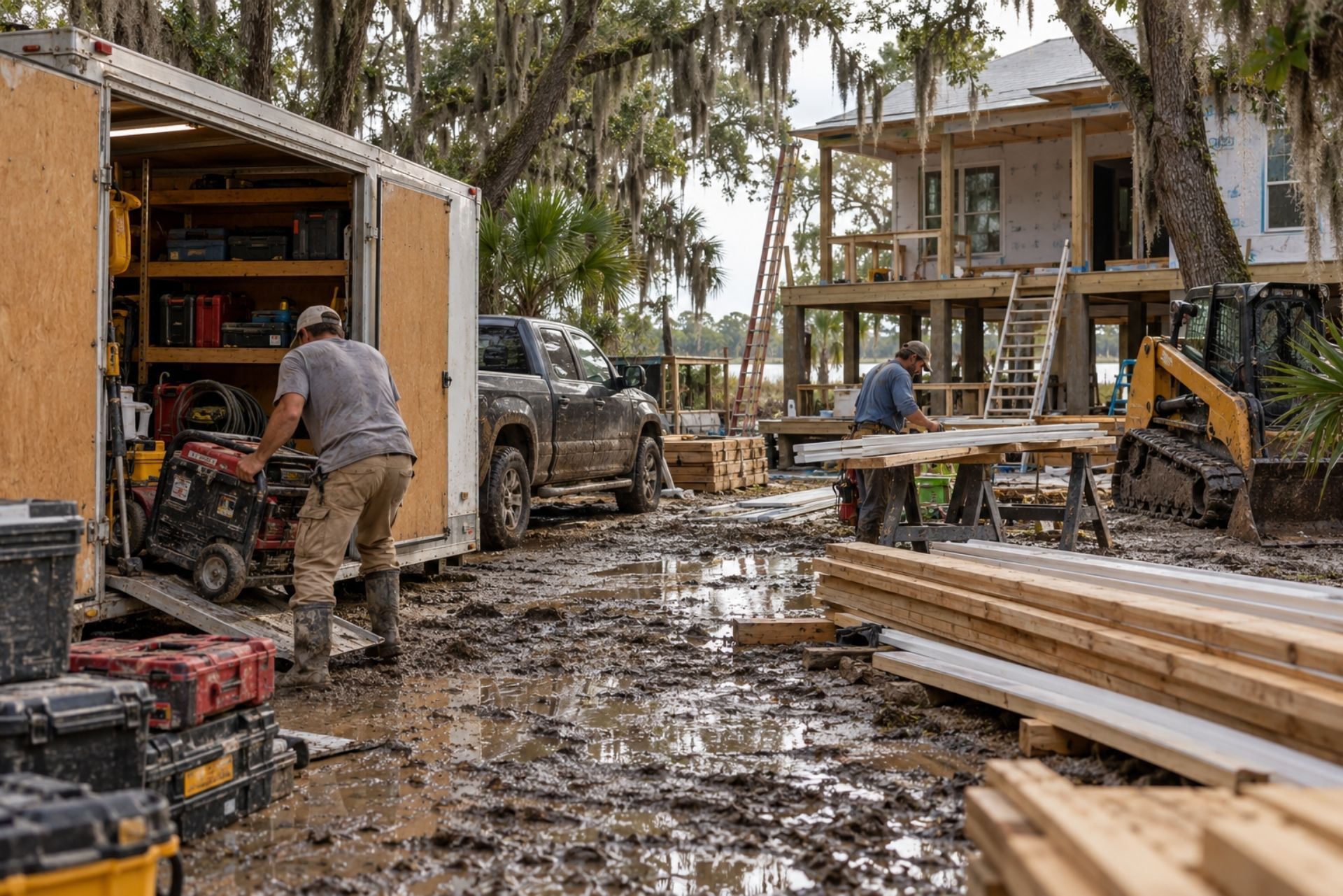
Your skid steer sits on a Mandeville lot overnight, your tools ride in a trailer across Lake Pontchartrain, and your HVAC units wait at a client's house for install day. A standard property policy may not cover any of that. Inland marine insurance is the coverage built for property that moves.
Protecting Mobile Business Assets with Louisiana Inland Marine Insurance
Louisiana inland marine insurance covers property in transit and movable equipment that doesn't stay at one fixed location. That includes tools, machinery, and materials traveling between job sites, sitting in trailers, or waiting to be installed. Aubert Insurance Agency has written coverage like this from offices in Covington and Slidell since 1910.
The name confuses people. It has nothing to do with boats on the Tchefuncte. The term goes back to early cargo insurance, when underwriters extended ocean marine coverage to goods moving over land. Today it's the policy category for property that a building-based policy usually won't follow.
Here's the gap most contractors miss. A commercial property policy is written around a scheduled address, your shop or office. Once equipment leaves that address, coverage may shrink to a small off-premises limit or disappear entirely. For a general contractor in St. Tammany Parish with crews spread across Covington, Abita Springs, and Slidell, nearly all the valuable equipment spends its working life somewhere other than the shop.
Inland marine fills that gap through several policy forms, often called "floaters" because the coverage floats with the property. The four that matter most for Louisiana contractors are covered below.

On this page
Aubert Insurance Agency is a local, independent agency, licensed to serve individuals and businesses across Louisiana, Mississippi, Florida and Texas.
We serve clients from our offices in Covington and Slidell and throughout St. Tammany Parish — working with dozens of carriers and wholesale markets to help homeowners, drivers, contractors, restaurant owners, property investors, auto shops, professional practices and many other personal and commercial clients find coverage that fits.
Licensed in Louisiana #3661 · Mississippi #15039075 · Florida #W0772236 · Texas #2381820
A named storm deductible works differently than the flat $500 or $1,000 deductible on your regular claims. In Louisiana, it's often calculated as 2% to 5% of the insured value of your personal property. On a policy with $40,000 in contents coverage, a 5% deductible means the first $2,000 of a hurricane loss is yours.
There's some good news in state law. Louisiana's one-deductible-per-year rule (La. R.S. 22:1337) means you generally pay the named storm deductible only once per calendar year, even if two storms hit your rental. Ask your agent to show you that deductible in dollars, not just a percentage, so you can set aside the right amount in an emergency fund.
Contractors Equipment and Tool Floaters
A contractors equipment floater covers the machinery and tools you own and use on jobs. It typically handles two buckets:
- Scheduled equipment: Higher-value items listed individually by make, model, serial number, and value. Think excavators, mini-excavators, skid steers, trenchers, generators, and light towers.
- Unscheduled tools: Smaller items covered as a group up to a blanket limit, often with a per-item cap. This bucket includes saws, drills, nail guns, laser levels, and compressors.
The most common mistake we see is the per-item cap. A contractor carries a $25,000 blanket limit for tools and assumes everything is covered. Then a $6,000 laser transit gets stolen, and the policy pays only up to its per-item maximum, which may be far lower. If you own anything pricey that isn't scheduled, check that cap.
Valuation matters just as much. Policies may pay actual cash value (replacement cost minus depreciation) or replacement cost. On a five-year-old skid steer, the difference between those two numbers can decide whether you keep working next week or wait months to save up. Ask which one you have before a claim forces the question.
Keep a current equipment list with serial numbers and photos. It takes an afternoon, and it can save weeks of claim back-and-forth.
With no lender to satisfy, the decision is yours, and so is the entire loss. A total rebuild in this parish runs well into six figures.
Homeowners who own outright
Your lender requires coverage at least equal to the loan, and will buy a policy on your behalf at your expense if yours lapses.
Homeowners with a mortgage
Comprehensive vs. Collision for Off-Road Vehicles
Installation Floaters for Materials in Transit and On-Site
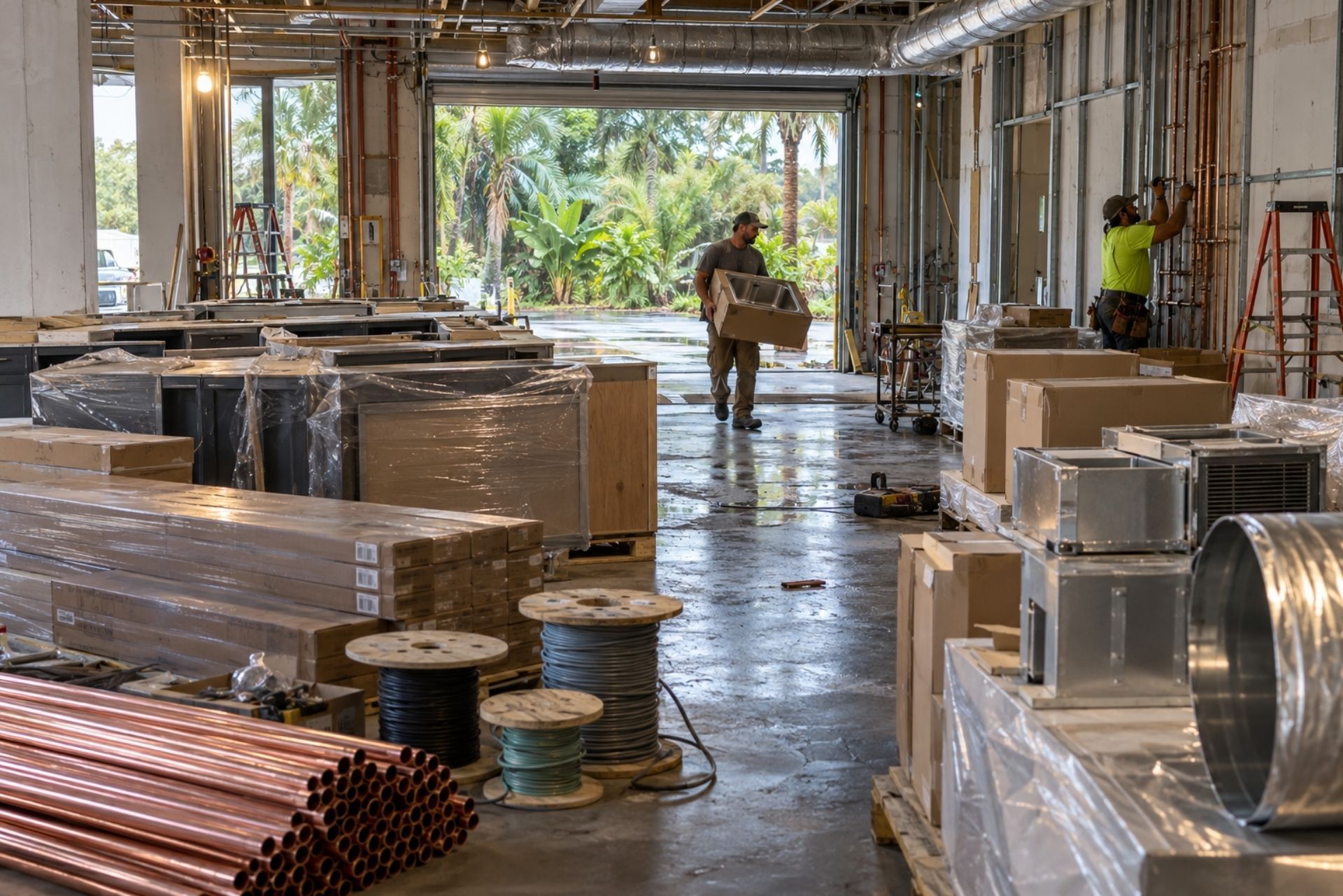
An installation floater, sometimes called a builders risk floater for trades, covers materials and equipment you're installing as part of a job. It applies while those materials sit in your shop, travel to the site, wait in staging, and go into the building. The coverage typically runs until the work is finished and accepted.
Picture an electrical contractor wiring a new medical office in Covington. Thousands of dollars in switchgear, panels, and copper wire get delivered on Monday. Installation runs for three weeks. During that window, the materials don't belong to the building owner yet, and they're no longer sitting safely in your warehouse. If someone strips the copper on a Saturday night, your general liability policy won't pay for it, because liability covers damage you cause to others, not your own property.
Some carriers now tailor installation floaters to cover both supplies and the labor costs tied to property being installed, until final sign-off is received. That labor piece can matter a lot. If half-installed ductwork is damaged, you may have to pay your crew twice to tear it out and redo it. Coverage details vary by carrier, so confirm whether labor is included and exactly when coverage ends: at substantial completion, at owner acceptance, or at final sign-off.
Plumbers, HVAC installers, electricians, cabinet makers, and window and door companies tend to need this coverage most.

The roof
Age, material and shape drive the wind rate more than any other factor. A fortified roof designation opens markets that would otherwise decline the house.
Coverage for Rented and Leased Equipment
Renting a boom lift for a two-week job feels simple until you read the rental agreement. Most agreements make you responsible for the equipment from pickup to return, including theft, fire, flood, and vandalism. Some also hold you liable for the rental company's lost income while the item is out of service.
You typically have three ways to handle that risk:
- Buy the rental company's damage waiver. It's convenient, but it adds cost to every rental and often carries exclusions people don't read.
- Add rented and leased equipment coverage to your contractors equipment floater. This is usually written with a set limit per item and may include coverage for rental payments you keep owing while a damaged item is replaced.
- Schedule long-term leased equipment directly. If you lease a machine for a year or more, the lessor will likely require you to list it on your policy and name them as loss payee.
If you rent more than a few times a year, a policy endorsement often costs less over time than paying waivers on every contract. Watch the limit, though. A $50,000 rented equipment limit won't cover a $120,000 telehandler. Match your limit to the most expensive thing you realistically rent, not the average.
Addressing Theft From Job Sites and Trailers
Theft drives a large share of contractor equipment claims, and Louisiana job sites face their share of it. Open lots in growing areas along I-12 and Highway 190 are easy to reach after dark, and tools stored in enclosed trailers make tempting targets because thieves can hitch and haul the whole thing.
Inland marine forms typically cover theft, but the fine print shapes how much you collect. Look for these terms:
- Mysterious disappearance exclusions: If a tool is simply gone with no sign of forced entry, some policies won't pay.
- Vehicle and trailer conditions: Some forms require tools in an unattended vehicle or trailer to be locked, with visible signs of forced entry, for coverage to apply.
- Overnight storage requirements: A few policies limit coverage for tools left in an unattended truck bed overnight.
- Theft deductibles: Some carriers apply a higher deductible specifically to theft claims.
Simple steps help both with prevention and claims. Use hitch locks and wheel boots on trailers, install GPS trackers on high-value machines, and engrave or mark tools with a company identifier. File a police report right away, because nearly every carrier requires one.
Comparing Standard Property vs. Inland Marine Coverage
| Situation | Standard Property / General Liability | Inland Marine Floater |
|---|---|---|
| Tools stolen from a job site | Property: often limited or excluded off-premises. GL: no coverage for your own tools | Typically covered, subject to theft conditions |
| Trailer stolen with tools inside | Usually excluded or capped at a small off-premises limit | Tools typically covered. Trailer may be covered if scheduled |
| Materials damaged before installation | GL doesn't cover your own property | Covered under an installation floater |
| Rented lift damaged | Not covered | Covered with a rented equipment endorsement |
| Equipment at your shop | Covered at the scheduled location | Also covered, since floaters follow the property |
| Damage you cause to a client's home | GL covers this | Not covered. That's a liability claim |
The last row matters. Inland marine and general liability do different jobs, and most contractors need both.
The roof
Age, material and shape drive the wind rate more than any other factor. A fortified roof designation opens markets that would otherwise decline the house.
Common Questions About Louisiana Equipment Insurance
Does my general liability policy cover my tools? No. General liability pays for injuries or property damage you cause to other people. Your own tools and equipment need a separate policy, usually an inland marine floater.
Is inland marine insurance required in Louisiana? The state doesn't require it, but lenders, equipment lessors, and many general contractors require it in contracts. Liability requirements are a different story: under Act 757, the minimum liability insurance for residential construction, mold remediation, and home improvement contractors rose to $500,000 effective August 1, 2026.
Will my homeowners policy cover tools I use for my side business? Probably not much. Homeowners policies typically limit or exclude business property, especially once it leaves your home.
Are flood and hurricane damage covered? Many inland marine forms may cover flood and windstorm for movable equipment, unlike many property policies, but some carriers exclude or sublimit them in coastal areas. Ask directly and get the answer in writing.
Can I sue my insurer directly if a claim goes wrong? In most cases, not anymore. A Louisiana appeals court affirmed in July 2026 that the repeal of the Direct Action Statute applies retroactively, which is one more reason to understand your policy before a loss happens.
How do I figure out how much tool coverage I need? Walk through your truck, trailer, and shop with a notepad and total what it would cost to replace everything new. Then list separately any single item worth more than your policy's per-item cap.
Making the Right Choice for Your Louisiana Business
The right setup for a two-person plumbing outfit in Slidell looks nothing like the right setup for a site work contractor running three excavators across St. Tammany Parish. What they share is a basic question: where is your property on any given day, and does your policy follow it there? Owned equipment, materials waiting for installation, rented machines, and tools locked in a trailer each create their own exposure, and a building-based policy often leaves them uncovered.
Good inland marine coverage for contractors in Louisiana comes down to details. Check per-item caps, valuation method, theft conditions, rented equipment limits, and when an installation floater ends. Those details look minor until the day a trailer goes missing from a Covington job site.
As an independent agency, Aubert Insurance Agency compares options from multiple carriers and walks you through what each policy covers and excludes, so you're not guessing after a loss. We've helped Louisiana families and business owners protect what matters since 1910, and we know the job sites, weather, and risks around Covington and Slidell.
Ready to see what fits your equipment and your jobs? Start a Quote with our Covington or Slidell office today.

About the Author
Kyle Beerbohm
President
We've been independent since 1910, and four generations of local ownership have kept us that way. We're one of the oldest agencies in St. Tammany Parish and the fourth oldest business in the City of Covington. I treat that history as a responsibility rather than a plaque on the wall. My job is to keep us answering to the families and business owners who walk through our doors, and to keep serving this parish for another hundred years.
Louisiana Insurance Questions, Answered
Questions clients ask us
Short, plain answers to what people ask before they call. Anything else, phone the office and ask.
What does an independent insurance agency do?
We represent you, not one insurance company. We gather your information once, then compare coverage and price across the carriers we hold contracts with. You get choices, and one agent handles the paperwork.
Which types of insurance does Aubert offer?
We write 13 personal lines, including home, auto, flood, boat, and life. We write 15 commercial lines, including business owners policies, general liability, workers compensation, and commercial property.
Do I need flood insurance in St. Tammany Parish?
Your homeowners policy excludes flood, and much of the Northshore has flooded outside mapped high-risk zones. Lenders require it inside those zones. We check your flood zone and quote NFIP and private options.
Which states are you licensed in?
We hold licenses in Louisiana, Mississippi, Florida, and Texas. License numbers appear in the footer of every page on this site.
How do you find me a competitive rate?
We take your details once and market them to the carriers and wholesale brokers that fit your risk. We compare the offers, explain the differences in coverage, and recommend the strongest fit.
How do I file a claim or request a certificate?
Call the office or use the Client Center on this site. We report the claim, follow the adjuster, and send certificates of insurance to whoever needs them.

Personal Insurance in Louisiana
Coverage for your home, your vehicles, and your family
Thirteen personal lines sit under one roof. Start with the coverage you need most, and we price it across our markets.
Home Insurance
Protect your house, its contents, and your liability with a policy priced across many Louisiana homeowners carriers.
Car Insurance
Cover every driver and vehicle in your household, and compare limits and deductibles side by side before you buy.
Flood Insurance
Standard home policies exclude flood. We write NFIP and private flood coverage for St. Tammany Parish properties.
Umbrella Insurance
Add a layer of liability above your home and auto limits, so one serious claim never reaches your savings.
Boat Insurance
Cover your hull, motor, trailer, and liability on the lake, the river, and the Gulf, wherever you launch.
Life Insurance
Replace your income for the people who depend on it, with term and permanent options we quote across carriers.
Business Insurance in Louisiana
Coverage for the business you built
Fifteen commercial lines, written for the payrolls, fleets, and buildings that Louisiana carriers ask hard questions about.
Contractors Insurance
General contractors, trade contractors and specialty crews. We cover the liability, tools, vehicles and workers your jobs depend on.
Business Owners (BOP)
One policy bundling property and liability for a small business. Straightforward cover for the building, the contents and the risk.
Professional Liability
Protection when your advice or professional work is challenged. A staple of any commercial package for a service business.
Commercial Property
Landlords and commercial real estate investors. We insure the building, the habitation risk and the income it produces.
Workers Compensation
Protecting your employees protects your business. Medical costs and lost wages covered when someone is hurt on the job.
Commercial Auto
Trucks, vans and fleets. We shop a wide range of commercial auto markets to match your vehicles and your drivers.
Business Insurance by Industry
We protect hundreds of businesses of all shapes and sizes
We know the exposures, the contract language, and the markets that write these trades on the Northshore.

General Contractors
Builders risk, general liability, and comp for homebuilders and remodelers working across St. Tammany Parish.

Plumber Insurance
Plumbers, electricians, roofers, and painters get liability, tools, and auto coverage that satisfies job requirements.

Restaurants
Property, liquor liability, spoilage, and comp for kitchens, bars, and cafés, including Louisiana association programs.
5-Star Rated by St. Tammany Clients
What Our Clients Say
Neighbours, business owners, and families across Covington and Slidell tell the story better than we can.


Insurance Tips & Local News
Insurance tips for Louisiana homes and businesses
Practical reading on flood zones, hurricane deductibles, and the coverage questions local business owners raise.
Request Your Free Insurance Quote
Tell us what you need covered
Send the form or call the office. A licensed agent in Covington or Slidell answers you directly.
614 E. Boston St., Covington, LA 70433. (985) 892-3101
58418 Tyler Drive, Slidell, LA 70461 · (985) 641-0520
Call
614 E. Boston St., Covington, LA 70433
58418 Tyler Drive, Slidell, LA 70461













