













Covington & Slidell Independent Insurance Agents
Picture a 40-acre tract off Highway 190 in Covington with clearing underway, utilities going in, and a mid-rise mixed-use building planned for phase two. Before a single unit sells, that project may already be exposed to a slip-and-fall on the raw land, a crane mishap, a named storm, and a lawsuit from the subdivision downhill. Louisiana real estate developer insurance exists to handle that stack of risks. Most developers still find the gaps only after a claim gets denied.
Understanding Louisiana Developer Insurance Needs
Louisiana developers typically need several layers of protection working together. These include an Owner's Interest policy that protects the development entity, liability coverage for vacant land, a wrap-up or clear contractor insurance requirements, Builders Risk sized for vertical construction and windstorm exposure, and liability limits that can respond to drainage and flooding claims from neighbors.
Each layer covers a different phase of the project, and each can fail on its own. A Builders Risk policy may pay to rebuild framing damaged by wind. That same policy will not defend you when the neighbor's yard floods. The structure you choose on day one shapes how every later claim plays out.

On this page
Aubert Insurance Agency is a local, independent agency, licensed to serve individuals and businesses across Louisiana, Mississippi, Florida and Texas.
We serve clients from our offices in Covington and Slidell and throughout St. Tammany Parish — working with dozens of carriers and wholesale markets to help homeowners, drivers, contractors, restaurant owners, property investors, auto shops, professional practices and many other personal and commercial clients find coverage that fits.
Licensed in Louisiana #3661 · Mississippi #15039075 · Florida #W0772236 · Texas #2381820
The jump from minimum limits to 100/300/100 often costs less than riders expect, because liability is typically priced per added layer rather than doubling with the limits. Ask for quotes at two or three levels side by side before you decide.
Here's a common scenario: you misjudge a curve and clip a late-model pickup, injuring the driver. A single ambulance ride, ER visit, and follow-up imaging can eat through $15,000 quickly. Anything above your limit can become your personal responsibility, which may put your savings, wages, or home at risk.
| Scenario | Dwelling limit | All-other-perils deductible | Named-storm deductible |
|---|---|---|---|
| Newer build, inland St. Tammany | $350,000 | $1,000 | 2% |
| Newer build, higher wind zone | $350,000 | $1,000 | 5% |
| Older home, updated roof | $275,000 | $2,500 | 2% |
| Older home, original roof | $275,000 | $2,500 | 5% |
| Fortified roof designation | $400,000 | $1,000 | 2% |
| Rebuilt after a prior claim | $400,000 | $2,500 | 5% |
| Bundled with auto | $350,000 | $1,000 | 2% |
Owner's Interest and Vacant Land Liability
An Owner's Interest policy, sometimes called Owner's Interest General Liability, is written for the development entity itself. Most developers assume that being listed as an additional insured on the general contractor's policy is enough. It often isn't. Additional insured endorsements can be narrow, tied to "ongoing operations," limited to the contractor's negligence, or exhausted by the contractor's own claims. An Owner's Interest policy gives your LLC its own defense and its own limits, and it typically responds when you are sued for decisions you made as owner, such as site design or hiring choices.
Vacant land needs coverage even before the first shovel hits the ground. Undeveloped parcels in St. Tammany Parish draw four-wheelers, hunters, dumpers, and kids exploring the woods. If someone is hurt on your property, you can be named in the suit whether or not you knew they were there. Old drainage ditches, abandoned structures, and standing water make the exposure worse.
Vacant land liability policies are usually inexpensive compared to the risk they carry. One common mistake: developers buy land through a new LLC and forget to add it to any policy until construction financing forces the issue. That gap can last months, sometimes years.
With no lender to satisfy, the decision is yours, and so is the entire loss. A total rebuild in this parish runs well into six figures.
Homeowners who own outright
Your lender requires coverage at least equal to the loan, and will buy a policy on your behalf at your expense if yours lapses.
Homeowners with a mortgage
| Coverage Area | State Minimum | Common Higher Option | Stronger Option |
|---|---|---|---|
| Injury, one person | $15,000 | $50,000 | $100,000 |
| Injury, per accident | $30,000 | $100,000 | $300,000 |
| Property damage | $25,000 | $50,000 | $100,000 |
| Who it fits | Legal compliance only | Riders with modest assets | Homeowners, families, higher earners |
Here's a common scenario: you misjudge a curve and clip a late-model pickup, injuring the driver. A single ambulance ride, ER visit, and follow-up imaging can eat through $15,000 quickly. Anything above your limit can become your personal responsibility, which may put your savings, wages, or home at risk.
Minimum Coverage vs. Actual Protection Needs
The jump from minimum limits to 100/300/100 often costs less than riders expect, because liability is typically priced per added layer rather than doubling with the limits. Ask for quotes at two or three levels side by side before you decide.
Wrap-Ups and Contractor Requirements
A wrap-up puts one insurance program over the whole project instead of letting every contractor bring their own policy. In Louisiana there are two main versions.
An Owner Controlled Insurance Program (OCIP) is bought and managed by the developer. You control the carrier, the limits, and claims handling, and you may recover part of the insurance costs that contractors would otherwise build into their bids. The tradeoff is administration. Someone has to enroll subcontractors, track payroll, and manage safety requirements.
A Contractor Controlled Insurance Program (CCIP) is run by the general contractor. It takes the administrative load off the developer, but the program protects the contractor's interests first. You will want to review exactly how the owner is covered and whether limits are shared across the contractor's other projects.
Wrap-ups usually make sense on larger projects. On smaller jobs, a traditional approach with tight contractor requirements is often more practical. That means specific limits, additional insured status on a primary and noncontributory basis, waiver of subrogation, and completed operations coverage that lasts after the project closes out.
Comparing Wrap-Up vs. Traditional Coverage
| Feature | OCIP | CCIP | Traditional |
|---|---|---|---|
| Who buys it | Developer | General contractor | Each contractor |
| Owner control | High | Moderate | Low |
| Admin burden on owner | Heavy | Light | Light to moderate |
| Risk of coverage gaps | Lower | Lower | Higher |
| Typical fit | Large, multi-phase projects | Large projects, experienced GCs | Small to mid-size builds |
Traditional programs fail most often on certificates. A certificate of insurance shows that a policy exists. It does not prove that your endorsements are on it. Ask for the actual endorsement forms.

The jump from minimum limits to 100/300/100 often costs less than riders expect, because liability is typically priced per added layer rather than doubling with the limits. Ask for quotes at two or three levels side by side before you decide.
One tip: keep a dated list of serial numbers and photos of your tools. Claims with documentation move much faster than claims built on memory.
| Feature | Commercial Property | Inland Marine (Tool Floater) |
|---|---|---|
| Where it applies | Your fixed shop location | Jobsites, truck, in transit |
| Typical items | Stationary machines, inventory, building | Portable saws, nailers, hand tools |
| Theft from vehicle | Usually not covered | Often covered, with conditions |
| Fire or storm at shop | Typically covered | May be covered if tools are there |
| Who needs it | Carpenters with a shop | Nearly every working carpenter |
Builders Risk on Vertical Construction
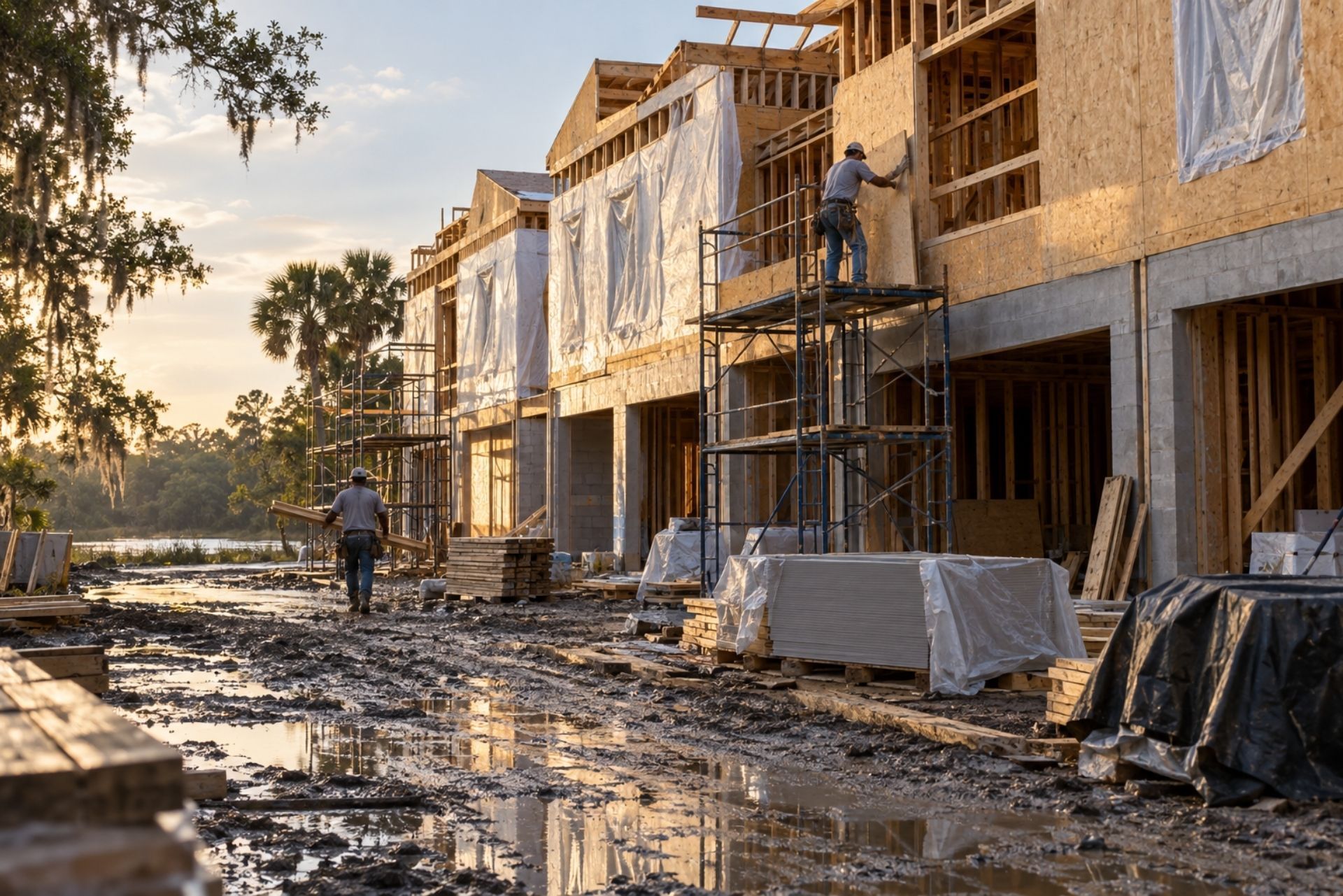
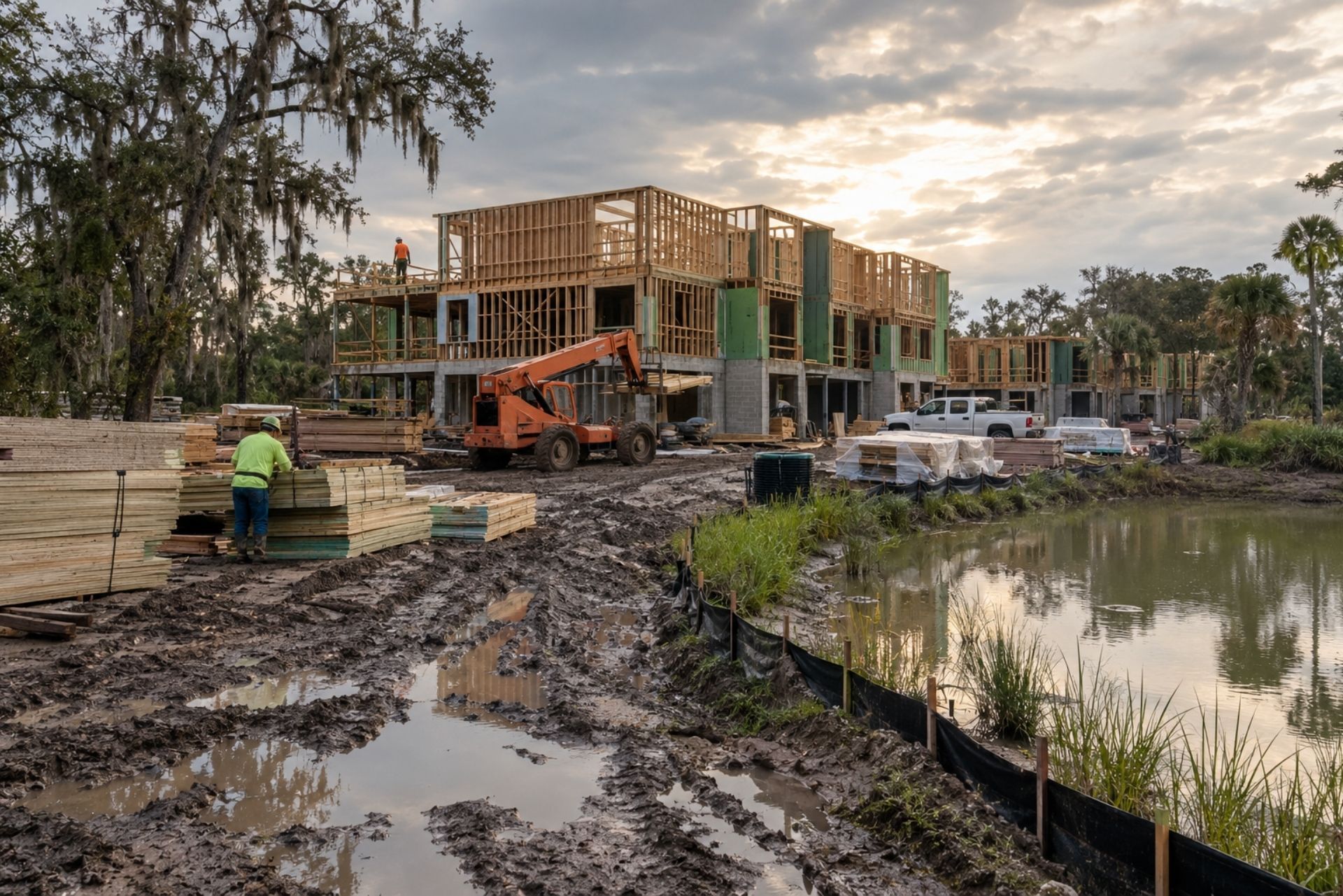
Builders Risk covers the structure while it is being built. That includes materials, framing, and often materials stored on site or in transit. Vertical construction changes the risk profile. A three-story wood-frame apartment building or a mid-rise with exposed sheathing and unsecured materials gives wind far more to work with than a slab-on-grade single-family home.
In Louisiana, windstorm and hail drive Builders Risk pricing and terms. Policies may carry a separate named storm deductible, often written as a percentage of the project value instead of a flat dollar amount. On a large build, that percentage can add up to a serious number. Some carriers may restrict or delay binding new coverage once a storm forms in the Gulf, so waiting until August to finalize your policy is a real risk.
Watch the transition points. Coverage on a ground-up build typically ends at occupancy, substantial completion, or a set date, whichever comes first. If phase one opens to tenants while phase two is still framing, you may need the Builders Risk policy endorsed and a permanent property policy started on time. Soft costs, such as extra interest, permit fees, and lost rental income from a delayed opening, are usually optional coverages. They are worth discussing when lenders are counting the days.
General liability covers physical harm: fires, shocks, and property damage from your work. Professional liability, sometimes called errors and omissions, may cover financial loss from design mistakes or bad advice, such as an undersized service you specified on a load calculation. Electricians who do design-build work, panel sizing for solar, or consulting often need both, because a general liability policy typically will not respond to a pure financial loss.
Managing Drainage and Flooding Claims
Drainage claims may be the most underestimated exposure in Louisiana development. Clearing trees, raising grade, and adding rooftops and pavement all change how water moves. The homeowners downhill notice right away.
The law here is specific. Under Louisiana Civil Code Article 655, lower land is legally bound to receive surface water that flows naturally from higher land. Developers sometimes read that as permission. It isn't. Article 655 sets the baseline relationship between adjacent properties, and Article 656 adds that the higher landowner may not make the natural drainage servitude more burdensome for neighbors. Once your fill, grading, or impervious surfaces push more water downhill, you can lose that protection. That's why the "Act of Man" concept matters: it keeps developers from increasing the drainage burden on lower-lying properties.
To structure coverage around this risk:
- Review pollution and water exclusions in your general liability policy, since some forms may restrict surface water or runoff claims.
- Carry adequate umbrella or excess limits, because a single claim may involve multiple homes.
- Confirm completed operations coverage lasts well beyond closing, since flooding often shows up after the first heavy rain.
- Require your civil engineer to carry professional liability in case the drainage design is at fault.
- Document pre-construction conditions with photos and surveys to defend against exaggerated claims.
The jump from minimum limits to 100/300/100 often costs less than riders expect, because liability is typically priced per added layer rather than doubling with the limits. Ask for quotes at two or three levels side by side before you decide.
One tip: keep a dated list of serial numbers and photos of your tools. Claims with documentation move much faster than claims built on memory.
| Feature | Commercial Property | Inland Marine (Tool Floater) |
|---|---|---|
| Where it applies | Your fixed shop location | Jobsites, truck, in transit |
| Typical items | Stationary machines, inventory, building | Portable saws, nailers, hand tools |
| Theft from vehicle | Usually not covered | Often covered, with conditions |
| Fire or storm at shop | Typically covered | May be covered if tools are there |
| Who needs it | Carpenters with a shop | Nearly every working carpenter |
Common Questions About Developer Insurance
Do I need insurance for land with no buildings? Yes. Trespassers and visitors can be injured on vacant land, and a vacant land liability policy typically covers your defense and settlement costs.
What does a wrap-up policy actually cover? A wrap-up usually provides general liability, and often workers' compensation, for the owner and enrolled contractors on one project. It typically excludes off-site work, some vendors, and professional services.
Isn't being an additional insured on my contractor's policy enough? Often it isn't. Additional insured coverage may be limited in scope and shared with the contractor's own claims, so an Owner's Interest policy gives you protection that belongs to you.
When should I buy Builders Risk? Bind it before materials arrive on site, and well before hurricane season if possible. Some carriers may pause new wind coverage when a storm is approaching.
Can neighbors sue me if their yard floods after I build? They can, especially if your grading or construction increased runoff onto their property. Your liability limits and policy exclusions decide how well you're protected.
Does flood insurance cover my project during construction? Standard Builders Risk policies may exclude or sublimit flood. Coverage often has to be added separately, so confirm it in writing.
Making the Right Choice for Your Project
Good Louisiana real estate developer insurance is planned around the whole life of a project: raw land, active construction, vertical build-out, and the years after turnover when drainage complaints tend to appear. The developers who get hurt are rarely uninsured. They're underinsured in one specific spot, usually the one nobody reviewed.
Aubert Insurance Agency has served Covington, Slidell, and St. Tammany Parish since 1910. As an independent agency, they compare options from multiple carriers and take the time to explain what your policies cover and what they exclude, before a claim tests them. Bring your site plan, your contractor agreements, and your lender's requirements, and you'll get straight answers.
Ready to protect your next project? Start a Quote with Kyle Beerbohm today.

About the Author
Kyle Beerbohm
President
We've been independent since 1910, and four generations of local ownership have kept us that way. We're one of the oldest agencies in St. Tammany Parish and the fourth oldest business in the City of Covington. I treat that history as a responsibility rather than a plaque on the wall. My job is to keep us answering to the families and business owners who walk through our doors, and to keep serving this parish for another hundred years.
Louisiana Insurance Questions, Answered
Questions clients ask us
Short, plain answers to what people ask before they call. Anything else, phone the office and ask.
What does an independent insurance agency do?
We represent you, not one insurance company. We gather your information once, then compare coverage and price across the carriers we hold contracts with. You get choices, and one agent handles the paperwork.
Which types of insurance does Aubert offer?
We write 13 personal lines, including home, auto, flood, boat, and life. We write 15 commercial lines, including business owners policies, general liability, workers compensation, and commercial property.
Do I need flood insurance in St. Tammany Parish?
Your homeowners policy excludes flood, and much of the Northshore has flooded outside mapped high-risk zones. Lenders require it inside those zones. We check your flood zone and quote NFIP and private options.
Which states are you licensed in?
We hold licenses in Louisiana, Mississippi, Florida, and Texas. License numbers appear in the footer of every page on this site.
How do you find me a competitive rate?
We take your details once and market them to the carriers and wholesale brokers that fit your risk. We compare the offers, explain the differences in coverage, and recommend the strongest fit.
How do I file a claim or request a certificate?
Call the office or use the Client Center on this site. We report the claim, follow the adjuster, and send certificates of insurance to whoever needs them.

Personal Insurance in Louisiana
Coverage for your home, your vehicles, and your family
Thirteen personal lines sit under one roof. Start with the coverage you need most, and we price it across our markets.
Home Insurance
Protect your house, its contents, and your liability with a policy priced across many Louisiana homeowners carriers.
Car Insurance
Cover every driver and vehicle in your household, and compare limits and deductibles side by side before you buy.
Flood Insurance
Standard home policies exclude flood. We write NFIP and private flood coverage for St. Tammany Parish properties.
Umbrella Insurance
Add a layer of liability above your home and auto limits, so one serious claim never reaches your savings.
Boat Insurance
Cover your hull, motor, trailer, and liability on the lake, the river, and the Gulf, wherever you launch.
Life Insurance
Replace your income for the people who depend on it, with term and permanent options we quote across carriers.
Business Insurance in Louisiana
Coverage for the business you built
Fifteen commercial lines, written for the payrolls, fleets, and buildings that Louisiana carriers ask hard questions about.
Contractors Insurance
General contractors, trade contractors and specialty crews. We cover the liability, tools, vehicles and workers your jobs depend on.
Business Owners (BOP)
One policy bundling property and liability for a small business. Straightforward cover for the building, the contents and the risk.
Professional Liability
Protection when your advice or professional work is challenged. A staple of any commercial package for a service business.
Commercial Property
Landlords and commercial real estate investors. We insure the building, the habitation risk and the income it produces.
Workers Compensation
Protecting your employees protects your business. Medical costs and lost wages covered when someone is hurt on the job.
Commercial Auto
Trucks, vans and fleets. We shop a wide range of commercial auto markets to match your vehicles and your drivers.
Business Insurance by Industry
We protect hundreds of businesses of all shapes and sizes
We know the exposures, the contract language, and the markets that write these trades on the Northshore.

General Contractors
Builders risk, general liability, and comp for homebuilders and remodelers working across St. Tammany Parish.

Plumber Insurance
Plumbers, electricians, roofers, and painters get liability, tools, and auto coverage that satisfies job requirements.

Restaurants
Property, liquor liability, spoilage, and comp for kitchens, bars, and cafés, including Louisiana association programs.
5-Star Rated by St. Tammany Clients
What Our Clients Say
Neighbours, business owners, and families across Covington and Slidell tell the story better than we can.


Insurance Tips & Local News
Insurance tips for Louisiana homes and businesses
Practical reading on flood zones, hurricane deductibles, and the coverage questions local business owners raise.
Request Your Free Insurance Quote
Tell us what you need covered
Send the form or call the office. A licensed agent in Covington or Slidell answers you directly.
614 E. Boston St., Covington, LA 70433. (985) 892-3101
58418 Tyler Drive, Slidell, LA 70461 · (985) 641-0520
Call
614 E. Boston St., Covington, LA 70433
58418 Tyler Drive, Slidell, LA 70461













