

Covington & Slidell Independent Insurance Agents
Protecting Your Assets with a Business Owners Policy
MNot every BOP is built the same. These features deserve a close look before you sign:
Equipment breakdown: May cover electrical or mechanical failure, like a power surge frying an imaging machine's circuit board. Standard property forms often exclude this.
Business income: Typically replaces lost revenue and continuing expenses if a covered loss forces you to close temporarily.
Spoilage coverage: May pay for vaccines or medications lost when refrigeration fails during an outage.
Flood: Usually excluded from a BOP. Practices in flood-prone parts of St. Tammany often need a separate flood policy.
Named storm deductibles: Louisiana policies frequently carry percentage-based hurricane deductibles, so know the dollar figure before storm season.
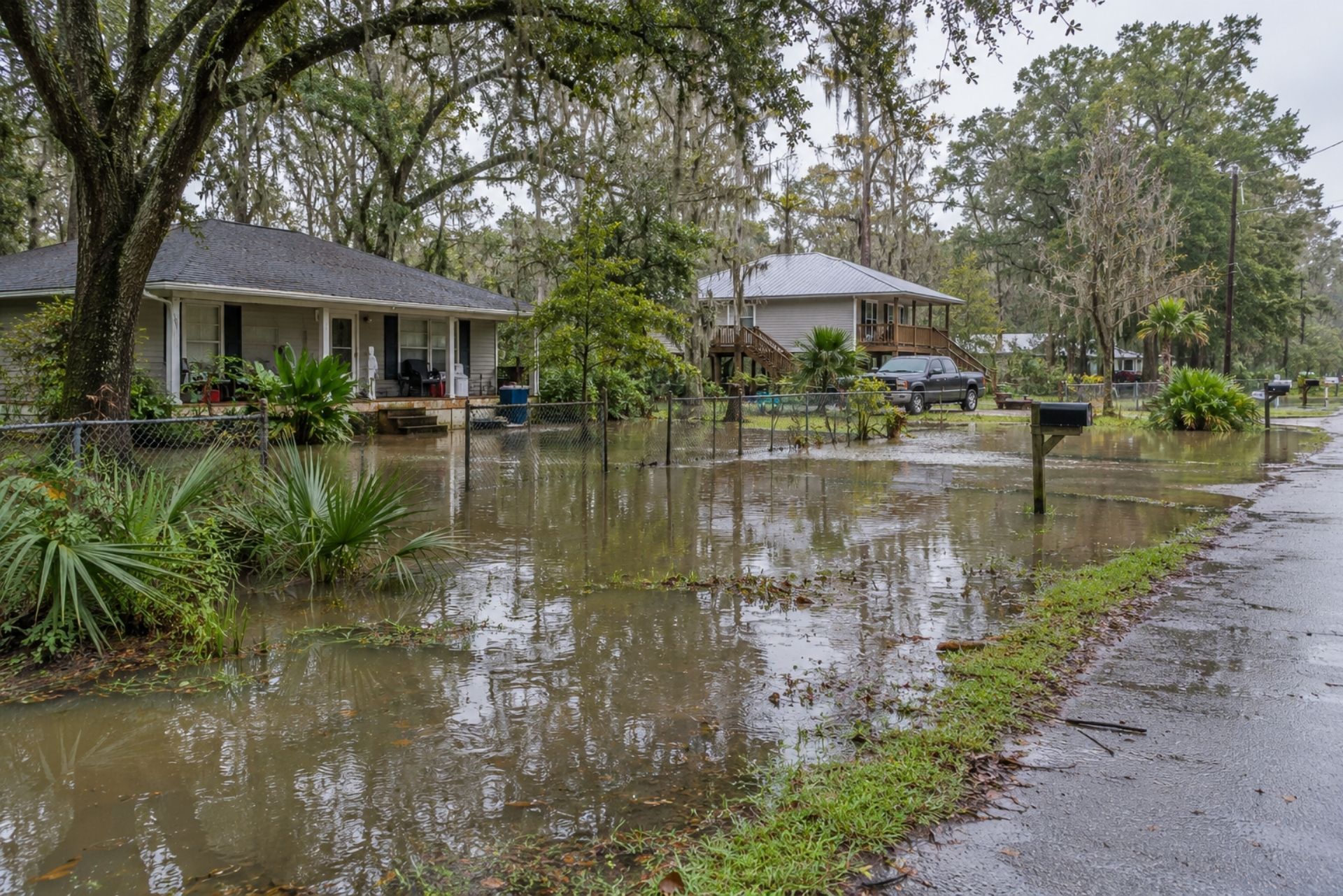
Ponchatoula flood insurance matters because much of the city sits on low ground that drains toward Lake Maurepas and Manchac. Heavy rain can push Selsers Creek and Ponchatoula Creek over their banks. Tropical systems can also drive surge through the pass. An Elevation Certificate may help show your home's true risk and affect what you pay.
Most homeowners here learn their flood risk the hard way, usually from a neighbor whose slab took on water during a storm that "wasn't supposed to be a big deal." Flooding in Tangipahoa Parish rarely follows the tidy lines drawn on a map. Water can come from the sky, from the creeks or from the lake, and sometimes from all three in the same week. Knowing which threat applies to your street is the first step toward buying coverage that works when you file a claim.
Understanding Ponchatoula Flood Risks: Low Ground and Lake Maurepas
Drive south from downtown Ponchatoula toward Manchac and the ground drops almost without you noticing. A few feet of elevation is the difference between a yard that drains overnight and one that holds standing water for days. Neighborhoods closest to the Lake Maurepas basin sit only slightly above the water. When the lake rises, there is nowhere for local runoff to go.
Researchers studying the area describe this as backwater flooding. When Lake Maurepas rises, the higher water blocks drainage from Selsers and Ponchatoula Creeks, and the water backs up into the southern low-lying parts of town. Your house can flood even if it never rained hard on your block.
The marsh is also changing. Scientists monitoring the corridor found that salinity in Pass Manchac can reach 2 ppt during fall months, a sign of saltwater intrusion. That same research treats salinity markers in the Maurepas basin as indicators of how exposed the Manchac corridor is to coastal surge. Shoreline erosion is a concern too. A 650-linear-foot shoreline protection project on the western side of Pass Manchac was scheduled for early 2026 to protect local infrastructure.
On this page
Aubert Insurance Agency is a local, independent agency, licensed to serve individuals and businesses across Louisiana, Mississippi, Florida and Texas.
We serve clients from our offices in Covington and Slidell and throughout St. Tammany Parish — working with dozens of carriers and wholesale markets to help homeowners, drivers, contractors, restaurant owners, property investors, auto shops, professional practices and many other personal and commercial clients find coverage that fits.
Licensed in Louisiana #3661 · Mississippi #15039075 · Florida #W0772236 · Texas #2381820
Understanding the Named Storm Deductible
A named storm deductible works differently than the flat $500 or $1,000 deductible on your regular claims. In Louisiana, it's often calculated as 2% to 5% of the insured value of your personal property. On a policy with $40,000 in contents coverage, a 5% deductible means the first $2,000 of a hurricane loss is yours.
There's some good news in state law. Louisiana's one-deductible-per-year rule (La. R.S. 22:1337) means you generally pay the named storm deductible only once per calendar year, even if two storms hit your rental. Ask your agent to show you that deductible in dollars, not just a percentage, so you can set aside the right amount in an emergency fund.
Selsers Creek and Ponchatoula Creek Overflow Risks
You do not need a named storm for these creeks to cause trouble. A slow-moving summer system or a stalled spring front can drop several inches of rain in an afternoon. Selsers Creek and Ponchatoula Creek fill fast, and homes and businesses along their banks feel it first.
Here is the claim pattern we see too often. A homeowner outside the high-risk zone skips flood coverage because the lender did not require it. Then a rain event overwhelms the creek, water crosses the yard and gets into the house, and the homeowners policy denies the claim. Standard homeowners policies typically exclude flood, and many people do not find that out until they file.
Business owners face their own gap. A restaurant or shop along Highway 22 may have commercial property coverage. That policy usually excludes rising water, and lost income during cleanup is usually excluded too.
A few signs your property carries creek overflow risk:
- Standing water after ordinary storms: If your yard ponds after a routine afternoon storm, it will do worse in a heavy event.
- Proximity to drainage channels: Lots backing up to ditches that feed the creeks get water early.
- Neighborhood history: Ask longtime neighbors where the water reached in past floods. Their memory is often more accurate than the map.
- Slab-on-grade construction: Homes built at grade have little margin before water reaches the floor.
With no lender to satisfy, the decision is yours, and so is the entire loss. A total rebuild in this parish runs well into six figures.
Homeowners who own outright
Your lender requires coverage at least equal to the loan, and will buy a policy on your behalf at your expense if yours lapses.
Homeowners with a mortgage
Being named as a certificate holder just means someone receives proof. Being named as an additional insured means your policy may actually defend and pay for that party if they're sued because of your work. General contractors, developers, and property managers ask for this because they get pulled into lawsuits over subcontractor mistakes constantly.
Read the contract language closely. Some agreements require "primary and noncontributory" wording or completed operations coverage for the additional insured, which needs specific endorsements. Many contractors sign a subcontract agreeing to these terms without checking whether their policy includes them. If a claim comes in and the endorsement isn't there, you may be in breach of contract on top of facing the lawsuit.
How Storm Surge Pushed Through the Pass Affects Local Property
Pass Manchac is the narrow channel connecting Lake Pontchartrain to Lake Maurepas. During a tropical system, it acts as a funnel. Research on the area identifies the pass as the primary conduit for storm surge entering Lake Maurepas, with surge heights of 2 to 4 feet recorded.
Wind direction drives this. As a storm approaches the Gulf coast, sustained winds from the east and south pile water into Lake Pontchartrain and push it west through the pass. Lake Maurepas rises quickly, and the southern parts of Ponchatoula feel it within hours. One study observed that east winds create a stacking effect in residential subdivisions that can last even after local rain stops.
That timing catches people off guard. The sky clears, the rain gauge stops climbing, and then the water keeps rising for another day because the lake has not let go. This is also why buying coverage at the last minute fails. NFIP policies typically carry a 30-day waiting period before coverage takes effect. If a storm is already in the Gulf, it is usually too late.
The roof
Age, material and shape drive the wind rate more than any other factor. A fortified roof designation opens markets that would otherwise decline the house.
Evaluating Wind and Tree Exposure Risks
Pine and oak trees are part of why people love living in the Pearl River area. They're also a leading cause of roof claims after tropical storms and severe thunderstorms. A single limb through a roof can open the house to water damage that runs far beyond the cost of the roof repair.
Carriers have noticed. In 2026, more insurers are making trimming of limbs that touch or hang over a roof a condition of renewal. A drive-by or aerial inspection may flag overhanging branches, and you could receive a notice giving you a deadline to fix it. Ignoring that letter can lead to nonrenewal, which makes finding new coverage harder.
The roof itself is the other half of the wind picture. Louisiana offers incentives for stronger roofs, and the state's wind mitigation program details explain how certain construction features can lower your premium. Beginning January 1, 2027, Louisiana insurers must apply a premium reduction of 16% to 49% to the hurricane portion for homes with a certified FORTIFIED roof. If you're planning a roof replacement anyway, it may make sense to price out FORTIFIED certification at the same time.
Also review your named storm or wind deductible. In this part of Louisiana, it's often a percentage of the dwelling limit rather than a flat dollar amount, so a 5% deductible on a $250,000 home means $12,500 out of pocket.
Your belongings
Personal property covers furniture, clothing, tools and electronics. Jewellery, firearms and silver carry low internal caps, so we schedule those items separately when they are worth more than the cap.
Farm Equipment and Machinery Protection
Tractors, bush hogs, UTVs, and zero-turn mowers are where a lot of Pearl River landowners find gaps. Personal property coverage on a homeowners policy may cover some yard equipment, but it often limits or excludes motorized vehicles and items used for farming or business purposes.
Options depend on how you use the equipment:
- Hobby or property maintenance use: An endorsement or scheduled item on the homeowners policy may work.
- Small-scale farming or hay production: A farm or ranch policy, or an inland marine/equipment floater, typically fits better.
- Off-road vehicles like UTVs: These often need their own policy, especially if driven off your property.
Keep serial numbers and photos of every machine. Theft of tractors and trailers from rural lots is a real claim type, and documentation speeds up recovery.
The Role of Elevation Certificates in Rating Your Policy
An Elevation Certificate is a form completed by a licensed surveyor or engineer. It records your building's elevations, including the height of the lowest floor, and compares them to the Base Flood Elevation for your area. The Base Flood Elevation is the level floodwater is expected to reach in a flood with a 1% annual chance. If your lowest floor sits above it, carriers may see your home as a lower risk.
Under FEMA's Risk Rating 2.0, the NFIP no longer requires an Elevation Certificate to issue a quote. The program estimates your elevation with data and modeling. Satellite and modeling estimates are not always accurate for a specific house, especially raised homes or properties on fill. If your certificate shows your first floor is higher than the estimate, it may lower your premium.
Private carriers use elevation data too, and some may rate more favorably with a strong certificate in hand. A few practical tips:
- Check for an existing certificate. Previous owners, your builder or the parish permit office may already have one on file.
- Compare before you pay for a new survey. An agent can quote with and without the certificate data to see whether a new survey is worth the cost.
- Update after improvements. If you raised your home, filled the lot or moved equipment up, a new certificate may reflect that lower risk.
With no lender to satisfy, the decision is yours, and so is the entire loss. A total rebuild in this parish runs well into six figures.
Comparing NFIP and Private Flood Insurance Options
Many Ponchatoula homeowners are on what FEMA calls a glide path. Under Risk Rating 2.0, premiums for some existing policies rise each year, capped at 18% annually, until they reach the full-risk rate. If your renewal notice keeps climbing, that is likely why. It is also why comparing private flood options has become worth the time for many households in Tangipahoa Parish.
The NFIP is the federal program, and its policies follow the same structure no matter which company services them. Private flood carriers set their own rates and policy language. That may mean higher limits or extra features, but terms vary, so read the contract carefully. Neither option is right for everyone. The right fit depends on your elevation, your home's value and your lender's requirements.
Coverage Limits and Features Comparison
| Feature | NFIP | Private Flood (varies by carrier) |
|---|---|---|
| Building coverage limit | Up to $250,000 (residential) | May offer higher limits |
| Contents coverage limit | Up to $100,000 | May offer higher limits |
| Waiting period | Typically 30 days | Often shorter, varies by carrier |
| Loss of use / living expenses | Not included | May be included |
| Basement contents | Very limited | May be broader |
| Elevation Certificate | Optional, may lower premium | May be requested for rating |
| Rate increases | Glide path, capped at 18% per year | Set by carrier at renewal |
One thing to keep in mind: if you leave the NFIP for a private policy and later want to return, ask how that affects any rating history before you switch. The conversation takes ten minutes and can prevent a costly surprise.
The roof
Age, material and shape drive the wind rate more than any other factor. A fortified roof designation opens markets that would otherwise decline the house.
Evaluating Wind and Tree Exposure Risks
Pine and oak trees are part of why people love living in the Pearl River area. They're also a leading cause of roof claims after tropical storms and severe thunderstorms. A single limb through a roof can open the house to water damage that runs far beyond the cost of the roof repair.
Carriers have noticed. In 2026, more insurers are making trimming of limbs that touch or hang over a roof a condition of renewal. A drive-by or aerial inspection may flag overhanging branches, and you could receive a notice giving you a deadline to fix it. Ignoring that letter can lead to nonrenewal, which makes finding new coverage harder.
The roof itself is the other half of the wind picture. Louisiana offers incentives for stronger roofs, and the state's wind mitigation program details explain how certain construction features can lower your premium. Beginning January 1, 2027, Louisiana insurers must apply a premium reduction of 16% to 49% to the hurricane portion for homes with a certified FORTIFIED roof. If you're planning a roof replacement anyway, it may make sense to price out FORTIFIED certification at the same time.
Also review your named storm or wind deductible. In this part of Louisiana, it's often a percentage of the dwelling limit rather than a flat dollar amount, so a 5% deductible on a $250,000 home means $12,500 out of pocket.
Your belongings
Personal property covers furniture, clothing, tools and electronics. Jewellery, firearms and silver carry low internal caps, so we schedule those items separately when they are worth more than the cap.
Farm Equipment and Machinery Protection
Tractors, bush hogs, UTVs, and zero-turn mowers are where a lot of Pearl River landowners find gaps. Personal property coverage on a homeowners policy may cover some yard equipment, but it often limits or excludes motorized vehicles and items used for farming or business purposes.
Options depend on how you use the equipment:
- Hobby or property maintenance use: An endorsement or scheduled item on the homeowners policy may work.
- Small-scale farming or hay production: A farm or ranch policy, or an inland marine/equipment floater, typically fits better.
- Off-road vehicles like UTVs: These often need their own policy, especially if driven off your property.
Keep serial numbers and photos of every machine. Theft of tractors and trailers from rural lots is a real claim type, and documentation speeds up recovery.
Seeing the coverages side by side makes the value of extended protection easier to judge.
Why Did I Get a Letter from My Lender?
Federally backed and federally regulated lenders must require flood insurance on properties in Special Flood Hazard Areas. When a remapping places your home inside one of those areas, the lender is obligated to notify you. The letter will typically ask you to show proof of flood coverage within a set period, often 45 days.
Do not ignore it. If you do nothing, the lender can buy force-placed flood insurance on your behalf and add the cost to your escrow. Force-placed coverage is usually more expensive and generally protects the lender's interest in the structure, not your belongings.
Comparing Coverage Levels for Ponchatoula Drivers
Comparing Coverage Levels for Ponchatoula Drivers
Frequently Asked Questions About Ponchatoula Flood Coverage
Does my homeowners policy cover flooding from the creeks? Usually not. Standard homeowners policies typically exclude flood damage from rising water, so you need a separate flood policy.
Do I need flood insurance if I'm not in a high-risk zone? Your lender may not require it, but many flood claims come from properties outside high-risk zones. Creek overflow and backwater from Lake Maurepas do not follow map boundaries.
How long does it take for a flood policy to start? NFIP policies typically have a 30-day waiting period. Some private policies may start sooner, so buy well before hurricane season peaks.
Is an Elevation Certificate required to get a quote? Not for NFIP quotes under Risk Rating 2.0. A favorable certificate may still lower your premium if it shows your floor is higher than the estimated elevation.
Why does my flood premium go up every year? You may be on FEMA's glide path, where increases are capped at 18% per year until you reach the full-risk rate. Comparing private options may help.
Can renters in Ponchatoula buy flood coverage? Yes. Renters can buy contents-only flood coverage to protect furniture, clothing and electronics, since the landlord's policy covers only the building.
With no lender to satisfy, the decision is yours, and so is the entire loss. A total rebuild in this parish runs well into six figures.
Protecting Your Assets Before the Next Storm
Flood risk in Ponchatoula comes from several directions. Low ground drains slowly toward Lake Maurepas and Manchac. Selsers Creek and Ponchatoula Creek can overflow during ordinary heavy rain. When east and south winds push surge through Pass Manchac, the lake can rise for hours after the rain stops. Your exposure depends on where your home sits and how high its floor is. A good policy is built around both of those facts.
Before a storm enters the Gulf, pull out your flood zone information and any Elevation Certificate you have. Then review them with an agent who will explain what the numbers mean. Aubert Insurance Agency has served Louisiana families since 1910. As an independent agency, we compare NFIP and private flood options from multiple carriers in one place. We also walk you through what your policy covers and what it excludes, so you understand the contract before you need it.
The 30-day waiting period means the time to act is a calm, sunny week, not when the cone is pointed at the coast. Start a Quote today, and let us show you how your elevation and location shape your flood coverage options.

About the Author
Kyle Beerbohm
President
We've been independent since 1910, and four generations of local ownership have kept us that way. We're one of the oldest agencies in St. Tammany Parish and the fourth oldest business in the City of Covington. I treat that history as a responsibility rather than a plaque on the wall. My job is to keep us answering to the families and business owners who walk through our doors, and to keep serving this parish for another hundred years.
Louisiana Insurance Questions, Answered
Questions clients ask us
Short, plain answers to what people ask before they call. Anything else, phone the office and ask.
What does an independent insurance agency do?
We represent you, not one insurance company. We gather your information once, then compare coverage and price across the carriers we hold contracts with. You get choices, and one agent handles the paperwork.
Which types of insurance does Aubert offer?
We write 13 personal lines, including home, auto, flood, boat, and life. We write 15 commercial lines, including business owners policies, general liability, workers compensation, and commercial property.
Do I need flood insurance in St. Tammany Parish?
Your homeowners policy excludes flood, and much of the Northshore has flooded outside mapped high-risk zones. Lenders require it inside those zones. We check your flood zone and quote NFIP and private options.
Which states are you licensed in?
We hold licenses in Louisiana, Mississippi, Florida, and Texas. License numbers appear in the footer of every page on this site.
How do you find me a competitive rate?
We take your details once and market them to the carriers and wholesale brokers that fit your risk. We compare the offers, explain the differences in coverage, and recommend the strongest fit.
How do I file a claim or request a certificate?
Call the office or use the Client Center on this site. We report the claim, follow the adjuster, and send certificates of insurance to whoever needs them.

Personal Insurance in Louisiana
Coverage for your home, your vehicles, and your family
Thirteen personal lines sit under one roof. Start with the coverage you need most, and we price it across our markets.
Home Insurance
Protect your house, its contents, and your liability with a policy priced across many Louisiana homeowners carriers.
Car Insurance
Cover every driver and vehicle in your household, and compare limits and deductibles side by side before you buy.
Flood Insurance
Standard home policies exclude flood. We write NFIP and private flood coverage for St. Tammany Parish properties.
Umbrella Insurance
Add a layer of liability above your home and auto limits, so one serious claim never reaches your savings.
Boat Insurance
Cover your hull, motor, trailer, and liability on the lake, the river, and the Gulf, wherever you launch.
Life Insurance
Replace your income for the people who depend on it, with term and permanent options we quote across carriers.
Business Insurance in Louisiana
Coverage for the business you built
Fifteen commercial lines, written for the payrolls, fleets, and buildings that Louisiana carriers ask hard questions about.

Contractors Insurance
General contractors, trade contractors and specialty crews. We cover the liability, tools, vehicles and workers your jobs depend on.

Business Owners (BOP)
One policy bundling property and liability for a small business. Straightforward cover for the building, the contents and the risk.

Professional Liability
Protection when your advice or professional work is challenged. A staple of any commercial package for a service business.

Commercial Property
Landlords and commercial real estate investors. We insure the building, the habitation risk and the income it produces.

Workers Compensation
Protecting your employees protects your business. Medical costs and lost wages covered when someone is hurt on the job.

Commercial Auto
Trucks, vans and fleets. We shop a wide range of commercial auto markets to match your vehicles and your drivers.
Business Insurance by Industry
We protect hundreds of businesses of all shapes and sizes
We know the exposures, the contract language, and the markets that write these trades on the Northshore.

Residential General Contractors
Builders risk, general liability, and comp for homebuilders and remodelers working across St. Tammany Parish.

Trade Contractors
Plumbers, electricians, roofers, and painters get liability, tools, and auto coverage that satisfies job requirements.

Restaurants
Property, liquor liability, spoilage, and comp for kitchens, bars, and cafés, including Louisiana association programs.
5-Star Rated by St. Tammany Clients
What Our Clients Say
Neighbours, business owners, and families across Covington and Slidell tell the story better than we can.
Insurance Tips & Local News
Insurance tips for Louisiana homes and businesses
Practical reading on flood zones, hurricane deductibles, and the coverage questions local business owners raise.










Request Your Free Insurance Quote
Tell us what you need covered
Send the form or call the office. A licensed agent in Covington or Slidell answers you directly.
614 E. Boston St., Covington, LA 70433. (985) 892-3101
58418 Tyler Drive, Slidell, LA 70461 · (985) 641-0520
Visit
614 E. Boston St., Covington, LA 70433 — Get Directions
58418 Tyler Drive, Slidell, LA 70461 — Get Directions


