













Covington & Slidell Independent Insurance Agents
Louisiana remodelers working on home improvement jobs between $7,500 and $50,000 typically need a home improvement registration, which requires proof of general liability and workers' compensation coverage. Beyond that, the real exposures are damage inside occupied homes, water and mold surprises after demolition, and stolen tools, each needing coverage that a basic policy may not include.
Picture a Tuesday morning in Covington. You're pulling up vinyl in a 1970s ranch house while the homeowner works from the kitchen table and the kids' backpacks sit by the door. By lunch you've found soft subfloor, a slow leak behind the tub and a dark stain climbing the wall cavity. By evening, someone has emptied your truck box outside a supply house in Slidell.
None of that is unusual for remodeling work in St. Tammany Parish. It is exactly why insurance for Louisiana remodeling contractors looks different from coverage for new construction crews. Remodelers work inside lived-in homes, open up walls nobody has seen in decades and haul thousands of dollars of gear from job to job. Each of those habits creates a claim scenario that a generic contractor policy may not handle the way you'd expect.
Louisiana Home Improvement Registration and Insurance Proof
The Louisiana State Licensing Board for Contractors (LSLBC) requires a home improvement registration for residential remodeling projects valued between $7,500 and $50,000. Above that range, you're generally looking at a residential building license instead. Kitchens, bath remodels, additions under the threshold, flooring and window replacements commonly fall into the registration bracket.
Registration isn't just paperwork and a fee. The board requires proof of general liability insurance and workers' compensation coverage before it issues or renews your registration. If you have no employees, ask about the board's exemption process rather than assuming you're off the hook.
The rules have also tightened. Act 757 requires licensees to show proof of insurance for at least six months covering all of their licensed scopes of work. That matters if you've been in the habit of buying a short-term policy just to clear the board, then letting it lapse.
Enforcement is getting sharper too. New Louisiana laws taking effect in 2026 bring stricter enforcement and penalties for contractor compliance. A lapse in coverage now carries more risk than it did a few years ago.

On this page
Aubert Insurance Agency is a local, independent agency, licensed to serve individuals and businesses across Louisiana, Mississippi, Florida and Texas.
We serve clients from our offices in Covington and Slidell and throughout St. Tammany Parish — working with dozens of carriers and wholesale markets to help homeowners, drivers, contractors, restaurant owners, property investors, auto shops, professional practices and many other personal and commercial clients find coverage that fits.
Licensed in Louisiana #3661 · Mississippi #15039075 · Florida #W0772236 · Texas #2381820
Many St. Tammany families end up with both: standalone coverage for the land, plus an umbrella over the home and vehicles.
Comparison: Standalone Liability vs. Umbrella Coverage
Understanding the Named Storm Deductible
A named storm deductible works differently than the flat $500 or $1,000 deductible on your regular claims. In Louisiana, it's often calculated as 2% to 5% of the insured value of your personal property. On a policy with $40,000 in contents coverage, a 5% deductible means the first $2,000 of a hurricane loss is yours.
There's some good news in state law. Louisiana's one-deductible-per-year rule (La. R.S. 22:1337) means you generally pay the named storm deductible only once per calendar year, even if two storms hit your rental. Ask your agent to show you that deductible in dollars, not just a percentage, so you can set aside the right amount in an emergency fund.
| Factor | Standalone Liability | Umbrella Policy |
|---|---|---|
| Underlying policy required | No | Yes, home and auto typically |
| When it pays | First dollar of a covered claim | After underlying limits run out |
| Typical use | Vacant land, hunting tracts, specific risks | Broad extra protection across policies |
| Cost structure | Priced by acreage, use, and limit | Priced by number of homes, cars, drivers |
| Scope | Narrow, tied to named property or risk | Wide, follows underlying coverage |
| Common limits | $300,000 to $1 million | $1 million and up |
People use the two terms as if they mean the same thing. They do not.
A true umbrella policy may provide broader coverage than the policies below it. In some cases it can "drop down" to cover a claim the primary policy excludes, usually subject to a self-insured retention, often $10,000 or $25,000. An excess policy is typically "follow form," which means it copies the terms and exclusions of the underlying policy and simply adds more limit.
Here is why that matters. If your general liability policy excludes a certain type of claim, a follow-form excess policy will generally exclude it as well. Higher limits do not repair a weak foundation. We go through the endorsements on each layer with clients before binding, because the wording on page 14 of the policy is what decides whether a claim gets paid.
Managing Risks When Working in Occupied Homes
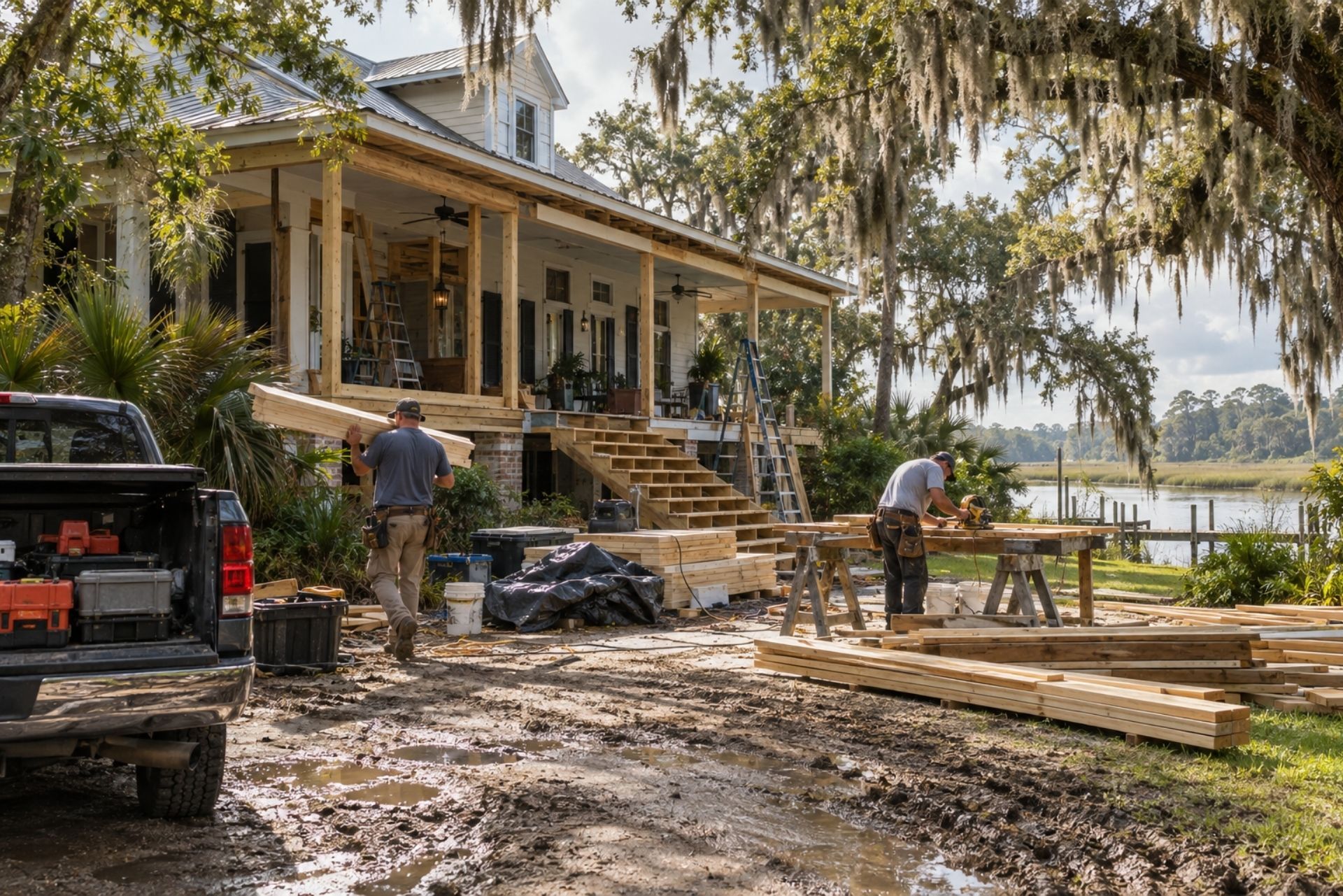
Working in an empty spec house is one thing. Working around a family, their pets, their furniture and their grandmother's china cabinet is another. Occupied homes multiply your third-party exposure, and that's the core reason remodeling insurance deserves more attention than a basic certificate.
Some claims we see contractors underestimate:
- Trip-and-fall injuries: A homeowner or visitor stumbles over a cord, an open floor joist or a pile of debris.
- Damage to belongings: Drywall dust ruins electronics, or a dropped tool cracks a granite countertop you didn't install.
- Accidental utility damage: A nail through a water line or a cut wire that fries appliances.
- Fire from hot work: Soldering pipe or using heat tools near old framing.
General liability typically responds to third-party bodily injury and property damage. The catch is the fine print. Many policies carry a "your work" exclusion or a "care, custody or control" limitation, which may restrict coverage for the specific part of the property you're actively working on. For residential remodelers, endorsements can matter as much as the base policy. Look for additional insured endorsements for homeowners or general contractors who demand them, and for language that clarifies coverage for property you're handling.
Read your exclusions before the job, not after the claim. A good agent walks you through them line by line.
With no lender to satisfy, the decision is yours, and so is the entire loss. A total rebuild in this parish runs well into six figures.
Homeowners who own outright
Your lender requires coverage at least equal to the loan, and will buy a policy on your behalf at your expense if yours lapses.
Homeowners with a mortgage
How Sublimits Affect Overtime and Minimum Wage Disputes
Homeowners with a mortgage
Your lender requires coverage at least equal to the loan, and will buy a policy on your behalf at your expense if yours lapses.
Water and Mold Claims After the Tear-Out
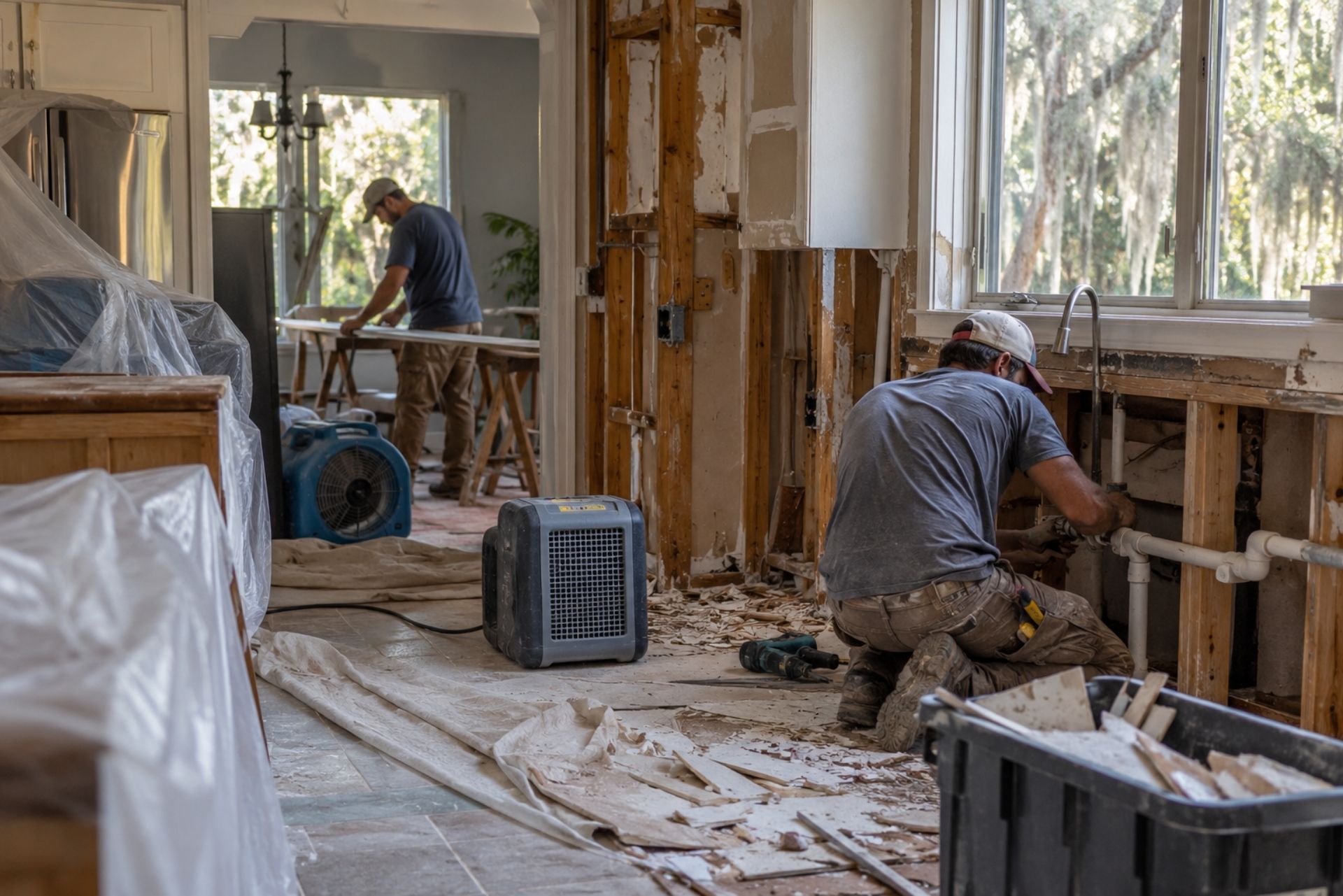
Demolition is where remodeling contractors in Louisiana inherit problems. Our humidity, older housing stock and storm history mean that pulling a vanity or opening a shower wall often reveals water damage that's been building for years. The trouble starts when the homeowner later blames you for it.
Two kinds of claims tend to follow tear-out work. The first is pre-existing damage you uncover. If you don't document it, it can easily become "the contractor caused this" six months later. The second is damage you actually cause: a fitting that weeps behind new tile, or a temporary tarp that fails during an afternoon thunderstorm.
Here's where a lot of contractors get caught. Many standard general liability policies include a fungi or mold exclusion, which may deny claims for mold growth even when the underlying water event was covered. A leak you caused might get paid while the mold remediation bill, often the larger number, does not. Limited mold coverage or a contractor's pollution liability policy may help close that gap, depending on the carrier.
Licensing matters here too. A separate mold remediation license is required for mold-related work, including removal or treatment, valued over $7,500. If you find mold mid-project, know where your scope ends.
Practical habits that protect you
Photograph every wall cavity and subfloor the moment it's exposed. Get written sign-off from the homeowner on hidden conditions before you proceed. Then put any change in scope in writing.

The roof
Age, material and shape drive the wind rate more than any other factor. A fortified roof designation opens markets that would otherwise decline the house.
| Scenario | Dwelling limit | All-other-perils deductible | Named-storm deductible |
|---|---|---|---|
| Newer build, inland St. Tammany | $350,000 | $1,000 | 2% |
| Newer build, higher wind zone | $350,000 | $1,000 | 5% |
| Older home, updated roof | $275,000 | $2,500 | 2% |
| Older home, original roof | $275,000 | $2,500 | 5% |
| Fortified roof designation | $400,000 | $1,000 | 2% |
| Rebuilt after a prior claim | $400,000 | $2,500 | 5% |
| Bundled with auto | $350,000 | $1,000 | 2% |
Exact terms vary by carrier, so treat this as a starting point for comparing quotes.
Protecting Your Tools in the Truck
This one surprises newer contractors more than anything else: general liability does not cover your own tools. If your compressor, saws and laser level disappear from your truck overnight or walk off a job site, your GL policy typically won't pay a dime. It covers damage you do to others, not losses to your own equipment.
Your commercial auto policy usually won't help either. Auto coverage protects the vehicle, and tools stored in or on it are generally excluded. That's the gap Inland Marine coverage is built to fill.
Inland Marine, sometimes written as a tools and equipment floater, typically covers property that moves from place to place. That includes tools in your truck, at a job site or in transit. Policies may be written on a scheduled basis, listing high-value items individually, or on a blanket basis for smaller tools up to a per-item limit. Ask whether coverage is replacement cost or actual cash value, since depreciation can shrink a payout on a five-year-old saw.
A related option is an installation floater, another form of Inland Marine. It can protect high-value materials like custom cabinetry or HVAC units from the time they're loaded until they're installed. If you've ever had a $9,000 cabinet order sitting in a homeowner's garage for a week, you understand why.
Homeowners who own outright
With no lender to satisfy, the decision is yours, and so is the entire loss. A total rebuild in this parish runs well into six figures.
Homeowners who own outright
With no lender to satisfy, the decision is yours, and so is the entire loss. A total rebuild in this parish runs well into six figures.
Homeowners who own outright
With no lender to satisfy, the decision is yours, and so is the entire loss. A total rebuild in this parish runs well into six figures.
Bonding capacity is the total amount of work a surety will back, usually expressed as a single-job limit and an aggregate limit. A contractor might qualify for $500,000 on any one project and $1.5 million in total open work. Those numbers come from a careful review, not a formula pulled off a shelf.
The process has changed. Roughly 67% of surety carriers have digitized their processes as of 2026, and many use automated tools to issue smaller commercial bonds almost instantly. Larger contract bonds still get a human underwriter who digs into your file.
Underwriters in 2026 are also paying closer attention to mid-market contractors' project mix and labor management. They want to know whether you're taking on more than your crews can handle. A contractor who jumps from residential remodels to a municipal drainage job will face hard questions.
How Underwriters Set Bonding Capacity
Homeowners who own outright
With no lender to satisfy, the decision is yours, and so is the entire loss. A total rebuild in this parish runs well into six figures.
Homeowners who own outright
Comparing Louisiana Contractor Coverage Options
Each policy answers a different question. This chart shows how they line up for a typical St. Tammany remodeler.
| Coverage | What It Protects | Required for LA Registration? | Common Gaps |
|---|---|---|---|
| General Liability | Third-party injury and property damage | Yes | Your own tools, mold (often excluded), faulty workmanship |
| Workers' Compensation | Employee injuries and lost wages | Yes, if you have employees | Doesn't cover subcontractors without their own policy |
| Inland Marine (Tools) | Your tools and equipment, including in the truck | No | Wear and tear, unattended-vehicle conditions on some policies |
| Installation Floater | Materials before and during installation | No | Ends once the work is accepted |
| Contractor's Pollution / Mold | Mold and contamination claims | No, but may be required by some clients | Varies widely by carrier |
One mistake we see often involves subcontractors. If your tile setter doesn't carry workers' comp and gets hurt on your job, the claim can land on your policy at audit. Collect certificates from every sub, every year.
The roof
Age, material and shape drive the wind rate more than any other factor. A fortified roof designation opens markets that would otherwise decline the house.
Common Questions About Remodeling Insurance
Do I need insurance for small jobs? For projects under $7,500, Louisiana doesn't require a home improvement registration. Even so, a single water claim on a small bathroom job can exceed what the job paid, so most remodelers carry general liability regardless of job size.
What does a certificate of insurance show? A certificate lists your policies, carriers, coverage limits and effective dates. Homeowners and general contractors use it to confirm you're covered, though it doesn't change the policy's actual terms.
Will my GL policy cover a stolen tool trailer? Typically not. You'd need Inland Marine for the tools and commercial auto or a trailer endorsement for the trailer itself.
Does my policy cover mold if I caused the leak? It depends on your policy's fungi exclusion. Many standard policies limit or exclude mold, so ask your agent whether you have a mold sublimit or need separate coverage.
Can I list a homeowner as an additional insured? Usually yes, through an additional insured endorsement. Some carriers may charge for it or offer it as part of a contractor package.
What happens if my coverage lapses? With the six-month proof-of-insurance requirement and stricter 2026 enforcement, a lapse can put your registration at risk and leave you personally exposed for any claims during the gap.
Making the Right Choice for Your Business
Remodeling in Louisiana means meeting the board's insurance requirements, then thinking past them. Registration gets you in the door. Endorsements for occupied homes, clear answers about mold exclusions and Inland Marine for the gear in your truck are what keep a bad week from becoming a business-ending one.
Aubert Insurance Agency has served Covington and Slidell since 1910. As an independent agency, we compare options from multiple carriers and take time to explain what your policy covers and what it excludes, before you need to file a claim. We'll review your registration requirements, check your subcontractor exposure and point out gaps in a policy you already have.
Before you open your next wall, make sure your coverage fits the work you actually do. Start a Quote with Aubert Insurance Agency today, and walk onto your next job knowing what's protected.

About the Author
Kyle Beerbohm
President
We've been independent since 1910, and four generations of local ownership have kept us that way. We're one of the oldest agencies in St. Tammany Parish and the fourth oldest business in the City of Covington. I treat that history as a responsibility rather than a plaque on the wall. My job is to keep us answering to the families and business owners who walk through our doors, and to keep serving this parish for another hundred years.
Louisiana Insurance Questions, Answered
Questions clients ask us
Short, plain answers to what people ask before they call. Anything else, phone the office and ask.
What does an independent insurance agency do?
We represent you, not one insurance company. We gather your information once, then compare coverage and price across the carriers we hold contracts with. You get choices, and one agent handles the paperwork.
Which types of insurance does Aubert offer?
We write 13 personal lines, including home, auto, flood, boat, and life. We write 15 commercial lines, including business owners policies, general liability, workers compensation, and commercial property.
Do I need flood insurance in St. Tammany Parish?
Your homeowners policy excludes flood, and much of the Northshore has flooded outside mapped high-risk zones. Lenders require it inside those zones. We check your flood zone and quote NFIP and private options.
Which states are you licensed in?
We hold licenses in Louisiana, Mississippi, Florida, and Texas. License numbers appear in the footer of every page on this site.
How do you find me a competitive rate?
We take your details once and market them to the carriers and wholesale brokers that fit your risk. We compare the offers, explain the differences in coverage, and recommend the strongest fit.
How do I file a claim or request a certificate?
Call the office or use the Client Center on this site. We report the claim, follow the adjuster, and send certificates of insurance to whoever needs them.

Personal Insurance in Louisiana
Coverage for your home, your vehicles, and your family
Thirteen personal lines sit under one roof. Start with the coverage you need most, and we price it across our markets.
Home Insurance
Protect your house, its contents, and your liability with a policy priced across many Louisiana homeowners carriers.
Car Insurance
Cover every driver and vehicle in your household, and compare limits and deductibles side by side before you buy.
Flood Insurance
Standard home policies exclude flood. We write NFIP and private flood coverage for St. Tammany Parish properties.
Umbrella Insurance
Add a layer of liability above your home and auto limits, so one serious claim never reaches your savings.
Boat Insurance
Cover your hull, motor, trailer, and liability on the lake, the river, and the Gulf, wherever you launch.
Life Insurance
Replace your income for the people who depend on it, with term and permanent options we quote across carriers.
Business Insurance in Louisiana
Coverage for the business you built
Fifteen commercial lines, written for the payrolls, fleets, and buildings that Louisiana carriers ask hard questions about.
Contractors Insurance
General contractors, trade contractors and specialty crews. We cover the liability, tools, vehicles and workers your jobs depend on.
Business Owners (BOP)
One policy bundling property and liability for a small business. Straightforward cover for the building, the contents and the risk.
Professional Liability
Protection when your advice or professional work is challenged. A staple of any commercial package for a service business.
Commercial Property
Landlords and commercial real estate investors. We insure the building, the habitation risk and the income it produces.
Workers Compensation
Protecting your employees protects your business. Medical costs and lost wages covered when someone is hurt on the job.
Commercial Auto
Trucks, vans and fleets. We shop a wide range of commercial auto markets to match your vehicles and your drivers.
Business Insurance by Industry
We protect hundreds of businesses of all shapes and sizes
We know the exposures, the contract language, and the markets that write these trades on the Northshore.

General Contractors
Builders risk, general liability, and comp for homebuilders and remodelers working across St. Tammany Parish.

Plumber Insurance
Plumbers, electricians, roofers, and painters get liability, tools, and auto coverage that satisfies job requirements.

Restaurants
Property, liquor liability, spoilage, and comp for kitchens, bars, and cafés, including Louisiana association programs.
5-Star Rated by St. Tammany Clients
What Our Clients Say
Neighbours, business owners, and families across Covington and Slidell tell the story better than we can.


Insurance Tips & Local News
Insurance tips for Louisiana homes and businesses
Practical reading on flood zones, hurricane deductibles, and the coverage questions local business owners raise.
Request Your Free Insurance Quote
Tell us what you need covered
Send the form or call the office. A licensed agent in Covington or Slidell answers you directly.
614 E. Boston St., Covington, LA 70433. (985) 892-3101
58418 Tyler Drive, Slidell, LA 70461 · (985) 641-0520
Call
614 E. Boston St., Covington, LA 70433
58418 Tyler Drive, Slidell, LA 70461













