













Covington & Slidell Independent Insurance Agents
Covington home insurance needs closer attention than a standard policy. Homes in the St. John historic district may face material requirements on exterior repairs, tall pines add tree and wind claim risk, and raised or pier-built homes typically cost more to rebuild. Your coverage limits and deductibles should reflect all three.
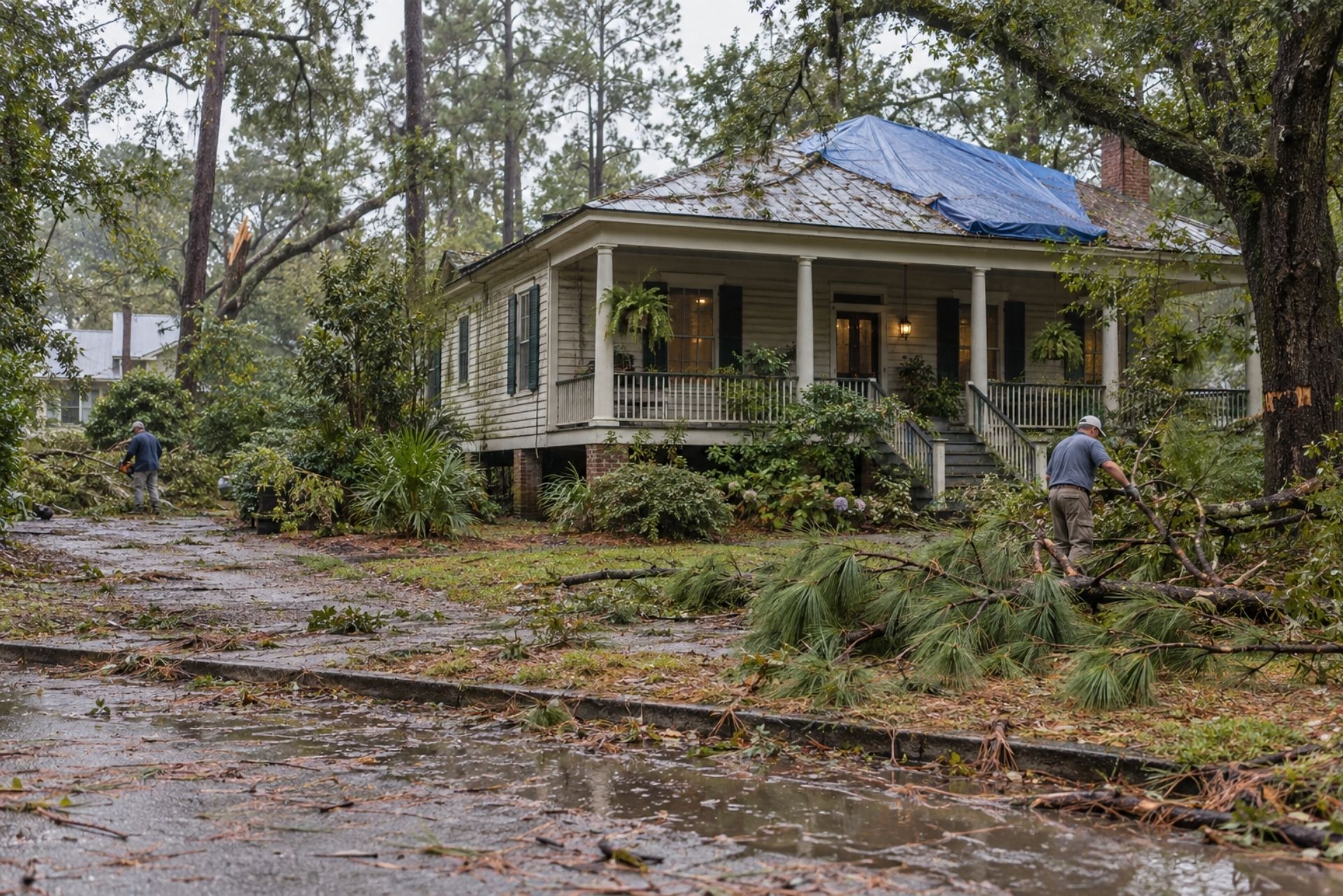
Picture a loblolly pine coming down across a 1920s cottage on a quiet street near the Boston Street corridor. The roof is crushed, the porch columns are split, and the city requires original-style materials on the repair. That one storm can expose every weak spot in a homeowners policy at once. Here is how to close those gaps before hurricane season does it for you.
Protecting Your Covington Home Under the Pines
Covington is a beautiful place to own a home, and much of that beauty creates insurance complexity. Mature pines and live oaks shade nearly every lot. Older neighborhoods hold cottages and Creole-influenced homes built long before modern codes. Many newer houses sit on raised slabs or piers because of the Bogue Falaya and Tchefuncte rivers.
Each of those features changes how a claim plays out. A tree strike tests your wind and debris coverage. A historic home tests whether your dwelling limit can pay for specialty materials. A raised foundation tests whether your replacement cost estimate includes the structure underneath the living space.
The mistake we see most often is a policy written as if the house were a generic suburban slab home. The premium looks fine until the claim arrives. Reviewing these four areas, historic standards, trees, named storm deductibles and rebuild costs, gives you a far clearer picture of what you actually own.

On this page
Aubert Insurance Agency is a local, independent agency, licensed to serve individuals and businesses across Louisiana, Mississippi, Florida and Texas.
We serve clients from our offices in Covington and Slidell and throughout St. Tammany Parish — working with dozens of carriers and wholesale markets to help homeowners, drivers, contractors, restaurant owners, property investors, auto shops, professional practices and many other personal and commercial clients find coverage that fits.
Licensed in Louisiana #3661 · Mississippi #15039075 · Florida #W0772236 · Texas #2381820
The jump from minimum limits to 100/300/100 often costs less than riders expect, because liability is typically priced per added layer rather than doubling with the limits. Ask for quotes at two or three levels side by side before you decide.
Here's a common scenario: you misjudge a curve and clip a late-model pickup, injuring the driver. A single ambulance ride, ER visit, and follow-up imaging can eat through $15,000 quickly. Anything above your limit can become your personal responsibility, which may put your savings, wages, or home at risk.
| Scenario | Dwelling limit | All-other-perils deductible | Named-storm deductible |
|---|---|---|---|
| Newer build, inland St. Tammany | $350,000 | $1,000 | 2% |
| Newer build, higher wind zone | $350,000 | $1,000 | 5% |
| Older home, updated roof | $275,000 | $2,500 | 2% |
| Older home, original roof | $275,000 | $2,500 | 5% |
| Fortified roof designation | $400,000 | $1,000 | 2% |
| Rebuilt after a prior claim | $400,000 | $2,500 | 5% |
| Bundled with auto | $350,000 | $1,000 | 2% |
Insuring Historic Cottages in the St. John District
Owning a cottage in Covington's historic district comes with rules that directly affect claim costs. The Covington Historic District Commission requires a Certificate of Appropriateness for any exterior material alterations, and recent cases on the commission's April 2026 agenda included balcony and fencing approvals. After a storm, that means you may not be able to swap wood siding for vinyl or replace true divided-light windows with stock units.
Matching materials and craftsmanship cost more, and repairs may take longer while you wait for approval. Here is what to check on your policy:
- Dwelling limit: Make sure it reflects specialty materials and skilled labor, not average construction cost per square foot.
- Ordinance or law coverage: This may help pay for upgrades required by current codes or local rules. Many policies include only a small percentage by default.
- Loss of use: Approval delays can stretch your time out of the house, so a thin additional living expense limit can run out quickly.
- Extended replacement cost: Some carriers typically offer an extra cushion above the dwelling limit, which helps when costs spike after a regional storm.
Keep photos of trim, windows, railings and siding details. Those images make it easier to prove what the original looked like.
With no lender to satisfy, the decision is yours, and so is the entire loss. A total rebuild in this parish runs well into six figures.
Homeowners who own outright
Your lender requires coverage at least equal to the loan, and will buy a policy on your behalf at your expense if yours lapses.
Homeowners with a mortgage
| Coverage Area | State Minimum | Common Higher Option | Stronger Option |
|---|---|---|---|
| Injury, one person | $15,000 | $50,000 | $100,000 |
| Injury, per accident | $30,000 | $100,000 | $300,000 |
| Property damage | $25,000 | $50,000 | $100,000 |
| Who it fits | Legal compliance only | Riders with modest assets | Homeowners, families, higher earners |
Here's a common scenario: you misjudge a curve and clip a late-model pickup, injuring the driver. A single ambulance ride, ER visit, and follow-up imaging can eat through $15,000 quickly. Anything above your limit can become your personal responsibility, which may put your savings, wages, or home at risk.
Minimum Coverage vs. Actual Protection Needs
The jump from minimum limits to 100/300/100 often costs less than riders expect, because liability is typically priced per added layer rather than doubling with the limits. Ask for quotes at two or three levels side by side before you decide.
Managing Tree and Wind Claims Under the Pines
Tree claims are probably the most common storm loss in western St. Tammany. The rule of thumb: if a tree falls on your house or another covered structure during a covered peril like wind, your policy typically responds to the structural damage and may pay a limited amount for debris removal. If a tree falls in your yard and hits nothing, many policies pay little or nothing to haul it away.
Neighbor trees cause the most confusion. When a healthy tree from next door lands on your roof during a storm, your own policy usually handles the claim, because nobody was negligent. The picture changes if that tree was documented as dead or diseased before the storm and the owner failed to act. In that case, the neighbor may be held liable for the damage to your property.
That works both ways. If you have a leaning pine or one showing beetle damage, have an arborist look at it and keep the paperwork. Removing a hazardous tree costs far less than a liability claim, and some carriers may decline to renew a policy if inspection photos show large dead trees over the roof.
Also check whether wind damage falls under your main policy or a separate wind arrangement. Some Louisiana homes split coverage, and that affects which deductible applies.

The jump from minimum limits to 100/300/100 often costs less than riders expect, because liability is typically priced per added layer rather than doubling with the limits. Ask for quotes at two or three levels side by side before you decide.
One tip: keep a dated list of serial numbers and photos of your tools. Claims with documentation move much faster than claims built on memory.
| Feature | Commercial Property | Inland Marine (Tool Floater) |
|---|---|---|
| Where it applies | Your fixed shop location | Jobsites, truck, in transit |
| Typical items | Stationary machines, inventory, building | Portable saws, nailers, hand tools |
| Theft from vehicle | Usually not covered | Often covered, with conditions |
| Fire or storm at shop | Typically covered | May be covered if tools are there |
| Who needs it | Carpenters with a shop | Nearly every working carpenter |
| Deductible Type | How It Works | Example on $400,000 Dwelling | Typically Applies To |
|---|---|---|---|
| All other perils (flat) | Fixed dollar amount | $2,500 | Fire, theft, plumbing leaks |
| Named storm (2%) | Percentage of dwelling limit | $8,000 | Damage from a named tropical system |
| Named storm (5%) | Percentage of dwelling limit | $20,000 | Damage from a named tropical system |
| Wind/hail (flat) | Fixed amount for non-named wind | Varies by carrier | Thunderstorms, straight-line winds |
How Deductible Types Compare
Understanding Named Storm Deductibles in Louisiana
Most Covington policies carry two deductibles. One is a flat dollar amount for everyday losses like a kitchen fire or burst pipe. The other applies when damage comes from a named storm or hurricane, and it is usually a percentage of your dwelling coverage rather than a fixed figure.
That percentage catches people off guard. On a home insured for $400,000, a 5% named storm deductible means you cover the first $20,000 yourself. A tree through the roof during a tropical storm might land under that amount entirely.
Wording matters too. Some policies trigger the named storm deductible only once the National Weather Service names a system, while others use hurricane watches or warnings, and time windows before and after the storm vary by carrier. Read the definition, not just the percentage.
There is good news on the premium side. Under Regulation 136, insurers must offer reductions of 16% to 49% on the hurricane portion of premiums for homes with a Fortified designation. If you plan a roof replacement, building to that standard may lower your costs for years.
How Deductible Types Compare
| Deductible Type | How It Works | Example on $400,000 Dwelling | Typically Applies To |
|---|---|---|---|
| All other perils (flat) | Fixed dollar amount | $2,500 | Fire, theft, plumbing leaks |
| Named storm (2%) | Percentage of dwelling limit | $8,000 | Damage from a named tropical system |
| Named storm (5%) | Percentage of dwelling limit | $20,000 | Damage from a named tropical system |
| Wind/hail (flat) | Fixed amount for non-named wind | Varies by carrier | Thunderstorms, straight-line winds |
A lower percentage raises your premium, but it may save you real money in a storm year. Ask yourself whether you could write a check for the larger figure next September.
General liability covers physical harm: fires, shocks, and property damage from your work. Professional liability, sometimes called errors and omissions, may cover financial loss from design mistakes or bad advice, such as an undersized service you specified on a load calculation. Electricians who do design-build work, panel sizing for solar, or consulting often need both, because a general liability policy typically will not respond to a pure financial loss.
The most common mistake is buying limits sized for the center you opened, not the center you run now. Enrollment grows, a second van shows up, an after-school program starts, and the policy stays the same. A yearly review against your actual operations catches that drift before a claim exposes it.
Rebuild Costs on Raised Homes and Pier Foundations
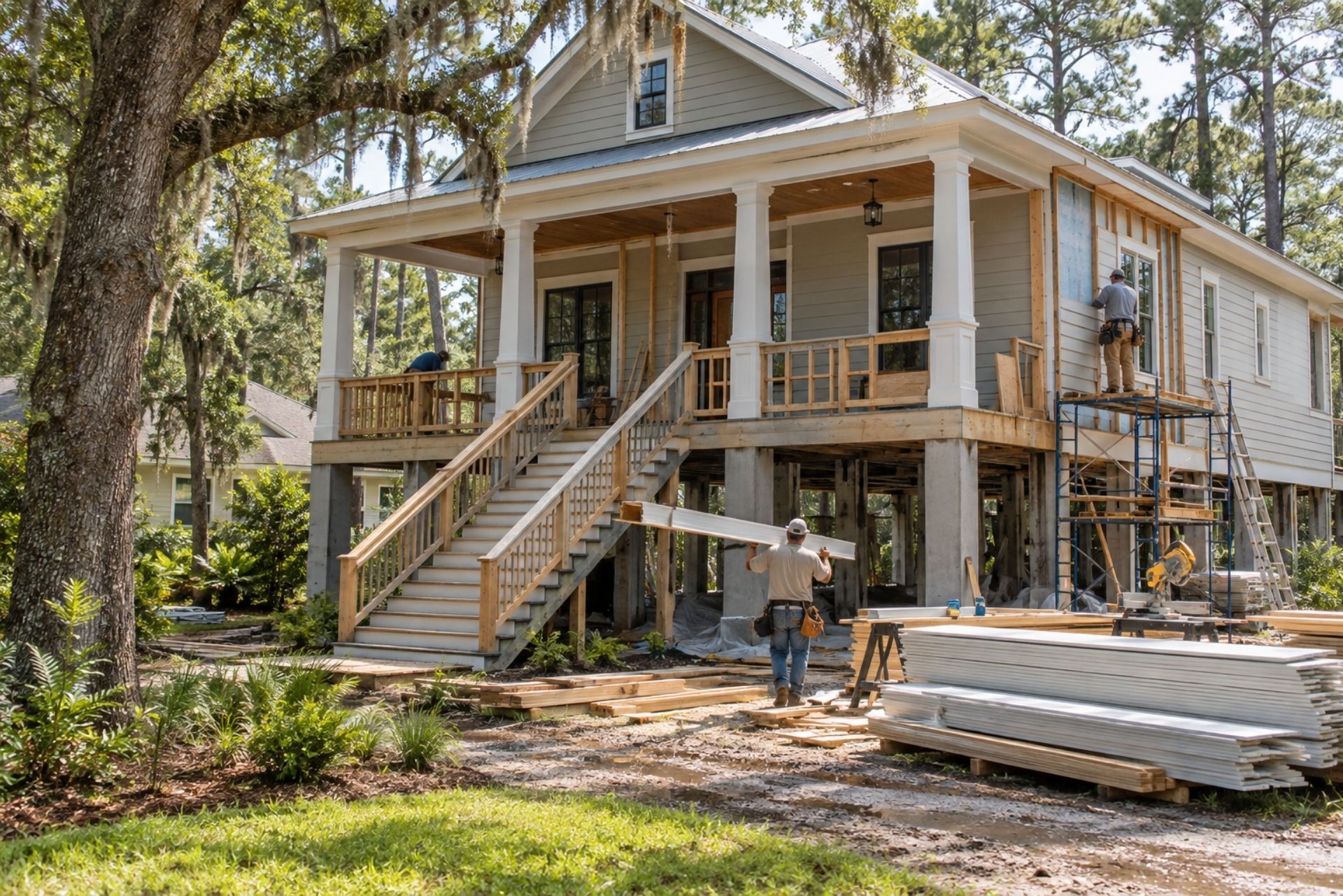
Raised homes are common around Covington for good reason, but they are costlier to rebuild than many owners realize. A home on piers or a tall stem wall needs engineered foundations, longer framing members, exterior stairs, and often elevated mechanical platforms for the HVAC unit. Online estimators that price square footage at slab-home rates can come in well short.
Your tax assessment is not a rebuild figure either. Assessments reflect market value, which includes land and excludes many construction factors. St. Tammany's 2026 public review period for assessments ran from August 17 to August 31, and that number is useful for property taxes, not for setting your dwelling limit.
When we review a raised home, we look at:
- Foundation type and height above grade
- Number and material of piers or pilings
- Exterior stairs, decks and elevated porches
- Breakaway walls or enclosed ground-level areas
- Any flood vents or elevation certificate on file
Remember that standard homeowners policies exclude flood. Elevation helps your flood premium, but a separate flood policy is still needed for rising water.
The jump from minimum limits to 100/300/100 often costs less than riders expect, because liability is typically priced per added layer rather than doubling with the limits. Ask for quotes at two or three levels side by side before you decide.
One tip: keep a dated list of serial numbers and photos of your tools. Claims with documentation move much faster than claims built on memory.
| Feature | Commercial Property | Inland Marine (Tool Floater) |
|---|---|---|
| Where it applies | Your fixed shop location | Jobsites, truck, in transit |
| Typical items | Stationary machines, inventory, building | Portable saws, nailers, hand tools |
| Theft from vehicle | Usually not covered | Often covered, with conditions |
| Fire or storm at shop | Typically covered | May be covered if tools are there |
| Who needs it | Carpenters with a shop | Nearly every working carpenter |
Replacement Cost vs Actual Cash Value
This one choice can decide whether a claim gets you back in your home or leaves you thousands short. Replacement cost coverage pays to repair or rebuild with similar materials at today's prices, without subtracting for age. Actual cash value pays replacement cost minus depreciation.
On a 15-year-old roof, the gap is enormous. Say a storm destroys a roof that would cost $24,000 to replace. Under replacement cost, you pay your deductible and the carrier typically covers the rest. Under actual cash value, the insurer may depreciate that roof by half or more before your deductible even comes off.
Many Louisiana carriers now apply actual cash value to roofs past a certain age, even when the rest of the dwelling has replacement cost. Check your declarations page or roof endorsement. For historic cottages with older materials, depreciation can hit especially hard, which is why replacement cost on the dwelling is usually worth the added premium.
Frequently Asked Questions About Covington Home Insurance
Does homeowners insurance pay to remove a fallen tree in my yard? Usually only if the tree damaged a covered structure, like your house, garage or fence. Trees that fall in open yard space typically get limited or no removal coverage.
My neighbor's tree hit my house. Whose insurance pays? Your own policy generally pays first. If the tree was documented as dead or diseased and your neighbor ignored it, they may be held liable.
Is flood included in my home policy? No. Standard homeowners policies exclude flood, so you need a separate flood policy even on a raised home.
How do I find my named storm deductible? Look on your declarations page for a percentage next to "hurricane" or "named storm." Multiply it by your dwelling limit to see your actual out-of-pocket amount.
Will a Fortified roof lower my premium? Yes, Louisiana requires insurers to offer reductions on the hurricane portion of the premium for Fortified homes. The amount depends on the designation level.
Do I need special coverage for a historic home?
Typically you need a higher dwelling limit and solid ordinance or law coverage, since repairs may require approved materials.
The jump from minimum limits to 100/300/100 often costs less than riders expect, because liability is typically priced per added layer rather than doubling with the limits. Ask for quotes at two or three levels side by side before you decide.
One tip: keep a dated list of serial numbers and photos of your tools. Claims with documentation move much faster than claims built on memory.
| Feature | Commercial Property | Inland Marine (Tool Floater) |
|---|---|---|
| Where it applies | Your fixed shop location | Jobsites, truck, in transit |
| Typical items | Stationary machines, inventory, building | Portable saws, nailers, hand tools |
| Theft from vehicle | Usually not covered | Often covered, with conditions |
| Fire or storm at shop | Typically covered | May be covered if tools are there |
| Who needs it | Carpenters with a shop | Nearly every working carpenter |
Making the Right Choice for Your Property
A policy for a home under Covington's pines should match the house you really have: the cottage with original trim, the raised home on piers, the big loblolly leaning toward the bedroom. Generic coverage tends to fail exactly where these homes are most exposed.
That is where local knowledge pays off. Aubert Insurance Agency has insured families in St. Tammany Parish since 1910, and as an independent agency we compare options from multiple carriers instead of steering you to one. We also take time to explain how your deductibles, roof terms and exclusions actually work, so storm season does not bring surprises.
Before the next named storm forms in the Gulf, pull out your declarations page and check your dwelling limit, your named storm percentage and your roof settlement terms. If anything looks unclear or outdated, we can help sort it out. Start a Quote today and let us shop coverage built around your Covington home.

About the Author
Kyle Beerbohm
President
We've been independent since 1910, and four generations of local ownership have kept us that way. We're one of the oldest agencies in St. Tammany Parish and the fourth oldest business in the City of Covington. I treat that history as a responsibility rather than a plaque on the wall. My job is to keep us answering to the families and business owners who walk through our doors, and to keep serving this parish for another hundred years.
Louisiana Insurance Questions, Answered
Questions clients ask us
Short, plain answers to what people ask before they call. Anything else, phone the office and ask.
What does an independent insurance agency do?
We represent you, not one insurance company. We gather your information once, then compare coverage and price across the carriers we hold contracts with. You get choices, and one agent handles the paperwork.
Which types of insurance does Aubert offer?
We write 13 personal lines, including home, auto, flood, boat, and life. We write 15 commercial lines, including business owners policies, general liability, workers compensation, and commercial property.
Do I need flood insurance in St. Tammany Parish?
Your homeowners policy excludes flood, and much of the Northshore has flooded outside mapped high-risk zones. Lenders require it inside those zones. We check your flood zone and quote NFIP and private options.
Which states are you licensed in?
We hold licenses in Louisiana, Mississippi, Florida, and Texas. License numbers appear in the footer of every page on this site.
How do you find me a competitive rate?
We take your details once and market them to the carriers and wholesale brokers that fit your risk. We compare the offers, explain the differences in coverage, and recommend the strongest fit.
How do I file a claim or request a certificate?
Call the office or use the Client Center on this site. We report the claim, follow the adjuster, and send certificates of insurance to whoever needs them.

Personal Insurance in Louisiana
Coverage for your home, your vehicles, and your family
Thirteen personal lines sit under one roof. Start with the coverage you need most, and we price it across our markets.
Home Insurance
Protect your house, its contents, and your liability with a policy priced across many Louisiana homeowners carriers.
Car Insurance
Cover every driver and vehicle in your household, and compare limits and deductibles side by side before you buy.
Flood Insurance
Standard home policies exclude flood. We write NFIP and private flood coverage for St. Tammany Parish properties.
Umbrella Insurance
Add a layer of liability above your home and auto limits, so one serious claim never reaches your savings.
Boat Insurance
Cover your hull, motor, trailer, and liability on the lake, the river, and the Gulf, wherever you launch.
Life Insurance
Replace your income for the people who depend on it, with term and permanent options we quote across carriers.
Business Insurance in Louisiana
Coverage for the business you built
Fifteen commercial lines, written for the payrolls, fleets, and buildings that Louisiana carriers ask hard questions about.
Contractors Insurance
General contractors, trade contractors and specialty crews. We cover the liability, tools, vehicles and workers your jobs depend on.
Business Owners (BOP)
One policy bundling property and liability for a small business. Straightforward cover for the building, the contents and the risk.
Professional Liability
Protection when your advice or professional work is challenged. A staple of any commercial package for a service business.
Commercial Property
Landlords and commercial real estate investors. We insure the building, the habitation risk and the income it produces.
Workers Compensation
Protecting your employees protects your business. Medical costs and lost wages covered when someone is hurt on the job.
Commercial Auto
Trucks, vans and fleets. We shop a wide range of commercial auto markets to match your vehicles and your drivers.
Business Insurance by Industry
We protect hundreds of businesses of all shapes and sizes
We know the exposures, the contract language, and the markets that write these trades on the Northshore.

General Contractors
Builders risk, general liability, and comp for homebuilders and remodelers working across St. Tammany Parish.

Plumber Insurance
Plumbers, electricians, roofers, and painters get liability, tools, and auto coverage that satisfies job requirements.

Restaurants
Property, liquor liability, spoilage, and comp for kitchens, bars, and cafés, including Louisiana association programs.
5-Star Rated by St. Tammany Clients
What Our Clients Say
Neighbours, business owners, and families across Covington and Slidell tell the story better than we can.


Insurance Tips & Local News
Insurance tips for Louisiana homes and businesses
Practical reading on flood zones, hurricane deductibles, and the coverage questions local business owners raise.
Request Your Free Insurance Quote
Tell us what you need covered
Send the form or call the office. A licensed agent in Covington or Slidell answers you directly.
614 E. Boston St., Covington, LA 70433. (985) 892-3101
58418 Tyler Drive, Slidell, LA 70461 · (985) 641-0520
Call
614 E. Boston St., Covington, LA 70433
58418 Tyler Drive, Slidell, LA 70461













