













Louisiana HVAC Contractor Insurance

Covington & Slidell Independent Insurance Agents

Louisiana HVAC contractors face risks that standard contractor policies often miss: condensate leaks that breed mold in humid attics, refrigerant releases, equipment stolen from trucks, and technicians collapsing from attic heat. The right insurance package typically combines General Liability, Pollution Liability, Inland Marine, and Workers Comp, built around the work you actually perform.

Louisiana HVAC Contractor Insurance Essentials

Louisiana HVAC contractors typically need four core coverages: General Liability for property damage and injuries, Contractors Pollution Liability for refrigerant and mold claims, Inland Marine for tools and equipment on the move, and Workers Comp for injured or heat-stricken technicians. A generic contractor policy rarely addresses humid attics and refrigerant handling on its own.


The rules also tightened in 2026. Under La. R.S. 37:2156.1.E.(2), your policy must explicitly cover every licensed scope of work, with no exclusions for those activities. You also need to list the Louisiana State Licensing Board for Contractors as certificate holder and keep coverage in force for at least six months.


If you hold a residential, mold remediation, or home improvement license, Act 757 raised the minimum general liability requirement to $500,000 starting August 1, 2026. The board put it plainly: your insurance policy needs to match the work you actually perform. A Covington shop that added duct cleaning or mold work last year but never updated its policy may now have a licensing problem as well as a coverage gap.

By: Kyle Beerbohm
President

Aubert Insurance Agency is a local, independent agency, licensed to serve individuals and businesses across Louisiana, Mississippi, Florida and Texas.

We serve clients from our offices in Covington and Slidell and throughout St. Tammany Parish — working with dozens of carriers and wholesale markets to help homeowners, drivers, contractors, restaurant owners, property investors, auto shops, professional practices and many other personal and commercial clients find coverage that fits.

Licensed in Louisiana #3661 · Mississippi #15039075 · Florida #W0772236 · Texas #2381820

Many St. Tammany families end up with both: standalone coverage for the land, plus an umbrella over the home and vehicles.

Comparison: Standalone Liability vs. Umbrella Coverage

Understanding the Named Storm Deductible

A named storm deductible works differently than the flat $500 or $1,000 deductible on your regular claims. In Louisiana, it's often calculated as 2% to 5% of the insured value of your personal property. On a policy with $40,000 in contents coverage, a 5% deductible means the first $2,000 of a hurricane loss is yours.


There's some good news in state law. Louisiana's one-deductible-per-year rule (La. R.S. 22:1337) means you generally pay the named storm deductible only once per calendar year, even if two storms hit your rental. Ask your agent to show you that deductible in dollars, not just a percentage, so you can set aside the right amount in an emergency fund.

Factor Standalone Liability Umbrella Policy
Underlying policy required No Yes, home and auto typically
When it pays First dollar of a covered claim After underlying limits run out
Typical use Vacant land, hunting tracts, specific risks Broad extra protection across policies
Cost structure Priced by acreage, use, and limit Priced by number of homes, cars, drivers
Scope Narrow, tied to named property or risk Wide, follows underlying coverage
Common limits $300,000 to $1 million $1 million and up

People use the two terms as if they mean the same thing. They do not.


A true umbrella policy may provide broader coverage than the policies below it. In some cases it can "drop down" to cover a claim the primary policy excludes, usually subject to a self-insured retention, often $10,000 or $25,000. An excess policy is typically "follow form," which means it copies the terms and exclusions of the underlying policy and simply adds more limit.


Here is why that matters. If your general liability policy excludes a certain type of claim, a follow-form excess policy will generally exclude it as well. Higher limits do not repair a weak foundation. We go through the endorsements on each layer with clients before binding, because the wording on page 14 of the policy is what decides whether a claim gets paid.

Managing Condensate Leaks and Mold in Humid Attics

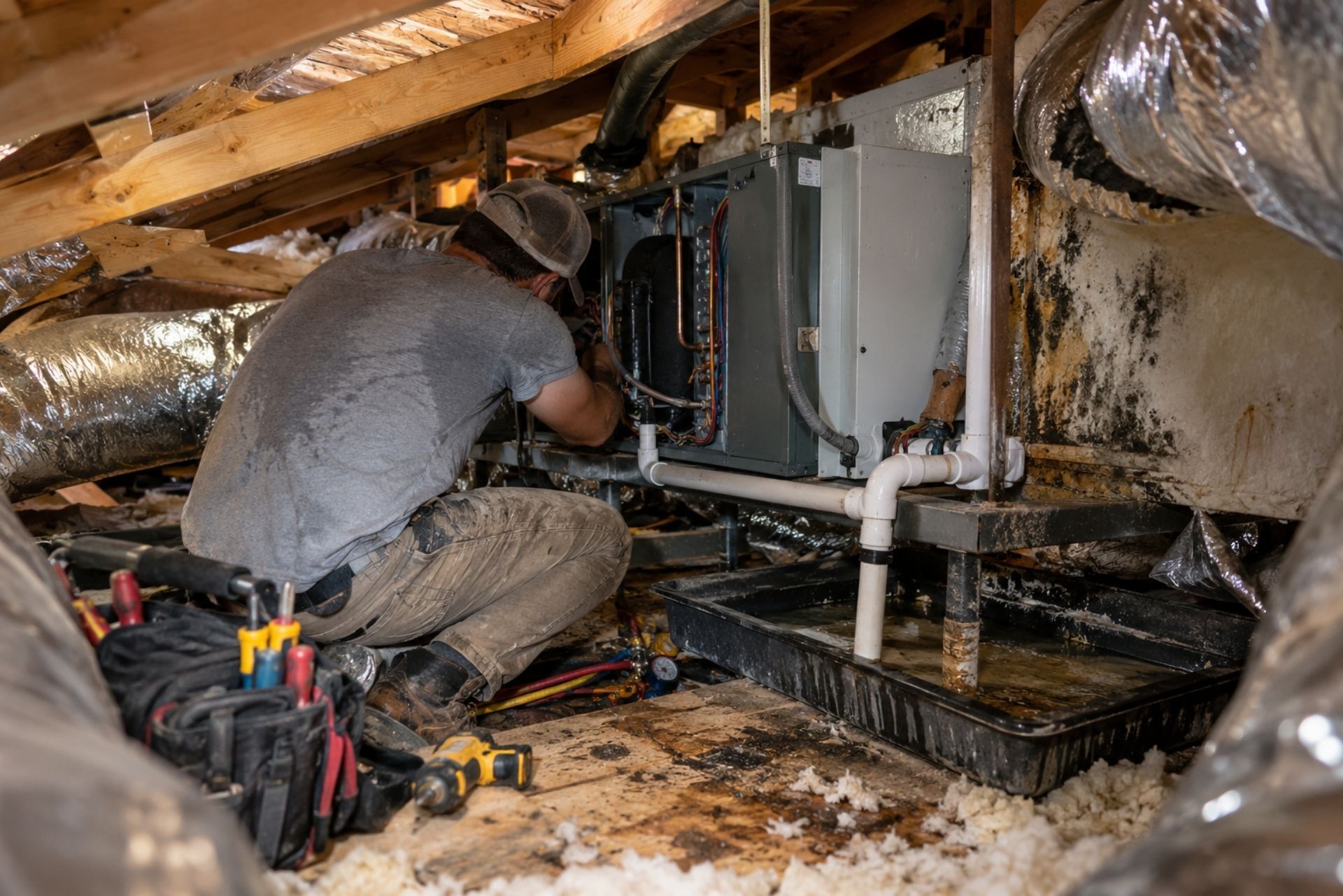
Picture a Slidell homeowner with an air handler in the attic. The secondary drain pan has a cracked fitting, the float switch was never installed, and a clogged primary line overflows for three weeks in July. By the time a brown stain appears on the bedroom ceiling, the drywall is soaked and mold is growing along the joists.


That homeowner calls their insurer, and their insurer calls you. These subrogation claims are some of the most common losses HVAC contractors in St. Tammany Parish see, and they often show up months after the install. The ceiling repair is usually the cheap part of the bill. Mold testing, remediation, insulation replacement, and sometimes temporary housing add up fast.


Here's the catch: many General Liability policies carry a fungi or mold exclusion. That means the water damage might be covered while the mold portion is denied. Before you sign any renewal, ask your agent:


  • Does my GL policy exclude mold, fungi, or bacteria?
  • Is there a sublimit for mold, and how low is it?
  • Does my pollution policy pick up mold claims if GL doesn't?


Are completed operations covered, since many of these leaks surface after the job is closed?

Good installation habits matter too. Float switches, properly pitched drain lines, and photos of your finished work can help defend a claim later.

With no lender to satisfy, the decision is yours, and so is the entire loss. A total rebuild in this parish runs well into six figures.

Homeowners who own outright

Your lender requires coverage at least equal to the loan, and will buy a policy on your behalf at your expense if yours lapses.

Homeowners with a mortgage

How Sublimits Affect Overtime and Minimum Wage Disputes

Refrigerant and Pollution Exposure

Most standard General Liability policies include a pollution exclusion, and carriers may interpret it broadly. A refrigerant release, a spill of coil cleaner, or contamination from an old system you removed can all fall under that exclusion. That leaves HVAC contractors needing a separate Contractors Pollution Liability (CPL) policy to cover these events.


Refrigerant handling carries federal obligations as well. EPA Section 608 prohibits knowingly venting ozone-depleting refrigerants and requires technicians to keep certification proof and invoices for appliances with charges over 50 pounds. Sloppy recordkeeping won't trigger a pollution claim by itself, but it can make defending one much harder.


Environmental enforcement in this state is not a hypothetical. One 2026 analysis found that civil penalties for air pollution violations in Southwest Louisiana averaged $66,300. Those figures involve larger facilities, not HVAC shops, but they show regulators do act. Keep in mind that insurance typically won't pay fines or penalties. What a CPL policy may cover is third-party bodily injury, property damage, and cleanup costs tied to a covered pollution event, plus legal defense.


One thing to keep in mind: if you do commercial work, general contractors and property managers increasingly ask for CPL on your certificate before you ever set foot on site.

The roof

Age, material and shape drive the wind rate more than any other factor. A fortified roof designation opens markets that would otherwise decline the house.

Scenario Dwelling limit All-other-perils deductible Named-storm deductible
Newer build, inland St. Tammany $350,000 $1,000 2%
Newer build, higher wind zone $350,000 $1,000 5%
Older home, updated roof $275,000 $2,500 2%
Older home, original roof $275,000 $2,500 5%
Fortified roof designation $400,000 $1,000 2%
Rebuilt after a prior claim $400,000 $2,500 5%
Bundled with auto $350,000 $1,000 2%

Exact terms vary by carrier, so treat this as a starting point for comparing quotes.

Protecting Your Equipment in Transit

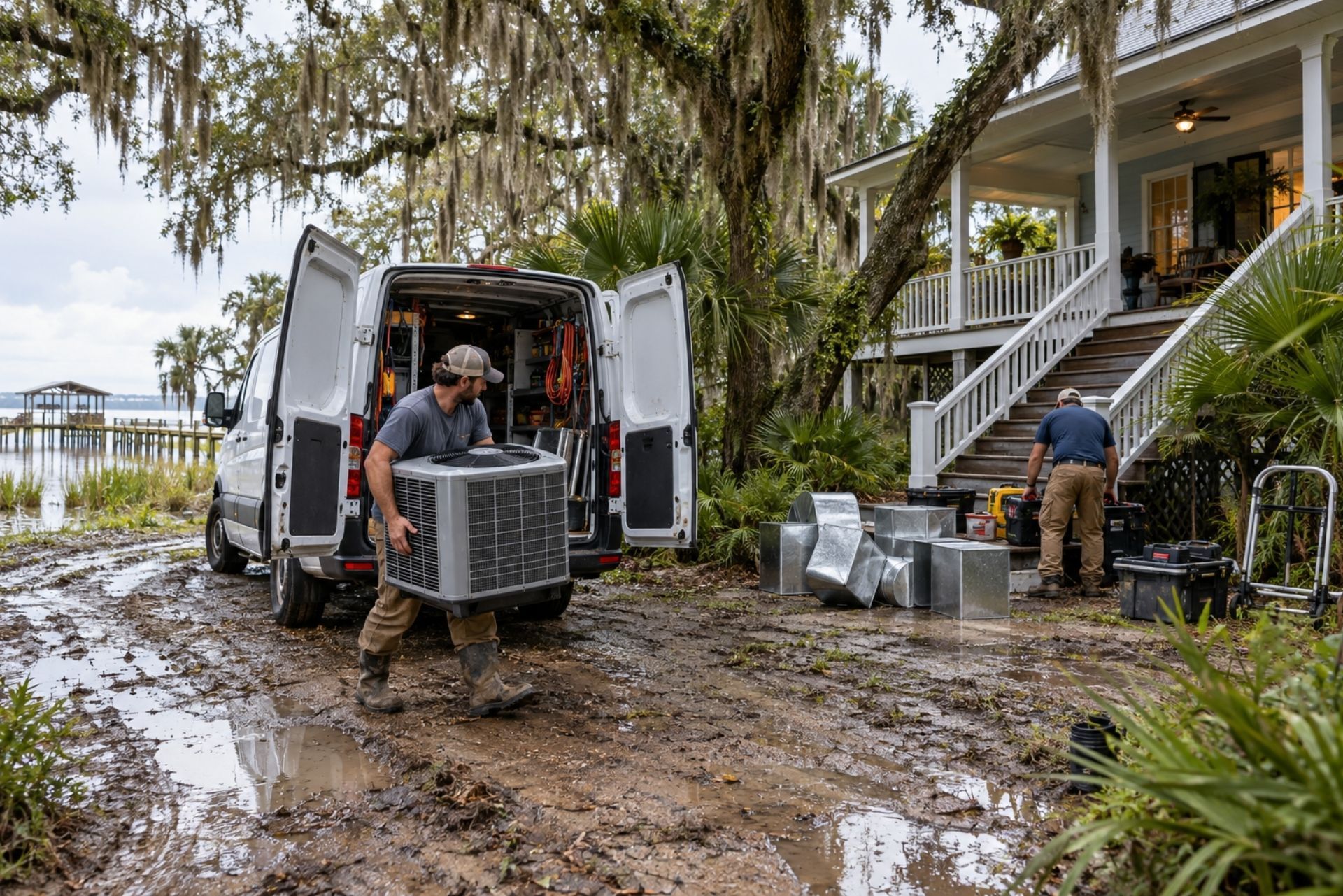
Your General Liability policy does not cover your own tools or equipment. Neither does your commercial auto policy, in most cases, once the gear leaves the vehicle or gets stolen out of the bed. That's where Inland Marine coverage comes in.


HVAC contractors usually look at two pieces:


  • Contractors equipment or tool floater: Covers gauges, recovery machines, vacuum pumps, brazing rigs, and other tools whether they're in the truck, at the shop, or on a jobsite.
  • Installation floater: Covers equipment you're installing until the customer takes ownership. Think of a $12,000 commercial rooftop unit staged in a parking lot overnight, or a condenser waiting on a slab in Mandeville.


The installation floater matters more than many contractors realize. Until the job is accepted, that new system is often your financial responsibility. If it's stolen, crushed by a falling limb during a storm, or damaged in a trailer accident, you could be eating the cost of a replacement unit plus another trip.


Ask how the floater values equipment. Replacement cost and actual cash value can produce very different checks on a three-year-old recovery machine. Also check whether the policy covers equipment left in unlocked vehicles, since some carriers may require visible signs of forced entry.

Working capital matters more than almost anything else. Underwriters look at current assets minus current liabilities, because cash and receivables are what keep a job moving when a payment runs late. Equity in equipment or real estate helps, but it doesn't pay a subcontractor on Friday.


Expect requests for CPA-prepared financial statements once you seek larger limits. Personal credit counts heavily for smaller firms, since owners typically sign personal indemnity. Clean books, a solid bank line of credit, and low debt can raise your capacity faster than any sales pitch.

Workers Comp for Attic Heat and Jobsite Risks

Louisiana attics in August can run well past 130 degrees. Add humidity, fiberglass insulation, cramped trusses, and a technician hauling a coil through a scuttle hole, and you have conditions where heat exhaustion can turn into heat stroke within an hour.


The numbers from 2026 are sobering. The Louisiana Department of Health confirmed 11 heat-related deaths in June and July, with more than 3,100 heat-related illness cases reported statewide by August. Health officials stressed that these deaths are preventable and urged people to hydrate, find shade, and rest. For an HVAC crew, that advice translates into real job practices: attic time limits, mandatory water breaks, portable fans, early starts, and a buddy system for tight spaces.


Workers Comp is your safety net when prevention isn't enough. It typically pays:


  • Emergency room visits and hospital stays
  • Follow-up treatment for heat illness complications
  • A portion of lost wages while the technician recovers
  • Death benefits for the family if the worst happens


Heat isn't the only attic hazard. Falls through ceiling joists, ladder injuries, electrical shocks, and back strains from lifting condensers are all common Workers Comp claims in this trade. Make sure your payroll classifications are accurate, too. Misclassifying technicians as clerical or as subcontractors is one of the fastest ways to end up with a painful audit bill.

The roof

Age, material and shape drive the wind rate more than any other factor. A fortified roof designation opens markets that would otherwise decline the house.

Comparing HVAC Coverage Options

Each policy fills a different gap. Here's how the three that cause the most confusion stack up for Louisiana contractors:

Coverage What It Typically Covers Common Gap It Fills Who Needs It Most
General Liability Third-party injury and property damage, completed operations Water damage from a botched install, customer trips over your hose Every licensed HVAC contractor (required by LSLBC)
Pollution Liability Refrigerant releases, mold, chemical spills, cleanup costs Claims GL excludes under its pollution or mold clause Contractors doing attic installs, commercial work, or mold-related services
Inland Marine Tools, recovery machines, equipment being installed Theft or damage GL and auto won't cover Anyone carrying expensive gear or staging units on-site

The value difference shows up at claim time. A contractor with only GL may get the drywall repair paid and the mold remediation denied. A contractor without Inland Marine may have liability protection for days but no way to replace a stolen rooftop unit.


Pricing varies by carrier, payroll, revenue, and claims history, so comparing quotes across several companies usually turns up meaningful differences in both cost and policy language.

Common Questions About HVAC Insurance

Does general liability cover mold from a condensate leak? It depends on the policy. Many GL forms exclude or sublimit mold, so you may need pollution coverage to fill that gap.


Do I really need pollution insurance if I'm EPA certified? Yes. Certification shows you're trained, but it doesn't pay a claim if refrigerant or chemicals cause injury or property damage.


What's the minimum liability coverage for Louisiana HVAC contractors in 2026? If you hold a residential, mold remediation, or home improvement license, Act 757 set the minimum at $500,000 effective August 1, 2026. Commercial license requirements may differ, so confirm with the LSLBC.


Are my tools covered if they're stolen from my truck? Usually not under auto or GL. An Inland Marine tool floater is typically what covers stolen tools.


Does workers comp cover heat stroke? Heat illness that happens on the job is generally treated as a work injury, so Workers Comp typically covers medical bills and part of lost wages.


Can I add a new service like duct cleaning without changing my policy? You shouldn't. Louisiana now requires your policy to cover every licensed scope of work, so update your coverage before taking on new services.

The roof

Age, material and shape drive the wind rate more than any other factor. A fortified roof designation opens markets that would otherwise decline the house.

Bond Type Who Requires It 2026 Amount What It Guarantees
Contractor License LSLBC $10,000 Compliance with licensing law
Permit Bond Parish or city Varies by jurisdiction Work meets local codes
Bid Bond Public owner Set by bid documents You'll sign if awarded
Performance Bond Public owner Set by contract Project gets completed
Notary (non-attorney) Secretary of State $50,000 Lawful notarial acts
Motor Vehicle Dealer State licensing Confirm with regulator Lawful title and sales handling

Before You Buy a Policy

The contractors who get hurt by claims usually aren't uninsured. They're underinsured in specific spots: a mold exclusion buried in the GL form, no pollution coverage for refrigerant work, a rooftop unit that wasn't on any floater, or payroll that never got updated. With the 2026 LSLBC changes, those gaps can now affect your license, too.


Take an hour to list what you actually do, from attic changeouts in Covington to commercial service calls in Slidell, and compare it line by line with your current policies. Note where you store tools, how you transport equipment, and how many techs work in attics during summer.


Then review those risks with Aubert Insurance Agency. We've served Covington, Slidell, and St. Tammany Parish since 1910, and as an independent agency we compare options from multiple carriers while explaining exactly what each policy covers and excludes. Your coverage should match the work you really do.


Ready to see where you stand? Start a Quote.

About the Author

Kyle Beerbohm

President


We've been independent since 1910, and four generations of local ownership have kept us that way. We're one of the oldest agencies in St. Tammany Parish and the fourth oldest business in the City of Covington. I treat that history as a responsibility rather than a plaque on the wall. My job is to keep us answering to the families and business owners who walk through our doors, and to keep serving this parish for another hundred years.

Louisiana Insurance Questions, Answered

Questions clients ask us

Short, plain answers to what people ask before they call. Anything else, phone the office and ask.

  • What does an independent insurance agency do?

    We represent you, not one insurance company. We gather your information once, then compare coverage and price across the carriers we hold contracts with. You get choices, and one agent handles the paperwork.

  • Which types of insurance does Aubert offer?

    We write 13 personal lines, including home, auto, flood, boat, and life. We write 15 commercial lines, including business owners policies, general liability, workers compensation, and commercial property.

  • Do I need flood insurance in St. Tammany Parish?

    Your homeowners policy excludes flood, and much of the Northshore has flooded outside mapped high-risk zones. Lenders require it inside those zones. We check your flood zone and quote NFIP and private options.

  • Which states are you licensed in?

    We hold licenses in Louisiana, Mississippi, Florida, and Texas. License numbers appear in the footer of every page on this site.

  • How do you find me a competitive rate?

    We take your details once and market them to the carriers and wholesale brokers that fit your risk. We compare the offers, explain the differences in coverage, and recommend the strongest fit.

  • How do I file a claim or request a certificate?

    Call the office or use the Client Center on this site. We report the claim, follow the adjuster, and send certificates of insurance to whoever needs them.

Personal Insurance in Louisiana

Coverage for your home, your vehicles, and your family

Thirteen personal lines sit under one roof. Start with the coverage you need most, and we price it across our markets.

Home Insurance

Protect your house, its contents, and your liability with a policy priced across many Louisiana homeowners carriers.

Car Insurance

Cover every driver and vehicle in your household, and compare limits and deductibles side by side before you buy.

Flood Insurance

Standard home policies exclude flood. We write NFIP and private flood coverage for St. Tammany Parish properties.

Umbrella Insurance

Add a layer of liability above your home and auto limits, so one serious claim never reaches your savings.


Boat Insurance

Cover your hull, motor, trailer, and liability on the lake, the river, and the Gulf, wherever you launch.


Life Insurance

Replace your income for the people who depend on it, with term and permanent options we quote across carriers.

Business Insurance in Louisiana

Coverage for the business you built

Fifteen commercial lines, written for the payrolls, fleets, and buildings that Louisiana carriers ask hard questions about.

Business Insurance by Industry

We protect hundreds of businesses of all shapes and sizes

We know the exposures, the contract language, and the markets that write these trades on the Northshore.

General Contractors

Builders risk, general liability, and comp for homebuilders and remodelers working across St. Tammany Parish.

Plumber Insurance

Plumbers, electricians, roofers, and painters get liability, tools, and auto coverage that satisfies job requirements.

Restaurants

Property, liquor liability, spoilage, and comp for kitchens, bars, and cafés, including Louisiana association programs.

5-Star Rated by St. Tammany Clients

What Our Clients Say

Neighbours, business owners, and families across Covington and Slidell tell the story better than we can.

Insurance Tips & Local News

Insurance tips for Louisiana homes and businesses

Practical reading on flood zones, hurricane deductibles, and the coverage questions local business owners raise.

louisiana citizens homeowners insurance what you need to know
15 October 2026
Learn about Louisiana Citizens homeowners insurance costs, coverage, eligibility, and switching to private insurers with Aubert Insurance Agency.

certificate of insurance requirements for louisiana subcontractors
15 October 2026
Learn Louisiana subcontractor COI requirements, liability limits, additional insured endorsements, and waivers of subrogation with Aubert Insurance Agency.

general liability cost for louisiana contractors
15 October 2026
Learn Louisiana contractor general liability insurance costs by trade, payroll, sales, and minimum premiums. Compare quotes with Aubert Insurance Agency.

louisiana fortify homes program insurance discount
15 October 2026
Explore Louisiana Fortify Homes Program grants up to $10,000, FORTIFIED roof standards, and insurance premium credits with Aubert Insurance Agency.

how does builders risk insurance work in louisiana
15 October 2026
Learn how Louisiana builders risk insurance protects spec and custom homes, who buys coverage, when it ends, and storm risks with Aubert Insurance Agency.

what is the lhba general liability trust
15 October 2026
Explore the LHBA General Liability Trust in Louisiana, how pooled coverage works, builder eligibility, dividends, and risks with Aubert Insurance Agency.

what is the homebuilders self insurers fund
15 October 2026
Explore Louisiana's Homebuilders Self Insurers Fund, how workers comp coverage works, membership eligibility, dividends, and risks with Aubert Insurance Agency.

workers comp cost for louisiana contractors
15 October 2026
Learn Louisiana contractor workers comp costs, class codes, payroll rates, experience mods, and audit risks. Compare quotes with Aubert Insurance Agency.

who needs workers comp in louisiana
15 October 2026
Learn who needs workers comp in Louisiana, including employer rules, owner exemptions, subcontractor risks, and penalties with Aubert Insurance Agency.

louisiana contractor license insurance requirements
15 October 2026
Learn Louisiana contractor insurance requirements for residential, home improvement, and commercial licenses. Compare coverage with Aubert Insurance Agency.


Request Your Free Insurance Quote

Tell us what you need covered

Send the form or call the office. A licensed agent in Covington or Slidell answers you directly.

614 E. Boston St., Covington, LA 70433.  (985) 892-3101

58418 Tyler Drive, Slidell, LA 70461 ·   (985) 641-0520

Call

Covington office, Monday through Friday

Email

Policy questions, certificates, and claims

Call

614 E. Boston St., Covington, LA 70433

58418 Tyler Drive, Slidell, LA 70461
