













Lafayette LA Contractors Insurance

Covington & Slidell Independent Insurance Agents

Lafayette contractors typically need a combination of General Liability, Workers Compensation, and specialized endorsements. Those endorsements may include contractual liability, additional insured, and waiver of subrogation forms. Together, they help cover the expansive clay soils under Acadiana slabs and the indemnity demands written into oilfield Master Service Agreements, which many local crews now sign alongside residential work.


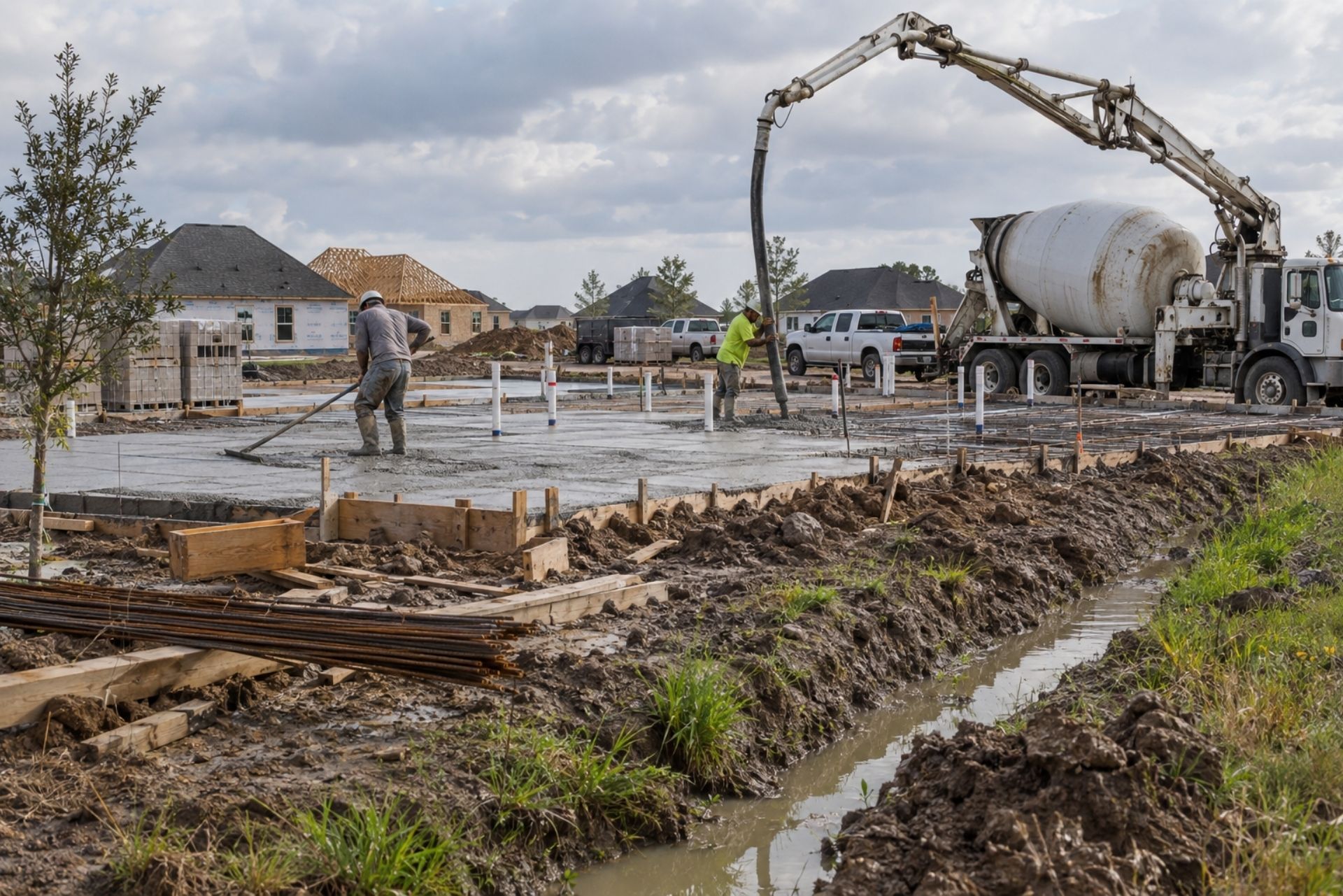
Picture a framing crew in Broussard. On Monday they pour a slab for a three-bedroom spec home off Highway 90. On Thursday they build a pipe rack for a service company in New Iberia. Many policies were written for one of those jobs, not both, and that gap can surface after a claim lands. That two-world reality is what makes contractors insurance in Lafayette, LA different from coverage almost anywhere else in the state.

Comprehensive Contractors Insurance for Lafayette and Acadiana

A solid contractor program in Lafayette Parish usually has three layers. Each one handles a different kind of loss:


  • General Liability: Third-party bodily injury and property damage, including completed operations claims that show up years after a job closes.
  • Workers Compensation: Louisiana generally requires employers to carry it, and oilfield clients will ask for proof before you set foot on a yard.
  • Endorsements and specialty coverage: Blanket additional insured, primary and noncontributory wording, waiver of subrogation, and sometimes Professional Liability for contractors who handle design-build work.


Commercial auto, inland marine for equipment, and umbrella coverage typically round things out. A common mistake is buying the GL policy first and treating the rest as optional. In practice, the endorsements often decide whether you can sign a contract at all.

By: Kyle Beerbohm
President

Aubert Insurance Agency is a local, independent agency, licensed to serve individuals and businesses across Louisiana, Mississippi, Florida and Texas.

We serve clients from our offices in Covington and Slidell and throughout St. Tammany Parish — working with dozens of carriers and wholesale markets to help homeowners, drivers, contractors, restaurant owners, property investors, auto shops, professional practices and many other personal and commercial clients find coverage that fits.

Licensed in Louisiana #3661 · Mississippi #15039075 · Florida #W0772236 · Texas #2381820

The jump from minimum limits to 100/300/100 often costs less than riders expect, because liability is typically priced per added layer rather than doubling with the limits. Ask for quotes at two or three levels side by side before you decide.

Here's a common scenario: you misjudge a curve and clip a late-model pickup, injuring the driver. A single ambulance ride, ER visit, and follow-up imaging can eat through $15,000 quickly. Anything above your limit can become your personal responsibility, which may put your savings, wages, or home at risk.

Scenario Dwelling limit All-other-perils deductible Named-storm deductible
Newer build, inland St. Tammany $350,000 $1,000 2%
Newer build, higher wind zone $350,000 $1,000 5%
Older home, updated roof $275,000 $2,500 2%
Older home, original roof $275,000 $2,500 5%
Fortified roof designation $400,000 $1,000 2%
Rebuilt after a prior claim $400,000 $2,500 5%
Bundled with auto $350,000 $1,000 2%

Subdivision Growth in Youngsville and Broussard

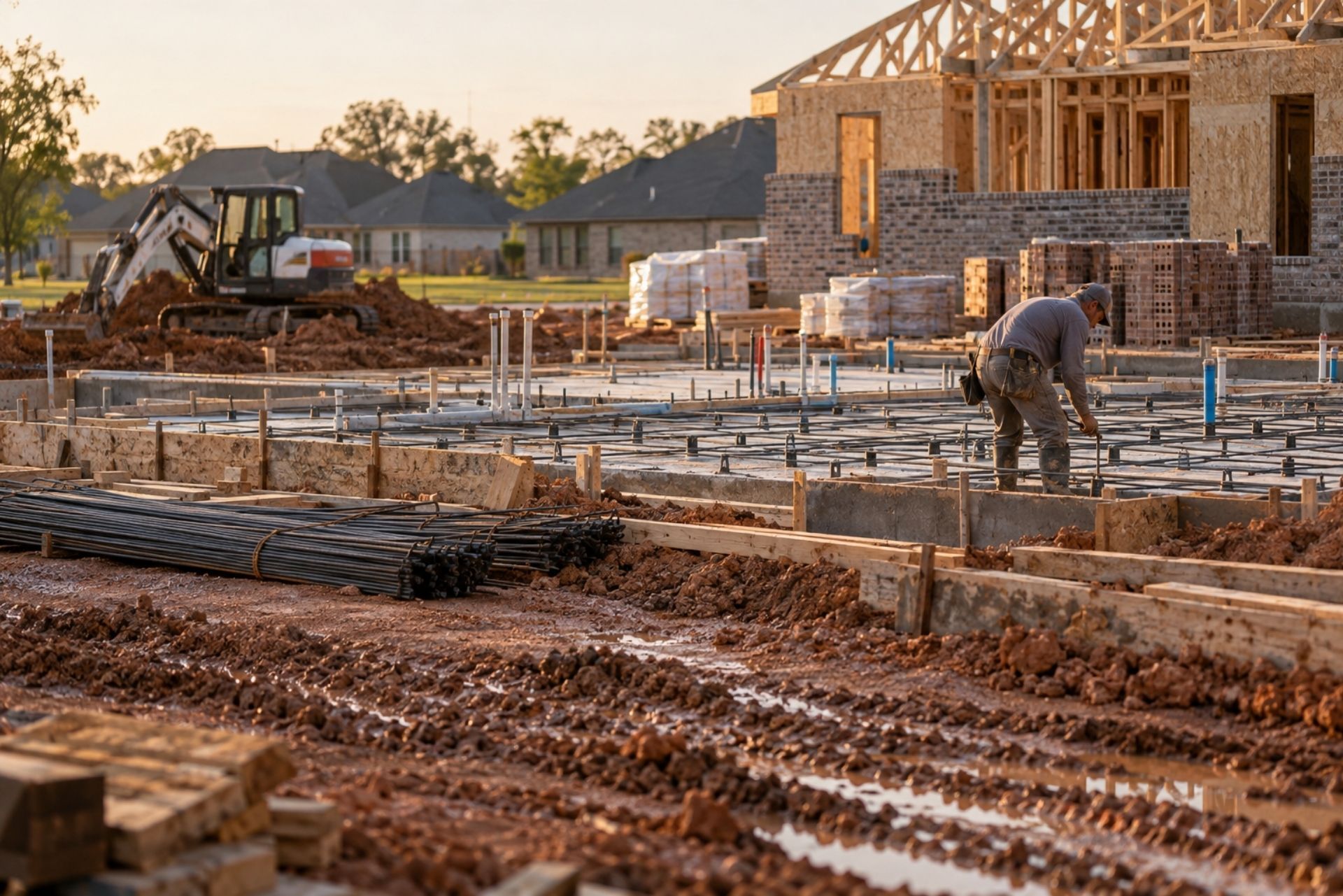
Drive down Chemin Metairie Parkway or Albertson Parkway and the pattern is obvious: new rooftops, new streets, and new phases breaking ground before the last ones sell. Youngsville and Broussard have become the overflow valve for Lafayette's housing demand. That means steady work for slab crews, framers, roofers, and finish carpenters.


Statewide, the money is enormous. Louisiana's construction market reached $37 billion in put-in-place spending in 2025, a 56.2% jump over the prior year. Much of that came from data centers and LNG facilities, but residential trades feel the ripple through labor competition and higher subcontractor rates.


Production builders in these subdivisions typically hand subs a contract that requires additional insured status, a specific completed operations period, and certificates before the first payment. If your policy only offers additional insured coverage for ongoing operations, you may fall short of what the builder demands. Read the subcontract before renewal, not after you've been awarded the job.

With no lender to satisfy, the decision is yours, and so is the entire loss. A total rebuild in this parish runs well into six figures.

Homeowners who own outright

Your lender requires coverage at least equal to the loan, and will buy a policy on your behalf at your expense if yours lapses.

Homeowners with a mortgage

Coverage Area State Minimum Common Higher Option Stronger Option
Injury, one person $15,000 $50,000 $100,000
Injury, per accident $30,000 $100,000 $300,000
Property damage $25,000 $50,000 $100,000
Who it fits Legal compliance only Riders with modest assets Homeowners, families, higher earners

Here's a common scenario: you misjudge a curve and clip a late-model pickup, injuring the driver. A single ambulance ride, ER visit, and follow-up imaging can eat through $15,000 quickly. Anything above your limit can become your personal responsibility, which may put your savings, wages, or home at risk.

Minimum Coverage vs. Actual Protection Needs

The jump from minimum limits to 100/300/100 often costs less than riders expect, because liability is typically priced per added layer rather than doubling with the limits. Ask for quotes at two or three levels side by side before you decide.

The Risk of Slab Work on Clay Soils

Acadiana sits on some of the most troublesome dirt in the country. The Louisiana DOTD's Geotechnical Design Manual outlines how to identify expansive and dispersive soils, including the smectite clays found in Lafayette Parish. These clays swell after a wet spring and shrink hard during an August drought. A slab poured without proper preparation can crack, heave, or settle within a few seasons.


That movement turns into claims. A homeowner notices doors sticking, then drywall cracks, then a plumbing line fails under the slab. Repairing a slab leak in high-clay conditions can exceed $50,000 once you add leak detection, slab excavation, and structural remediation. By comparison, engineered foundations in Louisiana typically run $5,000 to $12,000, plus engineering fees starting around $750.


Here's what that means for you: completed operations coverage is the policy feature that matters most for concrete and foundation contractors. Watch for exclusions tied to earth movement, subsidence, or "your work." Some carriers may write broader forms for foundation trades, while others may exclude soil-related damage outright. Keeping compaction reports and engineer sign-offs on file also helps your defense if a claim arrives years later.

The jump from minimum limits to 100/300/100 often costs less than riders expect, because liability is typically priced per added layer rather than doubling with the limits. Ask for quotes at two or three levels side by side before you decide.

One tip: keep a dated list of serial numbers and photos of your tools. Claims with documentation move much faster than claims built on memory.

Feature Commercial Property Inland Marine (Tool Floater)
Where it applies Your fixed shop location Jobsites, truck, in transit
Typical items Stationary machines, inventory, building Portable saws, nailers, hand tools
Theft from vehicle Usually not covered Often covered, with conditions
Fire or storm at shop Typically covered May be covered if tools are there
Who needs it Carpenters with a shop Nearly every working carpenter

How Deductible Types Compare

Comparison of NFIP vs. Excess Flood Coverage

Feature NFIP Policy Excess Flood Policy
Building limit Up to $250,000 Typically adds coverage above $250,000
Who issues it Federal program, sold through agents Private carriers
Waiting period Generally 30 days May be shorter, varies by carrier
Additional living expenses Not included May be included, depending on policy
Basement coverage Very limited May be broader on some policies
CRS premium credit Applies in Mandeville Typically does not apply
Best fit for Base layer for most homes Higher-value or lakefront homes

Oilfield Service Crossover Work and Market Shifts

Lafayette built its economy on oil and gas, and plenty of local contractors still split time between residential jobs and service-company work. A welder who builds handrails for a Youngsville home might fabricate skids for an operator the next week. An electrician could wire a subdivision clubhouse, then troubleshoot a shop in Abbeville.


The market keeps pulling people toward industrial work. Industrial construction labor demand in Louisiana is expected to peak at 20,500 workers in late 2026 and early 2027, driven by six megaprojects, including Meta's AI data center. When large projects compete for workers, smaller contractors often pick up energy-sector jobs to keep crews busy.


The catch is that your insurance classifications may not match your actual work. If your policy is rated for residential carpentry and you're on a production platform or a pipeline yard, a carrier may question coverage after a loss. You might also run into an oilfield exclusion. Tell your agent about every type of job you take, including the occasional one, so your classification codes and exposures reflect reality.

General liability covers physical harm: fires, shocks, and property damage from your work. Professional liability, sometimes called errors and omissions, may cover financial loss from design mistakes or bad advice, such as an undersized service you specified on a load calculation. Electricians who do design-build work, panel sizing for solar, or consulting often need both, because a general liability policy typically will not respond to a pure financial loss.

The most common mistake is buying limits sized for the center you opened, not the center you run now. Enrollment grows, a second van shows up, an after-school program starts, and the policy stays the same. A yearly review against your actual operations catches that drift before a claim exposes it.

General Liability vs. Workers Compensation

Understanding Master Service Agreement Indemnity

Before an oilfield operator or large service company lets you work, it will usually hand you a Master Service Agreement. The MSA sets general terms for every future work order. Its indemnity section decides who pays when someone gets hurt or property gets damaged.


Most MSAs use "knock-for-knock" language, where each party covers its own people and equipment regardless of fault. Others push nearly everything onto the contractor. Some require you to defend and indemnify the company even when its own negligence caused the loss. On top of that, you'll typically see demands for:


  • Additional insured status for the company and its affiliates
  • Waivers of subrogation on GL, auto, and workers comp
  • Minimum limits, often with an umbrella
  • Primary and noncontributory wording


Your GL policy's contractual liability coverage may respond to some of these obligations, but only within the policy's terms. Signing an MSA without matching it to your coverage is one of the most expensive habits in the trade.

The Role of the Louisiana Oilfield Anti-Indemnity Act

Louisiana limits how far these agreements can go. The Louisiana Oilfield Anti-Indemnity Act generally voids clauses that require a contractor to indemnify an operator for the operator's own negligence in death or bodily injury claims tied to oil and gas wells. The law was designed to protect smaller contractors from carrying risks they can't control.


There's an important exception. The "Marcel Exception" has been codified into law. It allows indemnity to be enforced if the party seeking it pays for the specific insurance coverage. Recent legislation spells out the steps: the party must submit a written request for a premium quote, receive the quote, and pay the insurer directly for that coverage.


If an operator follows those steps, the indemnity and additional insured obligations you thought were void may hold up. Ask whether premium is being paid on your policy for an operator, and keep records of it.

The jump from minimum limits to 100/300/100 often costs less than riders expect, because liability is typically priced per added layer rather than doubling with the limits. Ask for quotes at two or three levels side by side before you decide.

One tip: keep a dated list of serial numbers and photos of your tools. Claims with documentation move much faster than claims built on memory.

Feature Commercial Property Inland Marine (Tool Floater)
Where it applies Your fixed shop location Jobsites, truck, in transit
Typical items Stationary machines, inventory, building Portable saws, nailers, hand tools
Theft from vehicle Usually not covered Often covered, with conditions
Fire or storm at shop Typically covered May be covered if tools are there
Who needs it Carpenters with a shop Nearly every working carpenter

Comparing Essential Coverage Limits for Acadiana Contractors

General Liability and Professional Liability are often confused, but they cover different mistakes. The table below shows how they differ and how limits commonly vary between subdivision jobs and oilfield crossover work. Exact requirements depend on your contracts and the carrier.

Feature General Liability Professional Liability
What it covers Physical injury and property damage from your work Financial loss from design, advice, or specification errors
Typical trigger Cracked slab damages a home's interior Faulty foundation design leads to costly rework
Who usually needs it Nearly every contractor Design-build firms, engineers, consultants
Common residential limit $1M per occurrence / $2M aggregate $250K to $1M, if required
Common oilfield crossover limit $1M / $2M plus umbrella, often $5M or more $1M or more, when design is involved
Contract endorsements AI, waiver of subrogation, primary/noncontributory Rarely AI; contract-specific

Cost depends heavily on crew size. Average annual GL premiums for Louisiana contractors in 2026 range from $700 to $1,300 for solo operators. Mid-size crews of 6 to 15 employees typically pay $3,800 to $10,000. Oilfield exposure, foundation work, and claims history can push those numbers higher.

General liability covers physical harm: fires, shocks, and property damage from your work. Professional liability, sometimes called errors and omissions, may cover financial loss from design mistakes or bad advice, such as an undersized service you specified on a load calculation. Electricians who do design-build work, panel sizing for solar, or consulting often need both, because a general liability policy typically will not respond to a pure financial loss.

The most common mistake is buying limits sized for the center you opened, not the center you run now. Enrollment grows, a second van shows up, an after-school program starts, and the policy stays the same. A yearly review against your actual operations catches that drift before a claim exposes it.

General Liability vs. Workers Compensation

Common Questions About Lafayette Contractor Policies

Do I need workers comp if I only have two employees? Louisiana generally requires employers to carry workers compensation, even with a small crew. Oilfield clients and production builders will almost always ask for a certificate before you start.


Will my general liability cover a slab that cracks from clay movement? It depends on your policy's earth movement exclusions and completed operations coverage. Some forms may cover resulting damage, while others may exclude soil-related claims entirely.


Can an oil company make me pay for its own employee's injury? The Louisiana Oilfield Anti-Indemnity Act generally blocks that for well-related work. The exception applies when the company pays for the specific insurance coverage on your policy.


What's the difference between a certificate and being an additional insured? A certificate only shows that you have coverage. Additional insured status requires an endorsement on your policy that actually extends protection to the other party.


Do I need separate policies for residential and oilfield jobs? Not always. One program can often handle both if your classifications, limits, and endorsements reflect all of your work. Hiding the oilfield side, though, can put a claim at risk.


How long does completed operations coverage last? Coverage typically responds as long as you keep an active policy with that coverage. Some builder contracts require you to maintain it for a set number of years after the job ends.

The jump from minimum limits to 100/300/100 often costs less than riders expect, because liability is typically priced per added layer rather than doubling with the limits. Ask for quotes at two or three levels side by side before you decide.

One tip: keep a dated list of serial numbers and photos of your tools. Claims with documentation move much faster than claims built on memory.

Feature Commercial Property Inland Marine (Tool Floater)
Where it applies Your fixed shop location Jobsites, truck, in transit
Typical items Stationary machines, inventory, building Portable saws, nailers, hand tools
Theft from vehicle Usually not covered Often covered, with conditions
Fire or storm at shop Typically covered May be covered if tools are there
Who needs it Carpenters with a shop Nearly every working carpenter

Making the Right Choice for Your Business

Contractors in Lafayette face a mix of risks that rarely shows up anywhere else. You're dealing with clay soils that punish weak slabs, builder contracts in Youngsville and Broussard with strict insurance demands, and MSAs that can shift a lot of liability onto you. The right program matches every one of those exposures, not just the job you happen to be on this week.


That's where an independent agency helps. Aubert Insurance Agency shops multiple carriers for contractors across Louisiana and takes time to explain what your exclusions and endorsements actually do before you sign anything. The agency has been insuring Louisiana businesses since 1910, long enough to have watched the oil patch boom, bust, and rebuild.


Bring your subcontracts and MSAs to the conversation. Then Start a Quote and get coverage built around the work you really do.

About the Author

Kyle Beerbohm

President


We've been independent since 1910, and four generations of local ownership have kept us that way. We're one of the oldest agencies in St. Tammany Parish and the fourth oldest business in the City of Covington. I treat that history as a responsibility rather than a plaque on the wall. My job is to keep us answering to the families and business owners who walk through our doors, and to keep serving this parish for another hundred years.

Louisiana Insurance Questions, Answered

Questions clients ask us

Short, plain answers to what people ask before they call. Anything else, phone the office and ask.

  • What does an independent insurance agency do?

    We represent you, not one insurance company. We gather your information once, then compare coverage and price across the carriers we hold contracts with. You get choices, and one agent handles the paperwork.

  • Which types of insurance does Aubert offer?

    We write 13 personal lines, including home, auto, flood, boat, and life. We write 15 commercial lines, including business owners policies, general liability, workers compensation, and commercial property.

  • Do I need flood insurance in St. Tammany Parish?

    Your homeowners policy excludes flood, and much of the Northshore has flooded outside mapped high-risk zones. Lenders require it inside those zones. We check your flood zone and quote NFIP and private options.

  • Which states are you licensed in?

    We hold licenses in Louisiana, Mississippi, Florida, and Texas. License numbers appear in the footer of every page on this site.

  • How do you find me a competitive rate?

    We take your details once and market them to the carriers and wholesale brokers that fit your risk. We compare the offers, explain the differences in coverage, and recommend the strongest fit.

  • How do I file a claim or request a certificate?

    Call the office or use the Client Center on this site. We report the claim, follow the adjuster, and send certificates of insurance to whoever needs them.

Personal Insurance in Louisiana

Coverage for your home, your vehicles, and your family

Thirteen personal lines sit under one roof. Start with the coverage you need most, and we price it across our markets.

Home Insurance

Protect your house, its contents, and your liability with a policy priced across many Louisiana homeowners carriers.

Car Insurance

Cover every driver and vehicle in your household, and compare limits and deductibles side by side before you buy.

Flood Insurance

Standard home policies exclude flood. We write NFIP and private flood coverage for St. Tammany Parish properties.

Umbrella Insurance

Add a layer of liability above your home and auto limits, so one serious claim never reaches your savings.


Boat Insurance

Cover your hull, motor, trailer, and liability on the lake, the river, and the Gulf, wherever you launch.


Life Insurance

Replace your income for the people who depend on it, with term and permanent options we quote across carriers.

Business Insurance in Louisiana

Coverage for the business you built

Fifteen commercial lines, written for the payrolls, fleets, and buildings that Louisiana carriers ask hard questions about.

Business Insurance by Industry

We protect hundreds of businesses of all shapes and sizes

We know the exposures, the contract language, and the markets that write these trades on the Northshore.

General Contractors

Builders risk, general liability, and comp for homebuilders and remodelers working across St. Tammany Parish.

Plumber Insurance

Plumbers, electricians, roofers, and painters get liability, tools, and auto coverage that satisfies job requirements.

Restaurants

Property, liquor liability, spoilage, and comp for kitchens, bars, and cafés, including Louisiana association programs.

5-Star Rated by St. Tammany Clients

What Our Clients Say

Neighbours, business owners, and families across Covington and Slidell tell the story better than we can.

Insurance Tips & Local News

Insurance tips for Louisiana homes and businesses

Practical reading on flood zones, hurricane deductibles, and the coverage questions local business owners raise.

louisiana citizens homeowners insurance what you need to know
15 October 2026
Learn about Louisiana Citizens homeowners insurance costs, coverage, eligibility, and switching to private insurers with Aubert Insurance Agency.

certificate of insurance requirements for louisiana subcontractors
15 October 2026
Learn Louisiana subcontractor COI requirements, liability limits, additional insured endorsements, and waivers of subrogation with Aubert Insurance Agency.

general liability cost for louisiana contractors
15 October 2026
Learn Louisiana contractor general liability insurance costs by trade, payroll, sales, and minimum premiums. Compare quotes with Aubert Insurance Agency.

louisiana fortify homes program insurance discount
15 October 2026
Explore Louisiana Fortify Homes Program grants up to $10,000, FORTIFIED roof standards, and insurance premium credits with Aubert Insurance Agency.

how does builders risk insurance work in louisiana
15 October 2026
Learn how Louisiana builders risk insurance protects spec and custom homes, who buys coverage, when it ends, and storm risks with Aubert Insurance Agency.

what is the lhba general liability trust
15 October 2026
Explore the LHBA General Liability Trust in Louisiana, how pooled coverage works, builder eligibility, dividends, and risks with Aubert Insurance Agency.

what is the homebuilders self insurers fund
15 October 2026
Explore Louisiana's Homebuilders Self Insurers Fund, how workers comp coverage works, membership eligibility, dividends, and risks with Aubert Insurance Agency.

workers comp cost for louisiana contractors
15 October 2026
Learn Louisiana contractor workers comp costs, class codes, payroll rates, experience mods, and audit risks. Compare quotes with Aubert Insurance Agency.

who needs workers comp in louisiana
15 October 2026
Learn who needs workers comp in Louisiana, including employer rules, owner exemptions, subcontractor risks, and penalties with Aubert Insurance Agency.

louisiana contractor license insurance requirements
15 October 2026
Learn Louisiana contractor insurance requirements for residential, home improvement, and commercial licenses. Compare coverage with Aubert Insurance Agency.


Request Your Free Insurance Quote

Tell us what you need covered

Send the form or call the office. A licensed agent in Covington or Slidell answers you directly.

614 E. Boston St., Covington, LA 70433.  (985) 892-3101

58418 Tyler Drive, Slidell, LA 70461 ·   (985) 641-0520

Call

Covington office, Monday through Friday

Email

Policy questions, certificates, and claims

Call

614 E. Boston St., Covington, LA 70433

58418 Tyler Drive, Slidell, LA 70461
