













Lacombe LA Flood Insurance

Covington & Slidell Independent Insurance Agents

Lacombe flood insurance pays for damage that standard homeowners policies typically exclude: surge pushed in from Lake Pontchartrain, water backing up Bayou Lacombe, and wave damage along the marsh edge. Your premium, your coverage limits, and your rebuilding obligations after a loss all depend on your FEMA flood zone and your elevation.


If you own a home off Highway 190, a raised camp near the bayou mouth, or a lot backing up to the marsh, you already know the water does not follow the rules most people expect. This guide covers how surge moves through Lacombe, what V zones mean for your policy, how camps are treated, and what happens if a flood forces you to rebuild higher.

Understanding Flood Risks Along Bayou Lacombe and Lake Pontchartrain

Flood coverage in Lacombe protects homes, camps, and their contents from surge driven off Lake Pontchartrain and pushed up Bayou Lacombe. What a policy pays, and what it costs, depends on your FEMA flood zone, your lowest floor elevation compared to the Base Flood Elevation, and any local rules St. Tammany Parish applies when you rebuild.


Lacombe sits in an awkward spot geographically. The lake is shallow, so a strong southeast wind ahead of a tropical system can stack water against the north shore fast. Bayou Lacombe then acts like a funnel, carrying that surge inland well past the marsh and into neighborhoods that never see the lake from their porch.


Rain makes it worse. When heavy rainfall upstream meets surge moving up from the lake, the bayou has nowhere to drain. That combination is why homeowners a few miles from open water can still take water in the house, and why some of the claims we see come from properties owners assumed were "safe."


The practical takeaway is simple: distance from the lake is not the same as distance from risk. Your flood map, your elevation certificate, and the path water takes through the bayou system tell the real story. Anyone pricing flood coverage for a Lacombe property should start with those three items, not with a guess based on how far away the shoreline looks.

By: Kyle Beerbohm
President

Aubert Insurance Agency is a local, independent agency, licensed to serve individuals and businesses across Louisiana, Mississippi, Florida and Texas.

We serve clients from our offices in Covington and Slidell and throughout St. Tammany Parish — working with dozens of carriers and wholesale markets to help homeowners, drivers, contractors, restaurant owners, property investors, auto shops, professional practices and many other personal and commercial clients find coverage that fits.

Licensed in Louisiana #3661 · Mississippi #15039075 · Florida #W0772236 · Texas #2381820

The jump from minimum limits to 100/300/100 often costs less than riders expect, because liability is typically priced per added layer rather than doubling with the limits. Ask for quotes at two or three levels side by side before you decide.

Here's a common scenario: you misjudge a curve and clip a late-model pickup, injuring the driver. A single ambulance ride, ER visit, and follow-up imaging can eat through $15,000 quickly. Anything above your limit can become your personal responsibility, which may put your savings, wages, or home at risk.

Scenario Dwelling limit All-other-perils deductible Named-storm deductible
Newer build, inland St. Tammany $350,000 $1,000 2%
Newer build, higher wind zone $350,000 $1,000 5%
Older home, updated roof $275,000 $2,500 2%
Older home, original roof $275,000 $2,500 5%
Fortified roof designation $400,000 $1,000 2%
Rebuilt after a prior claim $400,000 $2,500 5%
Bundled with auto $350,000 $1,000 2%

Storm Surge and the Vulnerability of Marsh-Edge V Zones

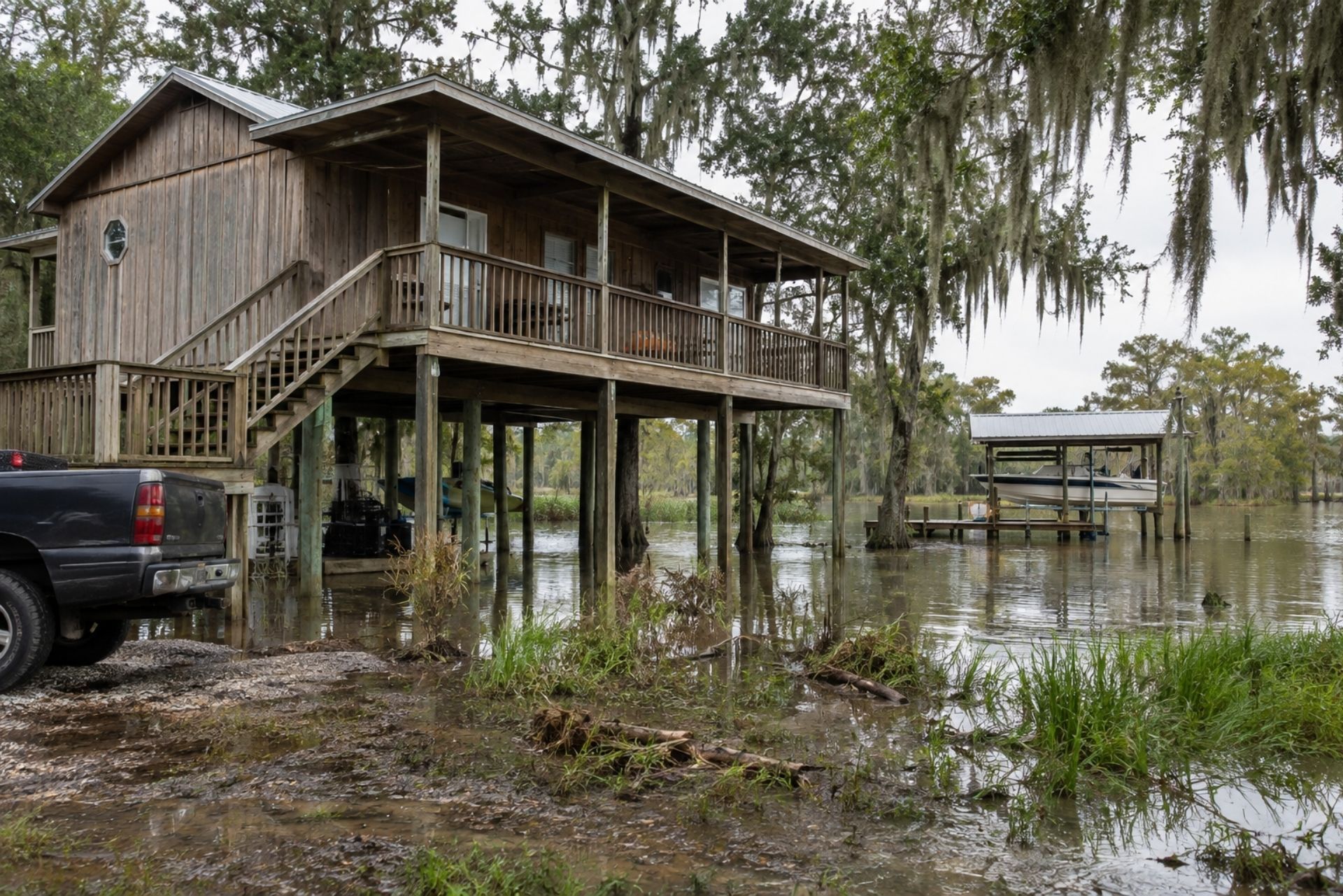
The marsh fringe south of Lacombe carries some of the highest-rated flood zones in the parish. Properties there are often mapped as Zone VE, which means a 1% annual chance of flooding plus the added hazard of velocity wave action, defined as waves of 3 feet or higher. That second part is what separates a V zone from an A zone.


Standing water damages a house. Moving water with waves breaks it apart. In an AE zone, surge may rise into a home and recede, leaving soaked drywall, ruined flooring, and mold. In a VE zone, waves strike pilings, tear off lower enclosures, and can push debris into the structure. Insurers and the NFIP rate those two scenarios very differently.


That difference shows up in three places:


Premiums: V zone policies typically cost more than A zone policies for a comparable structure because the expected severity of loss is higher.

Construction standards: VE zones require stricter building methods than AE zones, such as pile foundations and breakaway walls designed to fail without taking the house with them.

Enclosures: Finished or solid walls below the elevated floor can increase your rate and may leave you with property the policy limits or excludes.


One common mistake we see: a buyer purchases a marsh-edge camp, encloses the ground level for storage or a game room, and only learns at renewal that the enclosure pushed the rating up. Before you add walls under a raised home in Lacombe, have someone review how that change may affect your flood policy.

With no lender to satisfy, the decision is yours, and so is the entire loss. A total rebuild in this parish runs well into six figures.

Homeowners who own outright

Your lender requires coverage at least equal to the loan, and will buy a policy on your behalf at your expense if yours lapses.

Homeowners with a mortgage

Coverage Area State Minimum Common Higher Option Stronger Option
Injury, one person $15,000 $50,000 $100,000
Injury, per accident $30,000 $100,000 $300,000
Property damage $25,000 $50,000 $100,000
Who it fits Legal compliance only Riders with modest assets Homeowners, families, higher earners

Here's a common scenario: you misjudge a curve and clip a late-model pickup, injuring the driver. A single ambulance ride, ER visit, and follow-up imaging can eat through $15,000 quickly. Anything above your limit can become your personal responsibility, which may put your savings, wages, or home at risk.

Minimum Coverage vs. Actual Protection Needs

The jump from minimum limits to 100/300/100 often costs less than riders expect, because liability is typically priced per added layer rather than doubling with the limits. Ask for quotes at two or three levels side by side before you decide.

Camp and Contents Coverage for Lacombe Property Owners

Plenty of Lacombe properties are weekend camps rather than full-time homes. That matters, because flood coverage for a seasonal or secondary residence may be priced and structured differently than coverage for your primary home in Covington or Slidell. Some carriers apply higher rates to non-primary homes, and private flood markets may treat camps on a case-by-case basis.


The bigger surprise for camp owners is usually contents coverage below the lowest elevated floor. On a raised camp, the ground level is often where the expensive stuff lives: the boat, the freezer, fishing gear, a golf cart, tools, and sometimes a washer and dryer. NFIP coverage for personal property in areas below the lowest elevated floor is limited, and many of those items may not be covered at all once water rises under the house.


Here is how that plays out after a storm. The living space upstairs stays dry, so the owner assumes the claim will be small and straightforward. Then the adjuster explains that most of what was destroyed sat underneath the house, in an area where coverage is restricted. The policy did exactly what it was written to do; the owner just never read that part.


A few habits help:


  • Keep a written and photo inventory of what you store below the camp.
  • Move high-value items upstairs or off-site when a storm is forecast.
  • Ask whether a private flood policy may offer broader contents terms for your situation.
  • Confirm whether your camp is rated as a primary or secondary residence.

Comparing Building vs. Contents Coverage Limits

For residential properties, including camps, the NFIP caps building coverage at $250,000 and contents coverage at $100,000. The Louisiana Department of Insurance confirms the same maximum of $250,000 for the building and $100,000 for personal property on residential structures. Private flood markets work differently, and terms vary by carrier.

Feature NFIP Residential Private Flood (varies by carrier)
Building limit Up to $250,000 May offer higher limits
Contents limit Up to $100,000 May offer higher limits
Below-elevated-floor contents Limited May be broader on some policies
Additional living expense Not included May be available
Replacement cost on contents Typically actual cash value May be offered
Availability in VE zones Available Depends on carrier appetite

If your Lacombe home would cost more than $250,000 to rebuild, an NFIP policy alone may leave a gap. Some owners pair an NFIP policy with excess flood coverage; others place the whole risk privately. Neither answer fits every property, which is why comparing both side by side is worth the time.

The jump from minimum limits to 100/300/100 often costs less than riders expect, because liability is typically priced per added layer rather than doubling with the limits. Ask for quotes at two or three levels side by side before you decide.

One tip: keep a dated list of serial numbers and photos of your tools. Claims with documentation move much faster than claims built on memory.

Feature Commercial Property Inland Marine (Tool Floater)
Where it applies Your fixed shop location Jobsites, truck, in transit
Typical items Stationary machines, inventory, building Portable saws, nailers, hand tools
Theft from vehicle Usually not covered Often covered, with conditions
Fire or storm at shop Typically covered May be covered if tools are there
Who needs it Carpenters with a shop Nearly every working carpenter

How Deductible Types Compare

Comparison of NFIP vs. Excess Flood Coverage

Feature NFIP Policy Excess Flood Policy
Building limit Up to $250,000 Typically adds coverage above $250,000
Who issues it Federal program, sold through agents Private carriers
Waiting period Generally 30 days May be shorter, varies by carrier
Additional living expenses Not included May be included, depending on policy
Basement coverage Very limited May be broader on some policies
CRS premium credit Applies in Mandeville Typically does not apply
Best fit for Base layer for most homes Higher-value or lakefront homes

Elevation Requirements After a Loss

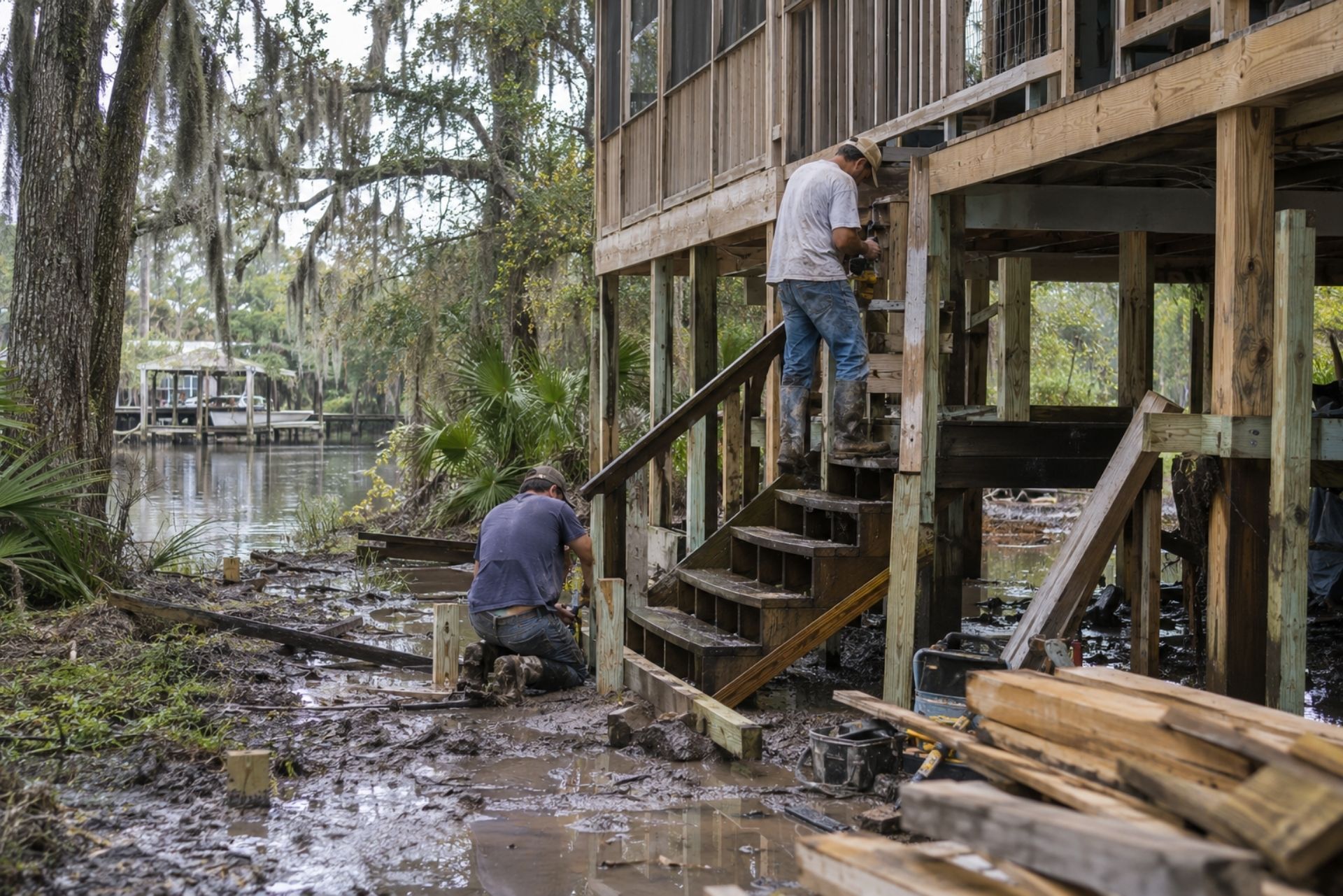
This is the part of flood insurance most Lacombe homeowners never think about until they are standing in a gutted house. If a flood causes enough damage that the parish classifies your structure as "substantially damaged," you may not be allowed to simply repair it as it was. Instead, you may have to bring the entire building into compliance with current floodplain rules, which often means elevating it.


Here is how that process typically unfolds:


  1. Damage assessment: After a major event, parish floodplain officials evaluate damaged homes and compare repair costs to the structure's value.
  2. Substantial damage determination: If repair costs cross the threshold under FEMA rules enforced locally, the home is declared substantially damaged.
  3. Compliance requirement: The rebuilt structure must meet the current Base Flood Elevation, and many local jurisdictions also require freeboard, an added safety margin above the BFE.
  4. Permitting: You typically cannot get a building permit for repairs until your plans show compliance.


For a slab home built decades ago in an AE zone, this can mean raising the house on piers or pilings, or tearing down and rebuilding. In a VE zone, the rebuild must also follow the stricter pile and breakaway wall standards. Those costs add up quickly.


Standard NFIP policies include Increased Cost of Compliance coverage, which may help pay toward elevation, demolition, or relocation when a home is declared substantially damaged. It is a separate pot of money from your building limit, but it typically will not cover the full cost of a major elevation project. Knowing your current elevation, and how far below today's BFE your lowest floor sits, tells you how exposed you are before a storm ever forms.

General liability covers physical harm: fires, shocks, and property damage from your work. Professional liability, sometimes called errors and omissions, may cover financial loss from design mistakes or bad advice, such as an undersized service you specified on a load calculation. Electricians who do design-build work, panel sizing for solar, or consulting often need both, because a general liability policy typically will not respond to a pure financial loss.

The most common mistake is buying limits sized for the center you opened, not the center you run now. Enrollment grows, a second van shows up, an after-school program starts, and the policy stays the same. A yearly review against your actual operations catches that drift before a claim exposes it.

General Liability vs. Workers Compensation

Common Questions About Lacombe Flood Policies

Do I need flood insurance if I am in an X zone? Your lender may not require it, but X zones still flood, especially where Bayou Lacombe backs up during rain and surge events. Coverage in lower-risk zones is typically priced more affordably, which makes it worth considering.


Does my homeowners policy cover lake surge? No. Standard homeowners policies typically exclude flood, including surge from Lake Pontchartrain. You need a separate flood policy through the NFIP or a private carrier.


Can I insure a camp I only use on weekends? Yes. Camps can be insured, though rates and terms may differ from a primary residence, and contents stored below the elevated floor may have limited coverage.


Is there a waiting period before a new flood policy starts? NFIP policies typically include a waiting period before coverage takes effect, with limited exceptions such as some loan closings. Do not wait until a storm enters the Gulf to buy.


Will an elevation certificate lower my premium? It may. An elevation certificate documents how high your lowest floor sits relative to the BFE, and a well-elevated home can sometimes qualify for a better rate.


What happens if my home is declared substantially damaged? You will typically need to elevate or rebuild to current floodplain standards before repairing. Increased Cost of Compliance coverage on an NFIP policy may help with part of that cost.

The jump from minimum limits to 100/300/100 often costs less than riders expect, because liability is typically priced per added layer rather than doubling with the limits. Ask for quotes at two or three levels side by side before you decide.

One tip: keep a dated list of serial numbers and photos of your tools. Claims with documentation move much faster than claims built on memory.

Feature Commercial Property Inland Marine (Tool Floater)
Where it applies Your fixed shop location Jobsites, truck, in transit
Typical items Stationary machines, inventory, building Portable saws, nailers, hand tools
Theft from vehicle Usually not covered Often covered, with conditions
Fire or storm at shop Typically covered May be covered if tools are there
Who needs it Carpenters with a shop Nearly every working carpenter

Making the Right Choice for Your Lacombe Property

Flood coverage in Lacombe comes down to a handful of facts about your specific property: your FEMA zone, your elevation, how you use the building, and what you keep underneath it. A marsh-edge VE camp and a slab home near Highway 190 can face very different premiums, coverage gaps, and rebuilding obligations, even though both sit in the same small community.


The surest way to avoid surprises is to sit down with someone who will pull your flood map, read your elevation certificate, and explain what your policy actually covers before you ever file a claim. Aubert Insurance Agency has been insuring St. Tammany Parish families since 1910, and as an independent agency we compare NFIP and private flood options from multiple carriers so you can see the differences clearly.


Water will come up Bayou Lacombe again. Make sure your policy is ready for it. Start a Quote today and let us review your Lacombe property with you.

About the Author

Kyle Beerbohm

President


We've been independent since 1910, and four generations of local ownership have kept us that way. We're one of the oldest agencies in St. Tammany Parish and the fourth oldest business in the City of Covington. I treat that history as a responsibility rather than a plaque on the wall. My job is to keep us answering to the families and business owners who walk through our doors, and to keep serving this parish for another hundred years.

Louisiana Insurance Questions, Answered

Questions clients ask us

Short, plain answers to what people ask before they call. Anything else, phone the office and ask.

  • What does an independent insurance agency do?

    We represent you, not one insurance company. We gather your information once, then compare coverage and price across the carriers we hold contracts with. You get choices, and one agent handles the paperwork.

  • Which types of insurance does Aubert offer?

    We write 13 personal lines, including home, auto, flood, boat, and life. We write 15 commercial lines, including business owners policies, general liability, workers compensation, and commercial property.

  • Do I need flood insurance in St. Tammany Parish?

    Your homeowners policy excludes flood, and much of the Northshore has flooded outside mapped high-risk zones. Lenders require it inside those zones. We check your flood zone and quote NFIP and private options.

  • Which states are you licensed in?

    We hold licenses in Louisiana, Mississippi, Florida, and Texas. License numbers appear in the footer of every page on this site.

  • How do you find me a competitive rate?

    We take your details once and market them to the carriers and wholesale brokers that fit your risk. We compare the offers, explain the differences in coverage, and recommend the strongest fit.

  • How do I file a claim or request a certificate?

    Call the office or use the Client Center on this site. We report the claim, follow the adjuster, and send certificates of insurance to whoever needs them.

Personal Insurance in Louisiana

Coverage for your home, your vehicles, and your family

Thirteen personal lines sit under one roof. Start with the coverage you need most, and we price it across our markets.

Home Insurance

Protect your house, its contents, and your liability with a policy priced across many Louisiana homeowners carriers.

Car Insurance

Cover every driver and vehicle in your household, and compare limits and deductibles side by side before you buy.

Flood Insurance

Standard home policies exclude flood. We write NFIP and private flood coverage for St. Tammany Parish properties.

Umbrella Insurance

Add a layer of liability above your home and auto limits, so one serious claim never reaches your savings.


Boat Insurance

Cover your hull, motor, trailer, and liability on the lake, the river, and the Gulf, wherever you launch.


Life Insurance

Replace your income for the people who depend on it, with term and permanent options we quote across carriers.

Business Insurance in Louisiana

Coverage for the business you built

Fifteen commercial lines, written for the payrolls, fleets, and buildings that Louisiana carriers ask hard questions about.

Business Insurance by Industry

We protect hundreds of businesses of all shapes and sizes

We know the exposures, the contract language, and the markets that write these trades on the Northshore.

General Contractors

Builders risk, general liability, and comp for homebuilders and remodelers working across St. Tammany Parish.

Plumber Insurance

Plumbers, electricians, roofers, and painters get liability, tools, and auto coverage that satisfies job requirements.

Restaurants

Property, liquor liability, spoilage, and comp for kitchens, bars, and cafés, including Louisiana association programs.

5-Star Rated by St. Tammany Clients

What Our Clients Say

Neighbours, business owners, and families across Covington and Slidell tell the story better than we can.

Insurance Tips & Local News

Insurance tips for Louisiana homes and businesses

Practical reading on flood zones, hurricane deductibles, and the coverage questions local business owners raise.

louisiana citizens homeowners insurance what you need to know
15 October 2026
Learn about Louisiana Citizens homeowners insurance costs, coverage, eligibility, and switching to private insurers with Aubert Insurance Agency.

certificate of insurance requirements for louisiana subcontractors
15 October 2026
Learn Louisiana subcontractor COI requirements, liability limits, additional insured endorsements, and waivers of subrogation with Aubert Insurance Agency.

general liability cost for louisiana contractors
15 October 2026
Learn Louisiana contractor general liability insurance costs by trade, payroll, sales, and minimum premiums. Compare quotes with Aubert Insurance Agency.

louisiana fortify homes program insurance discount
15 October 2026
Explore Louisiana Fortify Homes Program grants up to $10,000, FORTIFIED roof standards, and insurance premium credits with Aubert Insurance Agency.

how does builders risk insurance work in louisiana
15 October 2026
Learn how Louisiana builders risk insurance protects spec and custom homes, who buys coverage, when it ends, and storm risks with Aubert Insurance Agency.

what is the lhba general liability trust
15 October 2026
Explore the LHBA General Liability Trust in Louisiana, how pooled coverage works, builder eligibility, dividends, and risks with Aubert Insurance Agency.

what is the homebuilders self insurers fund
15 October 2026
Explore Louisiana's Homebuilders Self Insurers Fund, how workers comp coverage works, membership eligibility, dividends, and risks with Aubert Insurance Agency.

workers comp cost for louisiana contractors
15 October 2026
Learn Louisiana contractor workers comp costs, class codes, payroll rates, experience mods, and audit risks. Compare quotes with Aubert Insurance Agency.

who needs workers comp in louisiana
15 October 2026
Learn who needs workers comp in Louisiana, including employer rules, owner exemptions, subcontractor risks, and penalties with Aubert Insurance Agency.

louisiana contractor license insurance requirements
15 October 2026
Learn Louisiana contractor insurance requirements for residential, home improvement, and commercial licenses. Compare coverage with Aubert Insurance Agency.


Request Your Free Insurance Quote

Tell us what you need covered

Send the form or call the office. A licensed agent in Covington or Slidell answers you directly.

614 E. Boston St., Covington, LA 70433.  (985) 892-3101

58418 Tyler Drive, Slidell, LA 70461 ·   (985) 641-0520

Call

Covington office, Monday through Friday

Email

Policy questions, certificates, and claims

Call

614 E. Boston St., Covington, LA 70433

58418 Tyler Drive, Slidell, LA 70461
