













Covington & Slidell Independent Insurance Agents
Abita Springs homeowners face real flood exposure from the Abita River and from local drainage that backs up during heavy rain. Many properties sit outside high-risk zones, so lenders may not require coverage. That optional status says nothing about actual risk, and a separate NFIP or private flood policy is typically the only way to protect your home and belongings.
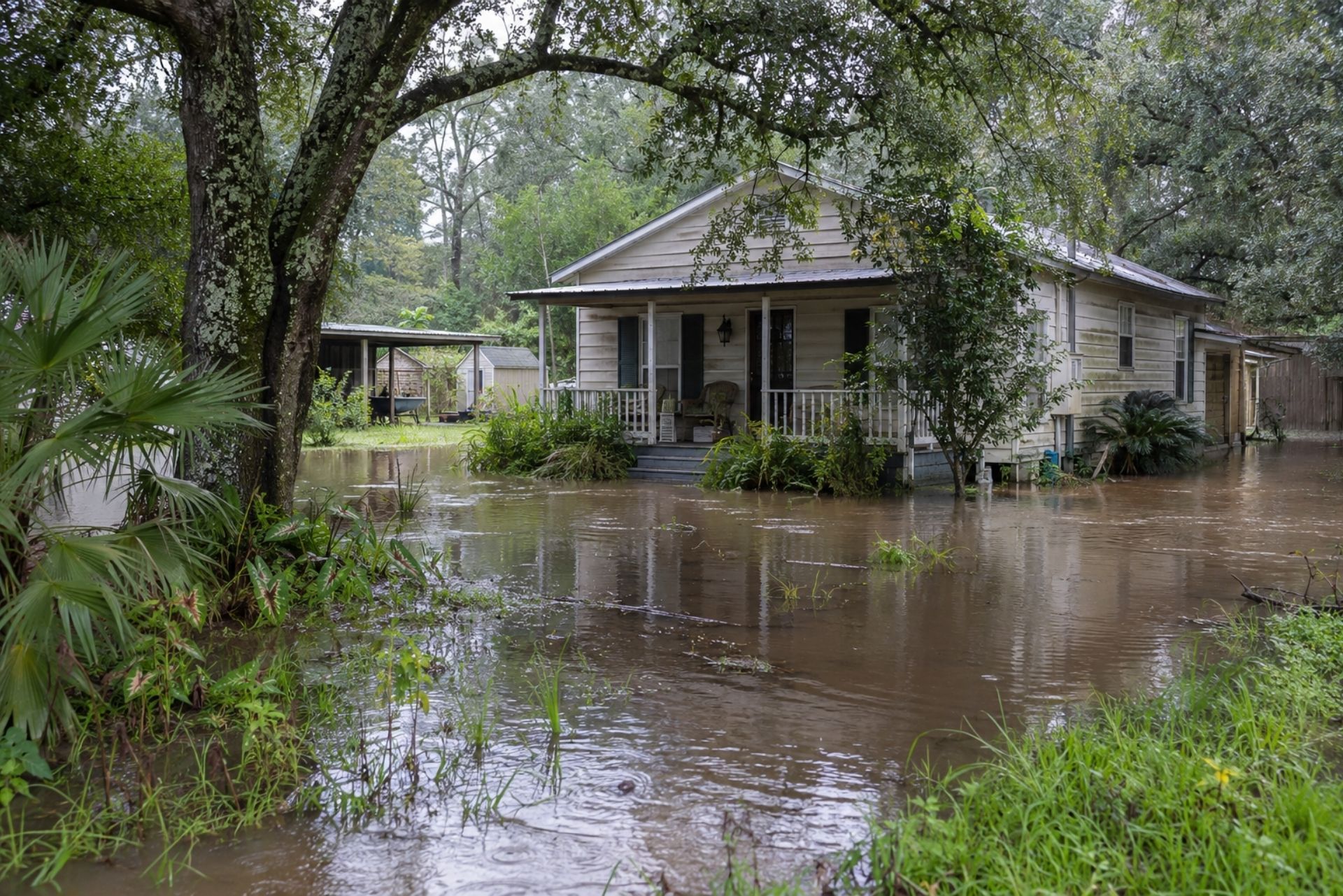
Picture a resident on a quiet street off Highway 36 in March 2016. They never thought much about the river a few blocks away, and their mortgage company never asked about flood coverage. Within days, water was in the garage, then the den. Homeowners insurance covered none of it.
That scenario played out across this small St. Tammany town, and it still shapes how people here should think about protection. Abita Springs is known for its springs, its brewery, and its trailhead charm. It is also a low-lying community laced with creeks and bayous that feed into the Bogue Falaya and Tchefuncte systems.
This guide covers flood insurance for Abita Springs, LA homeowners: what happened when the river overflowed in 2016, why repetitive loss properties matter to everyone in the parish, how elevation and mitigation grants may lower premiums, and why "lender-optional" is one of the most misunderstood phrases in local real estate.
Understanding Flood Risks in Abita Springs
Abita Springs residents deal with two separate flood threats: the Abita River rising out of its banks and localized drainage failures during intense rainfall. Either one can push water into homes far from a mapped high-risk zone. Standard homeowners policies exclude flood, so specialized NFIP or private coverage is needed whatever your lender says.
River flooding gets the headlines, but drainage flooding catches more people off guard. When several inches of rain fall in a few hours, ditches and culverts in older neighborhoods fill faster than they empty. Water then pools in yards and creeps toward slab foundations. That happens even when the river itself stays within its banks.
Parish-wide numbers show how common this is. St. Tammany Parish has recorded 38,420 NFIP flood claims since 1978, with total payouts above $1.8 billion. Over the past ten years (2017 to 2026), the average paid flood claim in the parish came to $38,029. For most families, that is not money sitting in a savings account.
Soil and topography add to the problem here. Flat terrain and clay-heavy ground mean water lingers instead of draining away. A home sitting a foot or two lower than its neighbors can take on water while the house next door stays dry.

On this page
Aubert Insurance Agency is a local, independent agency, licensed to serve individuals and businesses across Louisiana, Mississippi, Florida and Texas.
We serve clients from our offices in Covington and Slidell and throughout St. Tammany Parish — working with dozens of carriers and wholesale markets to help homeowners, drivers, contractors, restaurant owners, property investors, auto shops, professional practices and many other personal and commercial clients find coverage that fits.
Licensed in Louisiana #3661 · Mississippi #15039075 · Florida #W0772236 · Texas #2381820
Lessons from the Abita River Overflow in 2016
2016 was not a one-storm year for Abita Springs. The Abita River at Highway 36 hit a record crest of 21.11 feet on March 12, 2016, then rose again to a major crest of 20.27 feet that August. Both readings topped the 20.0-foot flood stage. A single community took two major flood events within five months.
Several practical lessons came out of that year:
- Records get broken. Flood maps and past experience are based on history. The March 2016 crest set a new high, which means past "safe" assumptions failed.
- Timing matters for coverage. New NFIP policies typically carry a 30-day waiting period. Anyone who tried to buy coverage after the March crest made headlines may not have been protected when August arrived.
- Contents get overlooked. Plenty of people with building coverage found they had little or no contents coverage, so furniture, appliances, and clothing came out of pocket.
- Back-to-back losses compound. Families who were still drying out from March faced a second event before repairs were done.
The waiting period is the lesson we bring up most often. People tend to shop for flood insurance when the river forecast looks scary. By then, it is usually too late for that storm.
With no lender to satisfy, the decision is yours, and so is the entire loss. A total rebuild in this parish runs well into six figures.
Homeowners who own outright
Your lender requires coverage at least equal to the loan, and will buy a policy on your behalf at your expense if yours lapses.
Homeowners with a mortgage
Repetitive Loss Properties and the NFIP
A repetitive loss property is one that has filed multiple flood claims with the NFIP over time. When the claims get frequent or large enough, FEMA classifies the home as Severe Repetitive Loss (SRL). In St. Tammany Parish, that subset of SRL properties has historically accounted for over $14.4 million in obligated mitigation and claim funding.
Why should you care if your own house has never flooded? Repetitive loss properties affect the whole community. They influence how FEMA views local risk, how the parish prioritizes drainage projects, and which homes get first access to mitigation money.
If you are buying in Abita Springs, ask the seller directly about prior flood claims. A home with a repetitive loss history may face higher premiums and stricter rebuilding rules after a future loss. Louisiana sellers typically disclose known flooding on the property disclosure form, but people interpret "known" loosely. Ask for the flood claim history in writing.
There is an upside, too. Homes on the repetitive loss list are often first in line for elevation and buyout funding. For some owners, that designation becomes the path to a permanent fix.

The roof
Age, material and shape drive the wind rate more than any other factor. A fortified roof designation opens markets that would otherwise decline the house.
Elevation and Mitigation Grants: Reducing Your Premium
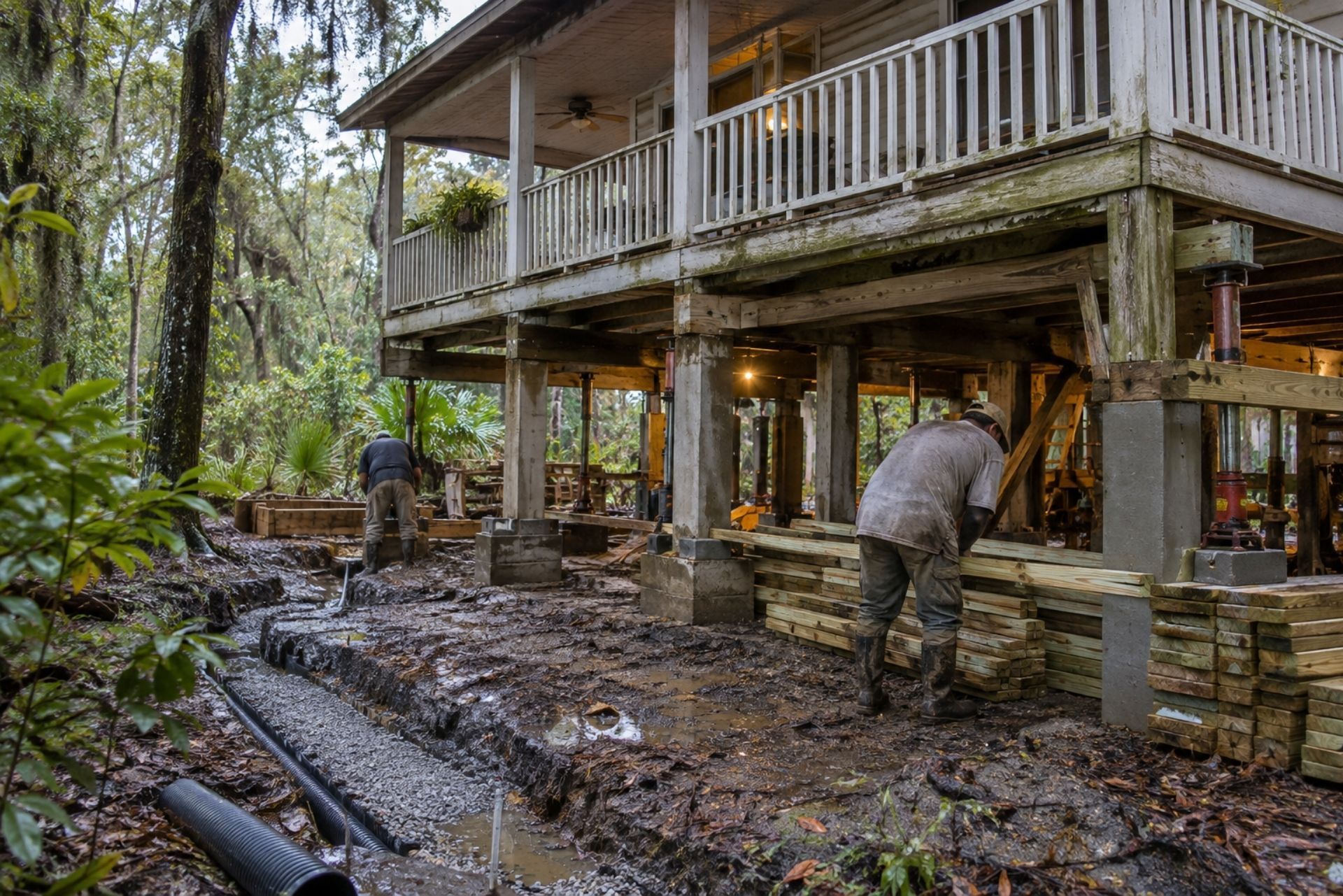
Under FEMA's current rating approach, a home's elevation relative to expected flood levels is one of the biggest drivers of NFIP cost. Raising a structure, filling in a crawlspace with proper flood vents, or moving mechanicals above flood level may all lower what you pay. The construction itself is expensive, which is where grants come in.
St. Tammany Parish is currently working through its 2026 Hazard Mitigation Plan Update, which it needs to stay eligible for federal mitigation grants. Those grant programs typically fund home elevations, acquisitions of flood-prone homes, and drainage improvements. Repetitive loss and SRL properties usually receive priority.
Every resident already benefits from community-level mitigation. Thanks to the parish's Class 7 Community Rating System rating, Abita Springs policyholders receive a 15% reduction on NFIP flood insurance premiums. That reduction depends on the parish keeping up its floodplain management work, so it is not guaranteed forever.
On your own, consider:
- Getting an elevation certificate, which may support a more accurate rate.
- Asking the parish permits office whether your property qualifies for grant programs.
- Raising HVAC units, water heaters, and electrical panels.
Comparing NFIP vs. Private Flood Insurance
Many Abita Springs homeowners assume the NFIP is the only choice. Private flood carriers have grown in Louisiana, and for some properties they may offer higher limits or different terms. Here is how the two typically compare:
| Feature | NFIP | Private Flood (varies by carrier) |
|---|---|---|
| Building limit | Up to $250,000 | May offer higher limits |
| Contents limit | Up to $100,000 | May offer higher limits |
| Waiting period | Typically 30 days | Often shorter, sometimes 10-15 days |
| Loss of use / living expenses | Not included | May be included |
| Basement coverage | Very limited | Varies, sometimes broader |
| CRS premium reduction | Yes, 15% in Abita Springs | Not applicable |
| Rate stability | Federally backed | Carrier can exit market or non-renew |
Neither option suits every home. A low-elevation house with a repetitive loss history may only find coverage through the NFIP, while a newer, elevated home may find private terms worth a look. Comparing both side by side is the only honest way to know.
Covington & Slidell Independent Insurance Agents
Comparison of Standard vs. Waterfront Coverage Limits
Why Lender-Optional Does Not Mean Low Risk
This is the misconception we hear most. Lenders require flood insurance only when a home sits in a Special Flood Hazard Area, the zones starting with A or V. Homes in Zones B, C, and X fall under lender-optional rules, and buyers often take that as a sign of safety.
The numbers say otherwise. Roughly 28% of all flood claims in St. Tammany Parish come from properties in Zones B, C, and X. More than one in four flood claims here, in other words, comes from homes where nobody required a policy. The 2016 crests and the drainage flooding that follows heavy storms do not stop at a map boundary.
A lender's rule protects the lender's loan. It was never meant to measure your exposure. Once your mortgage is paid off, or if you bought with cash, nobody will remind you at all.
The other problem: federal disaster aid is not insurance. When aid is available, it often arrives as a low-interest loan you have to repay, or as a grant that covers a fraction of the damage. A flood policy in a moderate-risk zone also tends to cost far less than one in a high-risk zone, which makes skipping it hard to justify.
not, unless you're both named on the policy. Each roommate typically needs their own coverage, and shared policies can get messy when one person files a claim.
Will my renters insurance cover my dog biting someone? Many policies include pet liability under personal liability, but some carriers exclude certain breeds or cap dog bite claims. Tell your agent about your pet upfront so there's no surprise later.
Does my landlord's insurance cover my belongings? No. Your landlord's policy typically covers the building only, so your furniture, clothes and electronics need your own policy.
When should I buy flood insurance before hurricane season? Aim for spring. NFIP contents coverage generally has a 30-day waiting period, so buying in late May means protection by the heart of the season.
What should I do to prepare my rental for a hurricane? Take a video walkthrough of every room, save receipts for big items in the cloud and keep a copy of your policy on your phone. Good documentation is the single biggest factor in how fast a storm claim gets paid.
Will renters insurance pay for a hotel if we evacuate? It depends. Loss of use typically kicks in when your rental is uninhabitable from a covered loss or when a civil authority orders evacuation, but check your policy wording.
The roof
Age, material and shape drive the wind rate more than any other factor. A fortified roof designation opens markets that would otherwise decline the house.
| Coverage | What It Covers | Example Claim | Required for License? |
|---|---|---|---|
| General Liability | Injury to others, damage to client property | Dust ruins a homeowner's sofa | Yes, $500,000 minimum (residential) |
| Workers' Compensation | Your employees' injuries and lost wages | Taper falls from stilts | Required if you have employees; proof needed for labor-only subs |
| Professional Liability | Errors in advice or design | Rarely relevant unless you design or consult | No |
| Mold Buy-Back | Limited mold claims, if offered | Mold blamed on board you installed | No, but often worth considering |
| Feature | General Liability | Garagekeepers Legal Liability | Garagekeepers Direct Primary |
|---|---|---|---|
| What it protects | Third-party injury and property damage from your operations | Customer vehicles in your care | Customer vehicles in your care |
| Fault required? | Yes, you must be liable | Yes, you must be negligent | No, pays regardless of fault |
| Covers customer cars on your lot? | Usually excluded | Yes, if you're at fault | Yes |
| Hail or flood to customer cars | No | Usually not (act of nature) | Typically yes, if peril is covered |
| Customer relations | N/A | Customer may need to file with own insurer | Shop handles claim directly |
| Relative cost | Base cost | Lower | Higher |
Abita Springs Flood Insurance FAQs
Do I need flood insurance if I am in Zone X? Your lender probably won't require it, but you should strongly consider it. More than a quarter of St. Tammany flood claims come from moderate- to low-risk zones like X.
What does flood insurance actually cover? Building coverage typically protects the structure, foundation, electrical, plumbing, and built-in appliances. Contents coverage is separate and protects furniture, clothing, and electronics, so make sure your policy includes both.
Won't my homeowners policy pay for flood damage? No. Standard homeowners policies exclude flood from rising water, which is why a separate flood policy is needed.
How long before my new policy kicks in? NFIP policies typically have a 30-day waiting period, with some exceptions tied to a home purchase. Private policies may have shorter waits depending on the carrier.
Can elevating my house really lower my premium? It may, often significantly, because elevation is a major rating factor. An updated elevation certificate helps document the improvement.
Does the parish's CRS rating help me? Yes. Abita Springs residents receive a 15% reduction on NFIP premiums because of St. Tammany's Class 7 rating.
Making the Right Choice for Your Property
Abita Springs has a history that should make every homeowner think twice about going without flood coverage. The river set a record in March 2016 and flooded again that August. Parish claims run into the billions, and more than a quarter come from zones where no lender asked for a policy. Mitigation grants and the CRS reduction can bring costs down, but they only help people who actually carry coverage.
The right policy depends on your elevation, your flood zone, your claim history, and how much of your home and belongings you need to protect. Some homes are a clear fit for the NFIP. Others may find private terms worth considering, and some benefit from pairing the two with excess coverage.
That is where an independent agency earns its keep. Aubert Insurance Agency has served Louisiana families since 1910, and we compare options from multiple carriers instead of pushing a single product. We also take the time to explain what your policy covers, what it excludes, and where the gaps are, before you need to file a claim.
Don't wait for the next river forecast to start thinking about it. Remember the 30-day clock. Start a Quote today, and let's find coverage that fits your Abita Springs home.

About the Author
Kyle Beerbohm
President
We've been independent since 1910, and four generations of local ownership have kept us that way. We're one of the oldest agencies in St. Tammany Parish and the fourth oldest business in the City of Covington. I treat that history as a responsibility rather than a plaque on the wall. My job is to keep us answering to the families and business owners who walk through our doors, and to keep serving this parish for another hundred years.
Louisiana Insurance Questions, Answered
Questions clients ask us
Short, plain answers to what people ask before they call. Anything else, phone the office and ask.
What does an independent insurance agency do?
We represent you, not one insurance company. We gather your information once, then compare coverage and price across the carriers we hold contracts with. You get choices, and one agent handles the paperwork.
Which types of insurance does Aubert offer?
We write 13 personal lines, including home, auto, flood, boat, and life. We write 15 commercial lines, including business owners policies, general liability, workers compensation, and commercial property.
Do I need flood insurance in St. Tammany Parish?
Your homeowners policy excludes flood, and much of the Northshore has flooded outside mapped high-risk zones. Lenders require it inside those zones. We check your flood zone and quote NFIP and private options.
Which states are you licensed in?
We hold licenses in Louisiana, Mississippi, Florida, and Texas. License numbers appear in the footer of every page on this site.
How do you find me a competitive rate?
We take your details once and market them to the carriers and wholesale brokers that fit your risk. We compare the offers, explain the differences in coverage, and recommend the strongest fit.
How do I file a claim or request a certificate?
Call the office or use the Client Center on this site. We report the claim, follow the adjuster, and send certificates of insurance to whoever needs them.

Personal Insurance in Louisiana
Coverage for your home, your vehicles, and your family
Thirteen personal lines sit under one roof. Start with the coverage you need most, and we price it across our markets.
Home Insurance
Protect your house, its contents, and your liability with a policy priced across many Louisiana homeowners carriers.
Car Insurance
Cover every driver and vehicle in your household, and compare limits and deductibles side by side before you buy.
Flood Insurance
Standard home policies exclude flood. We write NFIP and private flood coverage for St. Tammany Parish properties.
Umbrella Insurance
Add a layer of liability above your home and auto limits, so one serious claim never reaches your savings.
Boat Insurance
Cover your hull, motor, trailer, and liability on the lake, the river, and the Gulf, wherever you launch.
Life Insurance
Replace your income for the people who depend on it, with term and permanent options we quote across carriers.
Business Insurance in Louisiana
Coverage for the business you built
Fifteen commercial lines, written for the payrolls, fleets, and buildings that Louisiana carriers ask hard questions about.
Contractors Insurance
General contractors, trade contractors and specialty crews. We cover the liability, tools, vehicles and workers your jobs depend on.
Business Owners (BOP)
One policy bundling property and liability for a small business. Straightforward cover for the building, the contents and the risk.
Professional Liability
Protection when your advice or professional work is challenged. A staple of any commercial package for a service business.
Commercial Property
Landlords and commercial real estate investors. We insure the building, the habitation risk and the income it produces.
Workers Compensation
Protecting your employees protects your business. Medical costs and lost wages covered when someone is hurt on the job.
Commercial Auto
Trucks, vans and fleets. We shop a wide range of commercial auto markets to match your vehicles and your drivers.
Business Insurance by Industry
We protect hundreds of businesses of all shapes and sizes
We know the exposures, the contract language, and the markets that write these trades on the Northshore.

General Contractors
Builders risk, general liability, and comp for homebuilders and remodelers working across St. Tammany Parish.

Plumber Insurance
Plumbers, electricians, roofers, and painters get liability, tools, and auto coverage that satisfies job requirements.

Restaurants
Property, liquor liability, spoilage, and comp for kitchens, bars, and cafés, including Louisiana association programs.
5-Star Rated by St. Tammany Clients
What Our Clients Say
Neighbours, business owners, and families across Covington and Slidell tell the story better than we can.


Insurance Tips & Local News
Insurance tips for Louisiana homes and businesses
Practical reading on flood zones, hurricane deductibles, and the coverage questions local business owners raise.
Request Your Free Insurance Quote
Tell us what you need covered
Send the form or call the office. A licensed agent in Covington or Slidell answers you directly.
614 E. Boston St., Covington, LA 70433. (985) 892-3101
58418 Tyler Drive, Slidell, LA 70461 · (985) 641-0520
Call
614 E. Boston St., Covington, LA 70433
58418 Tyler Drive, Slidell, LA 70461













