













Baton Rouge LA Contractors Insurance

Covington & Slidell Independent Insurance Agents

Baton Rouge contractors typically need General Liability, Workers Compensation, Commercial Auto, and an Umbrella policy, plus specialized endorsements for industrial plant work, flood rebuilds, and subdivision projects. As of August 1, 2026, Louisiana also requires residential contractors to carry at least $500,000 in general liability, so many older policies no longer qualify.


That last point catches a lot of contractors off guard. The Capital Region is busy right now. Petrochemical turnarounds along the river, elevation jobs in neighborhoods still recovering from past floods, and new rooftops in Prairieville and Zachary all mean steady work. Each of those job types also carries a different insurance profile, and the policy that got you through 2024 may leave gaps in 2026. Here is how the pieces fit together for contractors working in and around Baton Rouge.

Baton Rouge Contractor Insurance Requirements

Most Baton Rouge contractors need General Liability, Workers Comp, and specialized endorsements that match the work they actually perform. Industrial sites, residential rebuilds, and new subdivisions each bring their own contract terms, so a single generic policy rarely satisfies every project owner, general contractor, or state licensing requirement.


The biggest 2026 change came from the legislature. Under Act 757, the minimum general liability for residential, mold remediation, and home improvement contractors rose from $100,000 to $500,000, effective August 1, 2026. The same act requires that your policy carry no exclusions for the specific operations you are licensed to perform.


That exclusion rule matters more than most people realize. A remodeler whose policy quietly excludes roofing or mold work could face LSLBC discipline even with the right limit on paper. And the penalties are real: the board can now issue fines up to 10% of the contract value, or $10,000 when no value is set. Roofers should also confirm licensing, since residential roofing jobs of $7,500 or more now require a Residential Roofing or Residential Construction license.

By: Kyle Beerbohm
President

Aubert Insurance Agency is a local, independent agency, licensed to serve individuals and businesses across Louisiana, Mississippi, Florida and Texas.

We serve clients from our offices in Covington and Slidell and throughout St. Tammany Parish — working with dozens of carriers and wholesale markets to help homeowners, drivers, contractors, restaurant owners, property investors, auto shops, professional practices and many other personal and commercial clients find coverage that fits.

Licensed in Louisiana #3661 · Mississippi #15039075 · Florida #W0772236 · Texas #2381820

The jump from minimum limits to 100/300/100 often costs less than riders expect, because liability is typically priced per added layer rather than doubling with the limits. Ask for quotes at two or three levels side by side before you decide.

Here's a common scenario: you misjudge a curve and clip a late-model pickup, injuring the driver. A single ambulance ride, ER visit, and follow-up imaging can eat through $15,000 quickly. Anything above your limit can become your personal responsibility, which may put your savings, wages, or home at risk.

Scenario Dwelling limit All-other-perils deductible Named-storm deductible
Newer build, inland St. Tammany $350,000 $1,000 2%
Newer build, higher wind zone $350,000 $1,000 5%
Older home, updated roof $275,000 $2,500 2%
Older home, original roof $275,000 $2,500 5%
Fortified roof designation $400,000 $1,000 2%
Rebuilt after a prior claim $400,000 $2,500 5%
Bundled with auto $350,000 $1,000 2%

Meeting Plant and Industrial Site Insurance Requirements

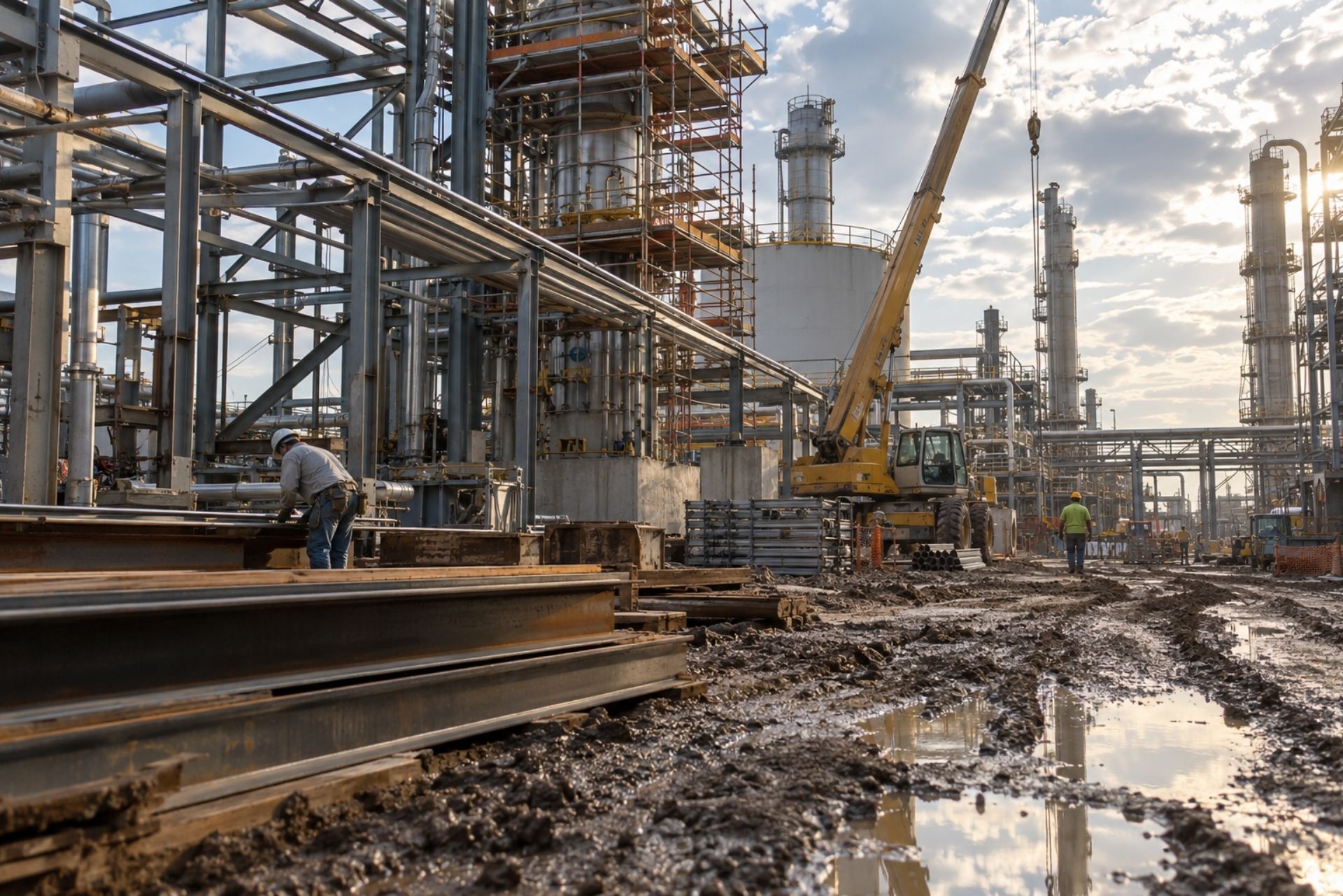
The industrial corridor running from north Baton Rouge down through Geismar and Plaquemine operates on a different set of rules. Plant owners and their prime contractors write insurance requirements into master service agreements, and those requirements are usually far stricter than anything the state mandates. Showing up with a residential-level policy simply will not get you badged onto the site.


Here is what industrial contracts commonly ask for:


  • Higher per-occurrence and aggregate limits on General Liability, often stacked with an umbrella reaching into the millions
  • Additional insured status for the plant owner, usually on a primary and noncontributory basis
  • Waiver of subrogation on GL, Workers Comp, and Auto
  • Contractors pollution liability, since standard GL policies typically exclude most pollution events
  • USL&H or maritime endorsements for anyone working on docks, barges, or near navigable water
  • Per-project aggregate so one large claim does not exhaust your limits for every other job


The mistake we see most often is signing the MSA first and calling the agent second. If the contract requires a waiver of subrogation and your carrier does not endorse it, you may be in breach before the first day on site. Send the insurance exhibit to your agent before you sign.

With no lender to satisfy, the decision is yours, and so is the entire loss. A total rebuild in this parish runs well into six figures.

Homeowners who own outright

Your lender requires coverage at least equal to the loan, and will buy a policy on your behalf at your expense if yours lapses.

Homeowners with a mortgage

Coverage Area State Minimum Common Higher Option Stronger Option
Injury, one person $15,000 $50,000 $100,000
Injury, per accident $30,000 $100,000 $300,000
Property damage $25,000 $50,000 $100,000
Who it fits Legal compliance only Riders with modest assets Homeowners, families, higher earners

Here's a common scenario: you misjudge a curve and clip a late-model pickup, injuring the driver. A single ambulance ride, ER visit, and follow-up imaging can eat through $15,000 quickly. Anything above your limit can become your personal responsibility, which may put your savings, wages, or home at risk.

Minimum Coverage vs. Actual Protection Needs

The jump from minimum limits to 100/300/100 often costs less than riders expect, because liability is typically priced per added layer rather than doubling with the limits. Ask for quotes at two or three levels side by side before you decide.

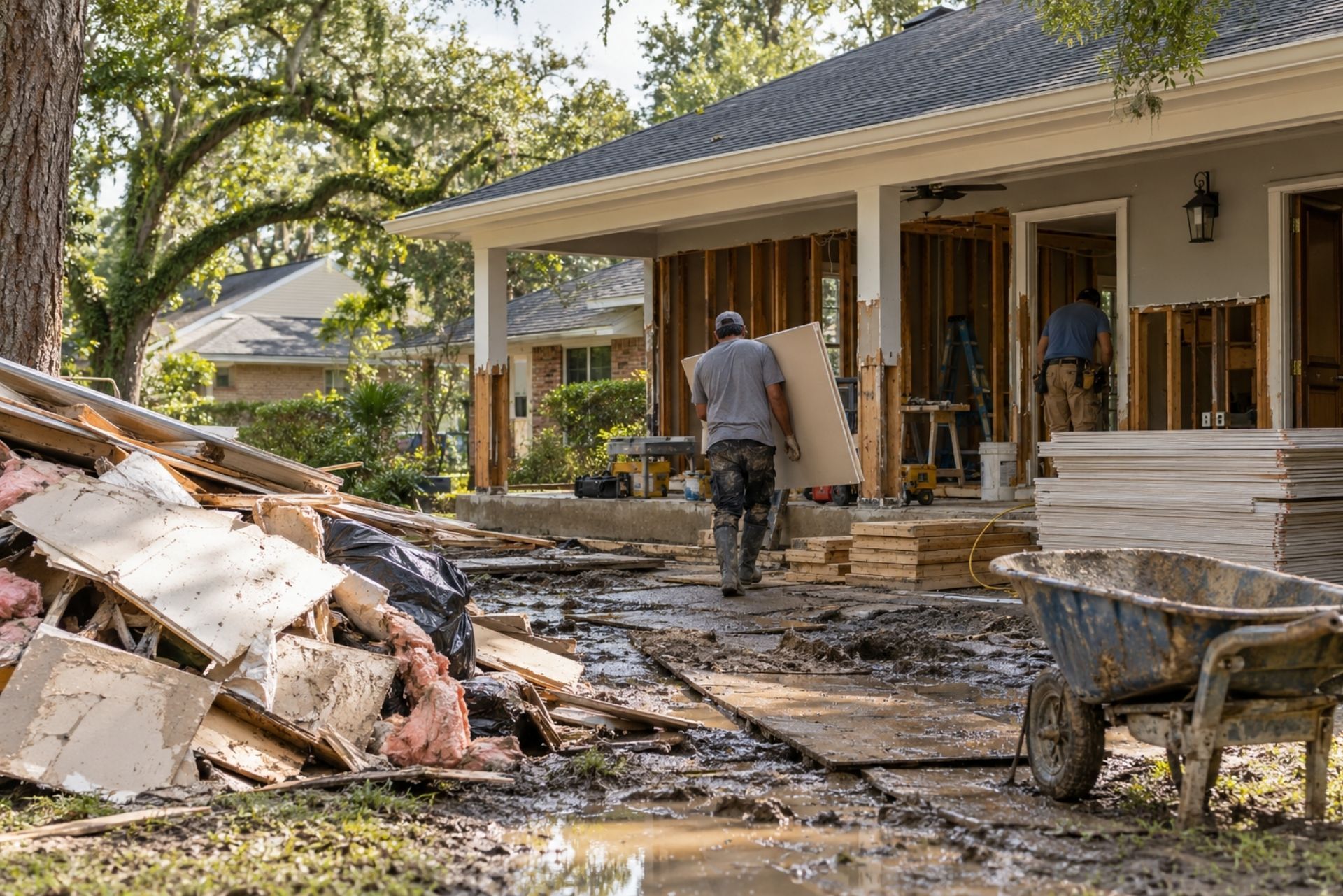
Flood recovery work is still a major part of the Baton Rouge market. The Restore Louisiana Homeowner Assistance Program has offered $122 million in grants to 4,200 homeowners for reconstruction, and East Baton Rouge Parish holds 38,207 active NFIP policies as of August 2026. That adds up to a lot of elevation projects and gut renovations.


Home elevations are some of the riskiest residential work out there. A house sitting on cribbing is exposed to wind, shifting soil, and equipment failure for weeks. Builder's Risk coverage protects the structure and materials during construction, but you need to check who owns the policy, the homeowner or you, and whether it may cover a structure that is being lifted rather than built new. Some forms typically exclude existing structures unless endorsed.


Pollution liability is the other blind spot. Flood-damaged homes often hide mold, sewage contamination, asbestos in older drywall, or lead paint. Disturb any of those and a GL policy with a pollution exclusion will likely deny the claim. Mold remediation contractors are now held to the $500,000 GL minimum too, so pairing that with a dedicated pollution policy makes sense.

The jump from minimum limits to 100/300/100 often costs less than riders expect, because liability is typically priced per added layer rather than doubling with the limits. Ask for quotes at two or three levels side by side before you decide.

One tip: keep a dated list of serial numbers and photos of your tools. Claims with documentation move much faster than claims built on memory.

Feature Commercial Property Inland Marine (Tool Floater)
Where it applies Your fixed shop location Jobsites, truck, in transit
Typical items Stationary machines, inventory, building Portable saws, nailers, hand tools
Theft from vehicle Usually not covered Often covered, with conditions
Fire or storm at shop Typically covered May be covered if tools are there
Who needs it Carpenters with a shop Nearly every working carpenter

How Deductible Types Compare

Comparison of NFIP vs. Excess Flood Coverage

Feature NFIP Policy Excess Flood Policy
Building limit Up to $250,000 Typically adds coverage above $250,000
Who issues it Federal program, sold through agents Private carriers
Waiting period Generally 30 days May be shorter, varies by carrier
Additional living expenses Not included May be included, depending on policy
Basement coverage Very limited May be broader on some policies
CRS premium credit Applies in Mandeville Typically does not apply
Best fit for Base layer for most homes Higher-value or lakefront homes

Managing Risks in Capital Region Subdivision Growth

The Baton Rouge metro led Louisiana's job growth this year, adding 9,300 new construction jobs as statewide employment hit a record 2.01 million. Much of that work is happening in subdivisions across East Baton Rouge and Ascension Parishes, and Ascension's new West Bank Resilient Community Overlay District offers density incentives of up to five homes per acre for developers who invest in infrastructure.


Denser development changes the liability picture. More homes per acre means more drainage complaints, more neighbor disputes, and more construction defect claims years after closing. Developers should look carefully at completed operations coverage, which typically responds to claims that surface after a home is finished and sold.


Artisan contractors working these subdivisions face their own issue: subcontractor agreements. Framers, plumbers, and electricians are routinely asked to name the builder as additional insured and carry matching limits. If you hire your own subs, collect their certificates and verify them. An uninsured sub can push their claim, and their injured worker, straight onto your Workers Comp and GL.

General liability covers physical harm: fires, shocks, and property damage from your work. Professional liability, sometimes called errors and omissions, may cover financial loss from design mistakes or bad advice, such as an undersized service you specified on a load calculation. Electricians who do design-build work, panel sizing for solar, or consulting often need both, because a general liability policy typically will not respond to a pure financial loss.

The most common mistake is buying limits sized for the center you opened, not the center you run now. Enrollment grows, a second van shows up, an after-school program starts, and the policy stays the same. A yearly review against your actual operations catches that drift before a claim exposes it.

General Liability vs. Workers Compensation

Comparing Coverage Needs for Baton Rouge Contractors

Different project types call for very different coverage stacks. The table below shows typical priorities, though every contract and carrier form varies.

Coverage Industrial Plant Work Flood Rebuilds Subdivision Work
General Liability High limits, primary/noncontributory $500K state minimum or more Strong completed ops
Workers Comp Required, waiver of subrogation Required Required, verify subs
Builder's Risk Owner usually provides Often critical Common for spec homes
Pollution Liability Usually required Strongly advised Situational
Umbrella Almost always required Advised Advised for developers

General Liability vs. Umbrella Policies

General Liability is your first layer. It typically pays for third-party bodily injury and property damage up to its stated limit. An umbrella sits on top and kicks in once that underlying limit is used up, and it often extends over your Auto and Employer's Liability as well.


The catch is that an umbrella usually follows the terms of the underlying policies. If your GL excludes a type of work, the umbrella likely excludes it too. That is why fixing exclusions at the GL level matters before you buy more limits.

The jump from minimum limits to 100/300/100 often costs less than riders expect, because liability is typically priced per added layer rather than doubling with the limits. Ask for quotes at two or three levels side by side before you decide.

One tip: keep a dated list of serial numbers and photos of your tools. Claims with documentation move much faster than claims built on memory.

Feature Commercial Property Inland Marine (Tool Floater)
Where it applies Your fixed shop location Jobsites, truck, in transit
Typical items Stationary machines, inventory, building Portable saws, nailers, hand tools
Theft from vehicle Usually not covered Often covered, with conditions
Fire or storm at shop Typically covered May be covered if tools are there
Who needs it Carpenters with a shop Nearly every working carpenter

Why Higher Auto and Umbrella Limits are Necessary

Louisiana's legal climate is expensive for businesses. Excessive lawsuits cost the Baton Rouge metro an estimated $1,058 per person each year in "tort tax," totaling $924.2 million in lost economic output. Recent reforms have helped, but large verdicts still happen, and contractors with trucks on I-10 and I-12 every day are frequent targets.


Commercial auto is where most catastrophic contractor claims start. A crew truck rear-ending a family on Airline Highway can produce a claim that blows through a $1 million auto limit quickly. Meanwhile, commercial auto rates in Louisiana keep climbing, with average monthly costs per vehicle running from $250 to $1,400. That price pressure tempts some owners to drop limits, which is exactly backward.


Industrial work raises the stakes further. A fire, a dropped load, or a release at a plant can involve injuries, shutdown losses, and multiple plaintiffs at once. Your business assets, equipment, and even future earnings are exposed above whatever limit you carry. An umbrella is usually the most cost-efficient way to add millions in protection compared to raising every underlying policy individually.

General liability covers physical harm: fires, shocks, and property damage from your work. Professional liability, sometimes called errors and omissions, may cover financial loss from design mistakes or bad advice, such as an undersized service you specified on a load calculation. Electricians who do design-build work, panel sizing for solar, or consulting often need both, because a general liability policy typically will not respond to a pure financial loss.

The most common mistake is buying limits sized for the center you opened, not the center you run now. Enrollment grows, a second van shows up, an after-school program starts, and the policy stays the same. A yearly review against your actual operations catches that drift before a claim exposes it.

General Liability vs. Workers Compensation

Common Questions About Louisiana Contractor Policies

What is the minimum general liability for residential contractors in Louisiana? As of August 1, 2026, residential, mold remediation, and home improvement contractors must carry at least $500,000 in general liability under Act 757.


Do I need Workers Comp if I only have a few employees? In most cases, yes. Louisiana generally requires employers to carry Workers Comp, and nearly every general contractor and plant owner will ask for proof before you start.


Does my general liability policy cover flood damage to a home I'm rebuilding? Typically not. GL covers damage you cause to others, while the structure itself during construction usually needs Builder's Risk, and flood may require a separate endorsement.


What happens if my policy excludes work I'm licensed for? Under Act 757, that exclusion could expose you to LSLBC discipline, including fines up to 10% of the contract value.


How much umbrella coverage should a contractor carry? It depends on your contracts and fleet size, but industrial work often requires several million. Smaller residential contractors may start lower and increase as their projects grow.


Can an independent agent help with plant contract requirements? Yes. An independent agent can review the insurance exhibit in your contract and compare carriers that may endorse the specific requirements.

The jump from minimum limits to 100/300/100 often costs less than riders expect, because liability is typically priced per added layer rather than doubling with the limits. Ask for quotes at two or three levels side by side before you decide.

One tip: keep a dated list of serial numbers and photos of your tools. Claims with documentation move much faster than claims built on memory.

Feature Commercial Property Inland Marine (Tool Floater)
Where it applies Your fixed shop location Jobsites, truck, in transit
Typical items Stationary machines, inventory, building Portable saws, nailers, hand tools
Theft from vehicle Usually not covered Often covered, with conditions
Fire or storm at shop Typically covered May be covered if tools are there
Who needs it Carpenters with a shop Nearly every working carpenter

What This Means for Your Business

Contractor insurance in Baton Rouge is no longer a set-it-and-forget-it purchase. The $500,000 GL minimum, the ban on exclusions for licensed work, and tougher LSLBC fines all took effect in 2026. Add plant contracts with strict endorsement demands, flood rebuilds full of pollution exposure, and fast-growing subdivisions in Ascension and East Baton Rouge, and the right mix of coverage looks different for nearly every contractor.


The smartest move is a policy review before your next contract, not after a claim. Check your limits, read your exclusions, and confirm your auto and umbrella coverage can handle a serious loss.


Aubert Insurance Agency has been insuring what matters to Louisiana families and businesses since 1910. As an independent agency, we compare options from multiple carriers and explain exactly what your policy does and does not cover. Start a Quote today and get coverage built around the work you actually do.

About the Author

Kyle Beerbohm

President


We've been independent since 1910, and four generations of local ownership have kept us that way. We're one of the oldest agencies in St. Tammany Parish and the fourth oldest business in the City of Covington. I treat that history as a responsibility rather than a plaque on the wall. My job is to keep us answering to the families and business owners who walk through our doors, and to keep serving this parish for another hundred years.

Louisiana Insurance Questions, Answered

Questions clients ask us

Short, plain answers to what people ask before they call. Anything else, phone the office and ask.

  • What does an independent insurance agency do?

    We represent you, not one insurance company. We gather your information once, then compare coverage and price across the carriers we hold contracts with. You get choices, and one agent handles the paperwork.

  • Which types of insurance does Aubert offer?

    We write 13 personal lines, including home, auto, flood, boat, and life. We write 15 commercial lines, including business owners policies, general liability, workers compensation, and commercial property.

  • Do I need flood insurance in St. Tammany Parish?

    Your homeowners policy excludes flood, and much of the Northshore has flooded outside mapped high-risk zones. Lenders require it inside those zones. We check your flood zone and quote NFIP and private options.

  • Which states are you licensed in?

    We hold licenses in Louisiana, Mississippi, Florida, and Texas. License numbers appear in the footer of every page on this site.

  • How do you find me a competitive rate?

    We take your details once and market them to the carriers and wholesale brokers that fit your risk. We compare the offers, explain the differences in coverage, and recommend the strongest fit.

  • How do I file a claim or request a certificate?

    Call the office or use the Client Center on this site. We report the claim, follow the adjuster, and send certificates of insurance to whoever needs them.

Personal Insurance in Louisiana

Coverage for your home, your vehicles, and your family

Thirteen personal lines sit under one roof. Start with the coverage you need most, and we price it across our markets.

Home Insurance

Protect your house, its contents, and your liability with a policy priced across many Louisiana homeowners carriers.

Car Insurance

Cover every driver and vehicle in your household, and compare limits and deductibles side by side before you buy.

Flood Insurance

Standard home policies exclude flood. We write NFIP and private flood coverage for St. Tammany Parish properties.

Umbrella Insurance

Add a layer of liability above your home and auto limits, so one serious claim never reaches your savings.


Boat Insurance

Cover your hull, motor, trailer, and liability on the lake, the river, and the Gulf, wherever you launch.


Life Insurance

Replace your income for the people who depend on it, with term and permanent options we quote across carriers.

Business Insurance in Louisiana

Coverage for the business you built

Fifteen commercial lines, written for the payrolls, fleets, and buildings that Louisiana carriers ask hard questions about.

Business Insurance by Industry

We protect hundreds of businesses of all shapes and sizes

We know the exposures, the contract language, and the markets that write these trades on the Northshore.

General Contractors

Builders risk, general liability, and comp for homebuilders and remodelers working across St. Tammany Parish.

Plumber Insurance

Plumbers, electricians, roofers, and painters get liability, tools, and auto coverage that satisfies job requirements.

Restaurants

Property, liquor liability, spoilage, and comp for kitchens, bars, and cafés, including Louisiana association programs.

5-Star Rated by St. Tammany Clients

What Our Clients Say

Neighbours, business owners, and families across Covington and Slidell tell the story better than we can.

Insurance Tips & Local News

Insurance tips for Louisiana homes and businesses

Practical reading on flood zones, hurricane deductibles, and the coverage questions local business owners raise.

louisiana citizens homeowners insurance what you need to know
15 October 2026
Learn about Louisiana Citizens homeowners insurance costs, coverage, eligibility, and switching to private insurers with Aubert Insurance Agency.

certificate of insurance requirements for louisiana subcontractors
15 October 2026
Learn Louisiana subcontractor COI requirements, liability limits, additional insured endorsements, and waivers of subrogation with Aubert Insurance Agency.

general liability cost for louisiana contractors
15 October 2026
Learn Louisiana contractor general liability insurance costs by trade, payroll, sales, and minimum premiums. Compare quotes with Aubert Insurance Agency.

louisiana fortify homes program insurance discount
15 October 2026
Explore Louisiana Fortify Homes Program grants up to $10,000, FORTIFIED roof standards, and insurance premium credits with Aubert Insurance Agency.

how does builders risk insurance work in louisiana
15 October 2026
Learn how Louisiana builders risk insurance protects spec and custom homes, who buys coverage, when it ends, and storm risks with Aubert Insurance Agency.

what is the lhba general liability trust
15 October 2026
Explore the LHBA General Liability Trust in Louisiana, how pooled coverage works, builder eligibility, dividends, and risks with Aubert Insurance Agency.

what is the homebuilders self insurers fund
15 October 2026
Explore Louisiana's Homebuilders Self Insurers Fund, how workers comp coverage works, membership eligibility, dividends, and risks with Aubert Insurance Agency.

workers comp cost for louisiana contractors
15 October 2026
Learn Louisiana contractor workers comp costs, class codes, payroll rates, experience mods, and audit risks. Compare quotes with Aubert Insurance Agency.

who needs workers comp in louisiana
15 October 2026
Learn who needs workers comp in Louisiana, including employer rules, owner exemptions, subcontractor risks, and penalties with Aubert Insurance Agency.

louisiana contractor license insurance requirements
15 October 2026
Learn Louisiana contractor insurance requirements for residential, home improvement, and commercial licenses. Compare coverage with Aubert Insurance Agency.


Request Your Free Insurance Quote

Tell us what you need covered

Send the form or call the office. A licensed agent in Covington or Slidell answers you directly.

614 E. Boston St., Covington, LA 70433.  (985) 892-3101

58418 Tyler Drive, Slidell, LA 70461 ·   (985) 641-0520

Call

Covington office, Monday through Friday

Email

Policy questions, certificates, and claims

Call

614 E. Boston St., Covington, LA 70433

58418 Tyler Drive, Slidell, LA 70461
