













Louisiana Condo Insurance

Most policies are built from these pieces:


  • Personal property: Furniture, electronics, clothing, kitchen gear and similar items damaged by covered perils like fire, theft, wind or a burst pipe. This coverage often follows you, so a laptop stolen from your car may be covered too.
  • Personal liability: Legal defense and damages if a guest is injured in your unit or you accidentally cause damage to someone else's property.
  • Medical payments to others: Small, no-fault payments for a guest's minor injuries, which can keep a simple accident from becoming a lawsuit.
  • Loss of use (additional living expenses): Hotel stays, meals beyond your normal grocery bill and similar costs while your rental is unlivable after a covered loss.


One common mistake: choosing actual cash value instead of replacement cost. A five-year-old TV valued at actual cash value may pay out a fraction of what a new one costs. Replacement cost usually adds a little to the premium and makes a big difference at claim time.

Covington & Slidell Independent Insurance Agents

Core Coverage Categories

In Louisiana, the condo association's master policy typically insures the building shell and common areas. You as the unit owner are usually responsible for your interior finishes, personal belongings, liability, and any share of a storm deductible the association passes down. An HO-6 policy with loss assessment coverage is how most owners close those gaps.


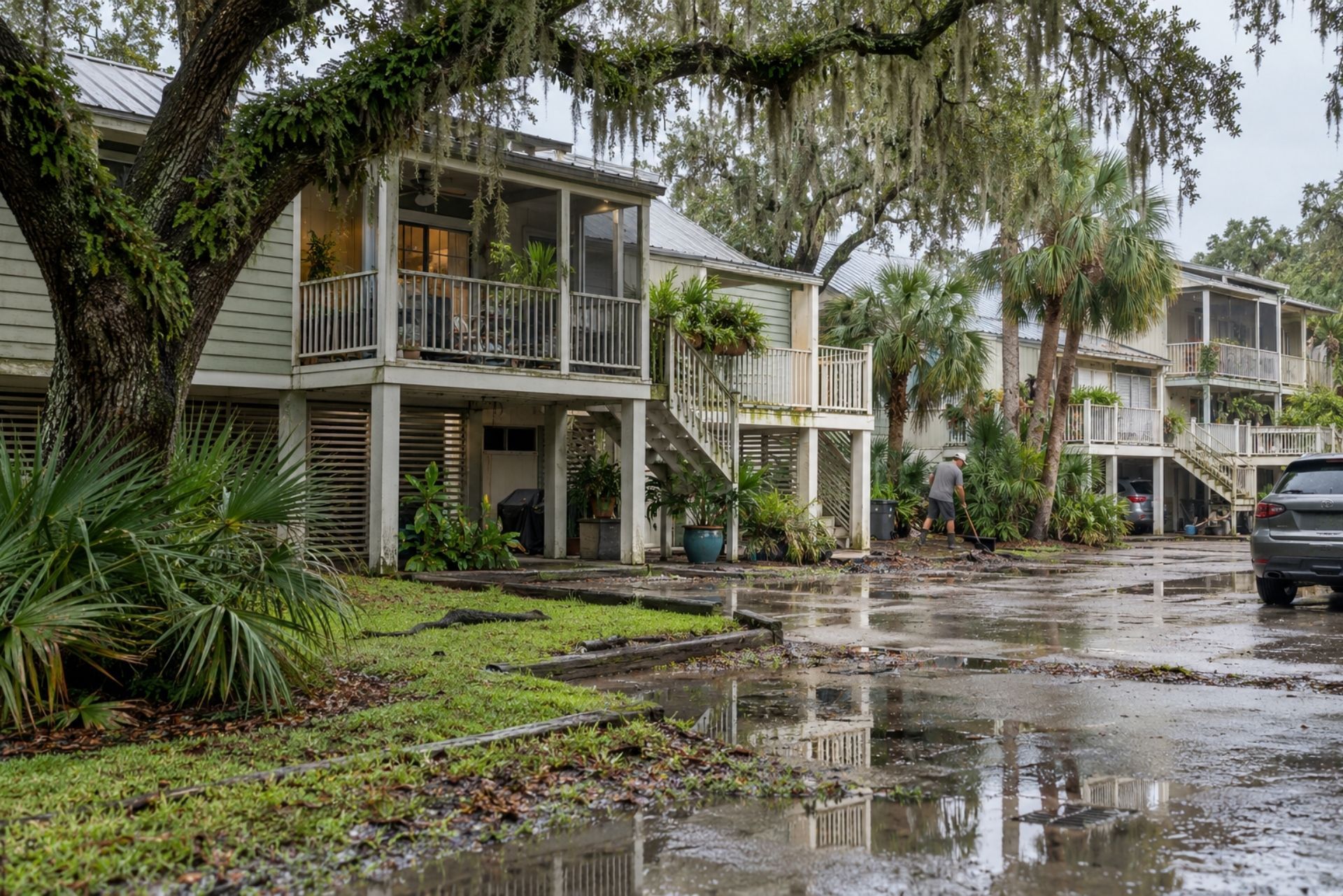
Picture a Slidell condo owner the week after a hurricane. The roof is tarped and the hallway carpet is soaked. Then a letter from the board arrives asking each owner to pay several thousand dollars toward the association's wind deductible. That letter catches a lot of people off guard, and it usually comes on top of their own repair bills.


Most condo owners in St. Tammany Parish assume "the HOA has insurance" means they're covered. That's partly true. The rest of this piece explains the part that isn't.

What Louisiana Condo Owners Need to Know About Coverage

Condo insurance in Louisiana works as two layers. The association buys one policy for the whole complex, and you buy a separate policy for your unit. When the two layers line up, a storm claim is manageable. When they don't, you pay out of pocket.


Three conditions in 2026 make this worth a closer look:


  • Rates have leveled off, but costs remain high. Average property insurance rate changes in Louisiana slowed to 0.1% in 2026, down from 14% increases in 2023. Premiums didn't fall back. They just stopped climbing as fast.
  • Master policies get fewer protections. Association policies are classified as commercial property, so they fall outside some consumer rules like the three-year protection against non-renewal.
  • Lenders are looking harder. Federal guidelines effective August 3, 2026 have largely eliminated limited reviews for condo financing, so buyers and refinancers face a full review of association insurance and finances.

By: Kyle Beerbohm
President

Aubert Insurance Agency is a local, independent agency, licensed to serve individuals and businesses across Louisiana, Mississippi, Florida and Texas.

We serve clients from our offices in Covington and Slidell and throughout St. Tammany Parish — working with dozens of carriers and wholesale markets to help homeowners, drivers, contractors, restaurant owners, property investors, auto shops, professional practices and many other personal and commercial clients find coverage that fits.

Licensed in Louisiana #3661 · Mississippi #15039075 · Florida #W0772236 · Texas #2381820

What the Association Master Policy Leaves to Unit Owners

The master policy covers the building exterior and shared spaces: roof, siding, structural walls, hallways, stairwells, the pool area, and parking structures. It also carries general liability for injuries in those common areas. That's the association's job, and the cost is built into your dues.


Everything inside your unit is a different story. Louisiana law requires associations to insure common elements and units, but it specifically excludes improvements and betterments installed by unit owners. If you replaced builder-grade laminate with hardwood or put in new quartz countertops, that upgrade is typically yours to insure.


Your personal liability falls to you too. If a supply line under your sink fails and water pours into the unit below, your neighbor may look to you for repairs. The master policy won't step in for a leak that started in your kitchen. Your furniture, clothes, electronics, and temporary housing costs after a covered loss also belong on your own policy.

With no lender to satisfy, the decision is yours, and so is the entire loss. A total rebuild in this parish runs well into six figures.

Homeowners who own outright

Your lender requires coverage at least equal to the loan, and will buy a policy on your behalf at your expense if yours lapses.

Homeowners with a mortgage

Understanding Walls-In Coverage and Your Interior

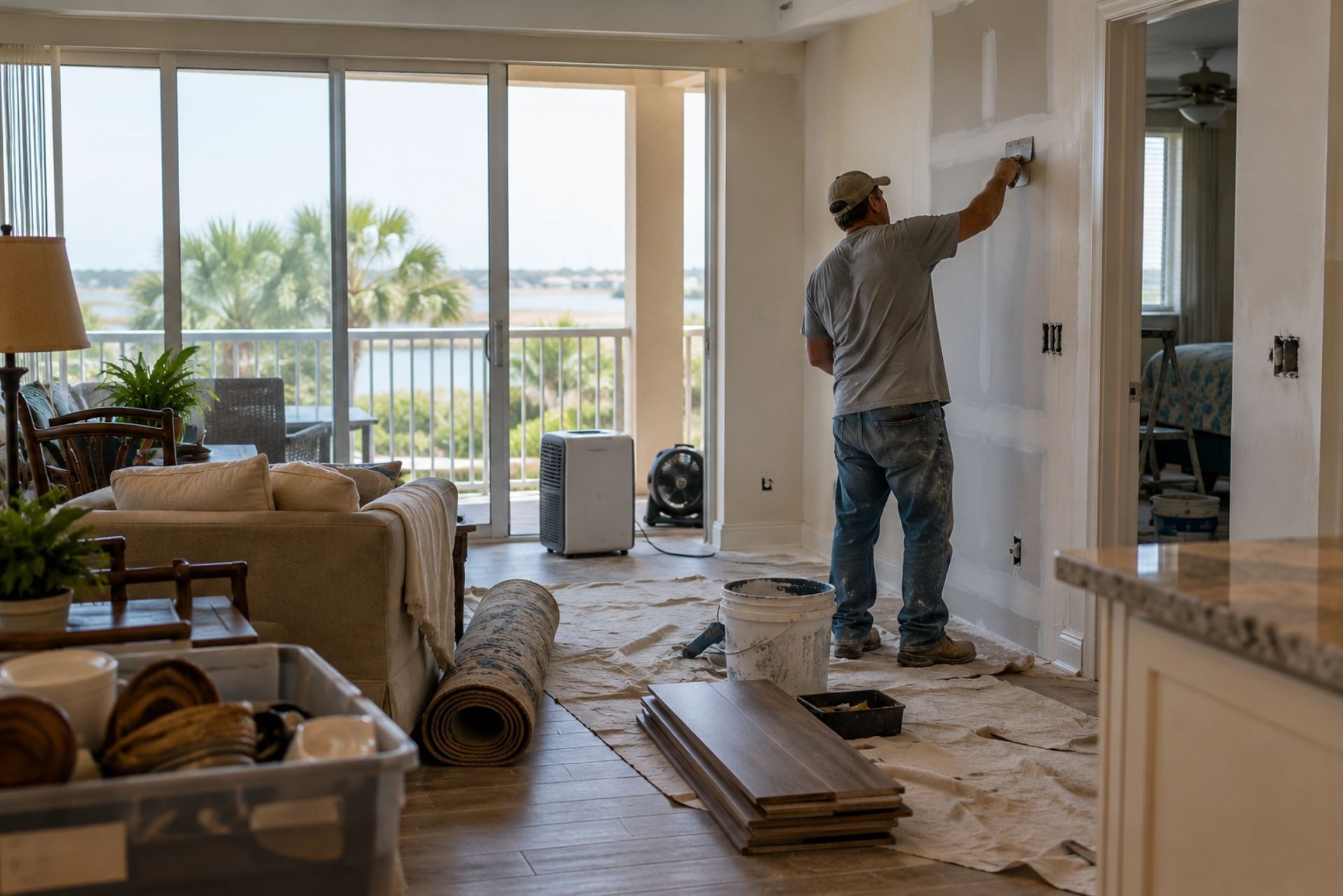
Walls-in coverage refers to the portion of your HO-6 policy that insures the unit's interior, often called dwelling or building property coverage. It typically includes drywall, flooring, cabinets, built-in appliances, fixtures, and interior plumbing and wiring that serve only your unit.


The amount you need depends entirely on what your association's master policy already covers. Two condos in the same Covington complex can need very different walls-in limits if one owner has remodeled and the other hasn't. A common mistake is setting this limit at a round number like $25,000 without ever reading the bylaws. That number may cover paint and carpet but fall well short of a full kitchen and two bathrooms.

The Difference Between Bare Walls and All-In Policies

Master policies generally fall into three types, and your bylaws or the declarations page will say which one applies:


  • Bare walls: The association covers the structure only. You insure everything from the studs inward, including drywall, flooring, cabinets, and fixtures.
  • Single entity (original specifications): The association covers interior features as they were when the building was first built. You insure upgrades and betterments.
  • All-in: The association covers original fixtures and some owner improvements. This is the least common, and policies vary on how far they reach.


If your complex uses a bare walls policy, your walls-in limit has to be high enough to rebuild your entire interior at today's labor and material prices.

The roof

Age, material and shape drive the wind rate more than any other factor. A fortified roof designation opens markets that would otherwise decline the house.

Comparing Master Policy vs. HO-6 Unit Owner Coverage

Here's how responsibilities typically split. Your bylaws control the final answer, so treat this as a starting point rather than a rule.

Item Master Policy HO-6 Unit Owner Policy
Roof Typically covered Not covered
Hallways and stairwells Typically covered Not covered
Exterior siding Typically covered Not covered
Pool, gym, clubhouse Typically covered Not covered
Flooring Depends on policy type Usually covered, especially upgrades
Cabinets and countertops Depends on policy type Usually covered, especially upgrades
Furniture and belongings Not covered Covered
Personal liability Common areas only Covered for incidents tied to you or your unit
Share of the association's deductible Not covered Covered by loss assessment, up to your limit
Temporary housing Not covered Typically covered as loss of use

The bottom row is the one most people skip, and it's the one that hurts after a hurricane.

Loss Assessment After a Named Storm

When a hurricane damages common areas, the association files a claim on the master policy. Before any insurance money flows, the association has to cover the deductible. If damage exceeds the policy limits or an item isn't covered, the association owes that too.


Associations usually pull from reserves first. Many smaller complexes don't have reserves large enough to absorb a six-figure deductible, especially after paying for tarps, debris removal, and water mitigation. When the money runs short, the board divides the shortfall among owners as a special assessment, usually based on each unit's ownership percentage.


Louisiana has rules on how this happens. For non-emergency assessments, boards must provide a summary to owners and hold a ratification meeting between 10 and 60 days later. Storm repairs often qualify as emergencies, though, which can move the timeline along faster. Either way, the bill is real, and it typically lands right when you're also handling your own interior damage and deductible.

The roof

Age, material and shape drive the wind rate more than any other factor. A fortified roof designation opens markets that would otherwise decline the house.

Closing the Wind Deductible Gap

Most Louisiana master policies use percentage-based hurricane deductibles, typically 2% to 5%. The percentage applies to the building's insured value, not to the size of the loss. That's where the math gets uncomfortable.


Take a complex insured for $15 million with a 5% named storm deductible. The association owes the first $750,000 of any hurricane claim. Spread across 50 units, that's $15,000 per owner if reserves can't cover it. At 2%, it's still $300,000, or $6,000 per unit. A larger building has a bigger number to split, though it may also have more owners sharing it.


Bigger complexes face one more catch. Louisiana's once-a-year named storm deductible protection does not apply to policies with a total insured value of $20 million or more. Two storms in one season could mean two deductibles and two assessments.


Loss assessment coverage on your HO-6 is the fix. Many policies include a small default limit, sometimes only $1,000. That won't touch a five-figure bill. Carriers may let you raise it substantially, and some may offer separate limits for deductible-related assessments. Ask your agent to compare your limit against your unit's share of the actual deductible, not a guess.

Essential Add-Ons for Louisiana Coastal Living

A solid HO-6 on the Northshore usually needs a few endorsements beyond the base form:


  • Flood insurance. Neither the master policy's wind coverage nor your HO-6 typically covers rising water. Check whether the association carries a building flood policy and buy contents and interior coverage for your unit.
  • Water backup. Clogged drains and sump failures during heavy rain are often excluded unless you add this endorsement.
  • Higher loss assessment limits. Size this to your share of the wind deductible, as covered above.
  • Replacement cost on contents. Without it, a claim on a five-year-old sofa may only pay depreciated value.
  • Higher liability limits or an umbrella. Water damage to downstairs units can add up fast.


Timing matters too. When a storm is approaching, insurers typically impose binding suspensions that block new policies and coverage increases until the threat passes. If you plan to raise a limit, do it in the off-season, not when a system appears in the Gulf.

The roof

Age, material and shape drive the wind rate more than any other factor. A fortified roof designation opens markets that would otherwise decline the house.

Common Questions About Louisiana Condo Insurance

Does my HOA insurance cover my appliances? Usually not. Under bare walls or original-specification policies, appliances you own or upgraded typically fall under your HO-6.


What happens if a hurricane damages the condo roof? The master policy typically pays for roof repairs after the association covers its deductible. If reserves can't cover that deductible, owners may receive a special assessment.


Is loss assessment coverage included in my HO-6? Many policies include a small amount by default. It's often far below what a percentage wind deductible could cost you, so check your limit.


Do I need flood insurance if I'm on an upper floor? Possibly. The building can still flood, and an assessment for flood damage to common areas can reach every owner.


Will my lender care about the association's insurance? Yes. With full reviews now standard for most condo financing, weak master coverage or thin reserves can complicate a sale or refinance.


How do I find out which type of master policy my complex has? Request the declarations page and the insurance section of your bylaws from your management company or board.

Making the Right Choice for Your Property

Condo coverage only works when your policy picks up exactly where the association's leaves off. That means knowing whether your complex uses a bare walls or original-specification policy, setting a walls-in limit that matches your actual interior, and carrying loss assessment coverage sized to a real hurricane deductible, not a default figure.


The most useful hour you can spend is sitting down with an agent and your association's bylaws and master policy declarations side by side. Aubert Insurance Agency has served Louisiana families since 1910, and as an independent agency we compare options from multiple carriers so your HO-6 fits your building rather than a generic template. We'll walk through the fine print with you so nothing slips between the two policies.


Ready to see where your gaps are? Start a Quote today, and get answers before the next storm season instead of after it.

About the Author

Kyle Beerbohm

President


We've been independent since 1910, and four generations of local ownership have kept us that way. We're one of the oldest agencies in St. Tammany Parish and the fourth oldest business in the City of Covington. I treat that history as a responsibility rather than a plaque on the wall. My job is to keep us answering to the families and business owners who walk through our doors, and to keep serving this parish for another hundred years.

Louisiana Insurance Questions, Answered

Questions clients ask us

Short, plain answers to what people ask before they call. Anything else, phone the office and ask.

  • What does an independent insurance agency do?

    We represent you, not one insurance company. We gather your information once, then compare coverage and price across the carriers we hold contracts with. You get choices, and one agent handles the paperwork.

  • Which types of insurance does Aubert offer?

    We write 13 personal lines, including home, auto, flood, boat, and life. We write 15 commercial lines, including business owners policies, general liability, workers compensation, and commercial property.

  • Do I need flood insurance in St. Tammany Parish?

    Your homeowners policy excludes flood, and much of the Northshore has flooded outside mapped high-risk zones. Lenders require it inside those zones. We check your flood zone and quote NFIP and private options.

  • Which states are you licensed in?

    We hold licenses in Louisiana, Mississippi, Florida, and Texas. License numbers appear in the footer of every page on this site.

  • How do you find me a competitive rate?

    We take your details once and market them to the carriers and wholesale brokers that fit your risk. We compare the offers, explain the differences in coverage, and recommend the strongest fit.

  • How do I file a claim or request a certificate?

    Call the office or use the Client Center on this site. We report the claim, follow the adjuster, and send certificates of insurance to whoever needs them.

Personal Insurance in Louisiana

Coverage for your home, your vehicles, and your family

Thirteen personal lines sit under one roof. Start with the coverage you need most, and we price it across our markets.

Home Insurance

Protect your house, its contents, and your liability with a policy priced across many Louisiana homeowners carriers.

Car Insurance

Cover every driver and vehicle in your household, and compare limits and deductibles side by side before you buy.

Flood Insurance

Standard home policies exclude flood. We write NFIP and private flood coverage for St. Tammany Parish properties.

Umbrella Insurance

Add a layer of liability above your home and auto limits, so one serious claim never reaches your savings.


Boat Insurance

Cover your hull, motor, trailer, and liability on the lake, the river, and the Gulf, wherever you launch.


Life Insurance

Replace your income for the people who depend on it, with term and permanent options we quote across carriers.

Business Insurance in Louisiana

Coverage for the business you built

Fifteen commercial lines, written for the payrolls, fleets, and buildings that Louisiana carriers ask hard questions about.

Business Insurance by Industry

We protect hundreds of businesses of all shapes and sizes

We know the exposures, the contract language, and the markets that write these trades on the Northshore.

General Contractors

Builders risk, general liability, and comp for homebuilders and remodelers working across St. Tammany Parish.

Plumber Insurance

Plumbers, electricians, roofers, and painters get liability, tools, and auto coverage that satisfies job requirements.

Restaurants

Property, liquor liability, spoilage, and comp for kitchens, bars, and cafés, including Louisiana association programs.

5-Star Rated by St. Tammany Clients

What Our Clients Say

Neighbours, business owners, and families across Covington and Slidell tell the story better than we can.

Insurance Tips & Local News

Insurance tips for Louisiana homes and businesses

Practical reading on flood zones, hurricane deductibles, and the coverage questions local business owners raise.

louisiana citizens homeowners insurance what you need to know
15 October 2026
Learn about Louisiana Citizens homeowners insurance costs, coverage, eligibility, and switching to private insurers with Aubert Insurance Agency.

certificate of insurance requirements for louisiana subcontractors
15 October 2026
Learn Louisiana subcontractor COI requirements, liability limits, additional insured endorsements, and waivers of subrogation with Aubert Insurance Agency.

general liability cost for louisiana contractors
15 October 2026
Learn Louisiana contractor general liability insurance costs by trade, payroll, sales, and minimum premiums. Compare quotes with Aubert Insurance Agency.

louisiana fortify homes program insurance discount
15 October 2026
Explore Louisiana Fortify Homes Program grants up to $10,000, FORTIFIED roof standards, and insurance premium credits with Aubert Insurance Agency.

how does builders risk insurance work in louisiana
15 October 2026
Learn how Louisiana builders risk insurance protects spec and custom homes, who buys coverage, when it ends, and storm risks with Aubert Insurance Agency.

what is the lhba general liability trust
15 October 2026
Explore the LHBA General Liability Trust in Louisiana, how pooled coverage works, builder eligibility, dividends, and risks with Aubert Insurance Agency.

what is the homebuilders self insurers fund
15 October 2026
Explore Louisiana's Homebuilders Self Insurers Fund, how workers comp coverage works, membership eligibility, dividends, and risks with Aubert Insurance Agency.

workers comp cost for louisiana contractors
15 October 2026
Learn Louisiana contractor workers comp costs, class codes, payroll rates, experience mods, and audit risks. Compare quotes with Aubert Insurance Agency.

who needs workers comp in louisiana
15 October 2026
Learn who needs workers comp in Louisiana, including employer rules, owner exemptions, subcontractor risks, and penalties with Aubert Insurance Agency.

louisiana contractor license insurance requirements
15 October 2026
Learn Louisiana contractor insurance requirements for residential, home improvement, and commercial licenses. Compare coverage with Aubert Insurance Agency.


Request Your Free Insurance Quote

Tell us what you need covered

Send the form or call the office. A licensed agent in Covington or Slidell answers you directly.

614 E. Boston St., Covington, LA 70433.  (985) 892-3101

58418 Tyler Drive, Slidell, LA 70461 ·   (985) 641-0520

Call

Covington office, Monday through Friday

Email

Policy questions, certificates, and claims

Call

614 E. Boston St., Covington, LA 70433

58418 Tyler Drive, Slidell, LA 70461
