













Covington & Slidell Independent Insurance Agents
A New Orleans contractor typically needs general liability that meets Louisiana's new $500,000 minimum for residential work, a certificate naming the City as additional insured for certain registrations, and coverage sized for historic replacement costs. Tight lots also call for third-party property damage protection, which may include an XCU endorsement.
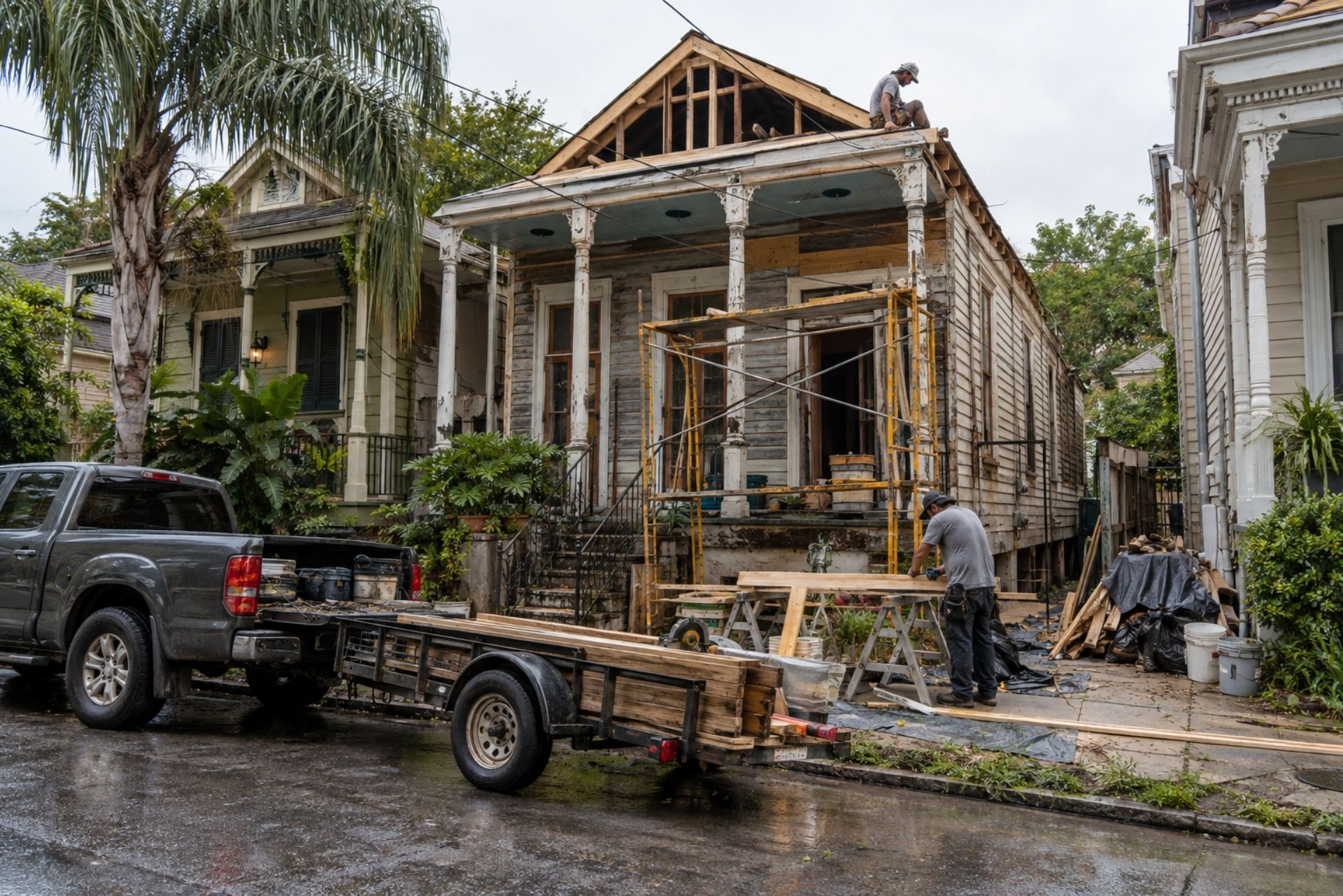
Picture a crew jacking up a 120-year-old shotgun in Bywater while the neighbor's kitchen sits about three feet away. One shifted pier, one dropped beam, one cracked plaster wall next door, and the job's profit is gone before the drywall goes up. That is what contractors insurance in New Orleans really has to handle, and it looks very different from a policy built for a subdivision in Mandeville.
Navigating New Orleans Contractors Insurance and Licensing Requirements
New Orleans stacks several layers of requirements on top of each other. The state sets licensing and insurance minimums through the Louisiana State Licensing Board for Contractors (LSLBC). The City runs its own contractor registration and permitting. In historic districts, the Historic District Landmarks Commission (HDLC) adds design review that shapes materials, methods and timelines.
Each layer creates its own insurance demand. General liability is the foundation, since you need it to register with the City and pull permits. From there, historic work, structural rebuilds and dense lots each bring risks a basic policy may not fully address.
The state minimums also changed recently. Residential, home improvement and mold remediation contractors must now carry at least $500,000 in general liability, a fivefold jump from the previous requirement. If you haven't reviewed your limits since that change, do it before your next renewal or permit application.

On this page
Aubert Insurance Agency is a local, independent agency, licensed to serve individuals and businesses across Louisiana, Mississippi, Florida and Texas.
We serve clients from our offices in Covington and Slidell and throughout St. Tammany Parish — working with dozens of carriers and wholesale markets to help homeowners, drivers, contractors, restaurant owners, property investors, auto shops, professional practices and many other personal and commercial clients find coverage that fits.
Licensed in Louisiana #3661 · Mississippi #15039075 · Florida #W0772236 · Texas #2381820
The jump from minimum limits to 100/300/100 often costs less than riders expect, because liability is typically priced per added layer rather than doubling with the limits. Ask for quotes at two or three levels side by side before you decide.
Here's a common scenario: you misjudge a curve and clip a late-model pickup, injuring the driver. A single ambulance ride, ER visit, and follow-up imaging can eat through $15,000 quickly. Anything above your limit can become your personal responsibility, which may put your savings, wages, or home at risk.
| Scenario | Dwelling limit | All-other-perils deductible | Named-storm deductible |
|---|---|---|---|
| Newer build, inland St. Tammany | $350,000 | $1,000 | 2% |
| Newer build, higher wind zone | $350,000 | $1,000 | 5% |
| Older home, updated roof | $275,000 | $2,500 | 2% |
| Older home, original roof | $275,000 | $2,500 | 5% |
| Fortified roof designation | $400,000 | $1,000 | 2% |
| Rebuilt after a prior claim | $400,000 | $2,500 | 5% |
| Bundled with auto | $350,000 | $1,000 | 2% |
Meeting City Registration and Certificate Demands
City registration trips up more contractors than the actual work does. The paperwork is not complicated, but small details cause delays. A certificate of insurance with the wrong name or a missing endorsement can stall a permit for days.
Here's what to have ready:
- Additional insured status: For specific registrations, contractors must name the City of New Orleans as an additional insured on their liability policies. That requires an endorsement on the policy itself, not just a line typed onto a certificate.
- Identification: New applicants need a government-issued photo ID and a color passport photo taken within the last 3 to 6 months.
- Current limits: Your certificate should reflect the $500,000 general liability minimum if you do residential or home improvement work.
- Active state license: Your LSLBC status matters beyond registration, too.
That last point has teeth now. Under Act 932, insurers are required to verify a contractor's license status through the LSLBC portal before paying for property damage repairs. A lapsed license can leave your customer's claim check in limbo, and that frustration usually lands on you.
With no lender to satisfy, the decision is yours, and so is the entire loss. A total rebuild in this parish runs well into six figures.
Homeowners who own outright
Your lender requires coverage at least equal to the loan, and will buy a policy on your behalf at your expense if yours lapses.
Homeowners with a mortgage
| Coverage Area | State Minimum | Common Higher Option | Stronger Option |
|---|---|---|---|
| Injury, one person | $15,000 | $50,000 | $100,000 |
| Injury, per accident | $30,000 | $100,000 | $300,000 |
| Property damage | $25,000 | $50,000 | $100,000 |
| Who it fits | Legal compliance only | Riders with modest assets | Homeowners, families, higher earners |
Here's a common scenario: you misjudge a curve and clip a late-model pickup, injuring the driver. A single ambulance ride, ER visit, and follow-up imaging can eat through $15,000 quickly. Anything above your limit can become your personal responsibility, which may put your savings, wages, or home at risk.
Minimum Coverage vs. Actual Protection Needs
The jump from minimum limits to 100/300/100 often costs less than riders expect, because liability is typically priced per added layer rather than doubling with the limits. Ask for quotes at two or three levels side by side before you decide.
Insuring Historic Renovation Work Under HDLC Rules
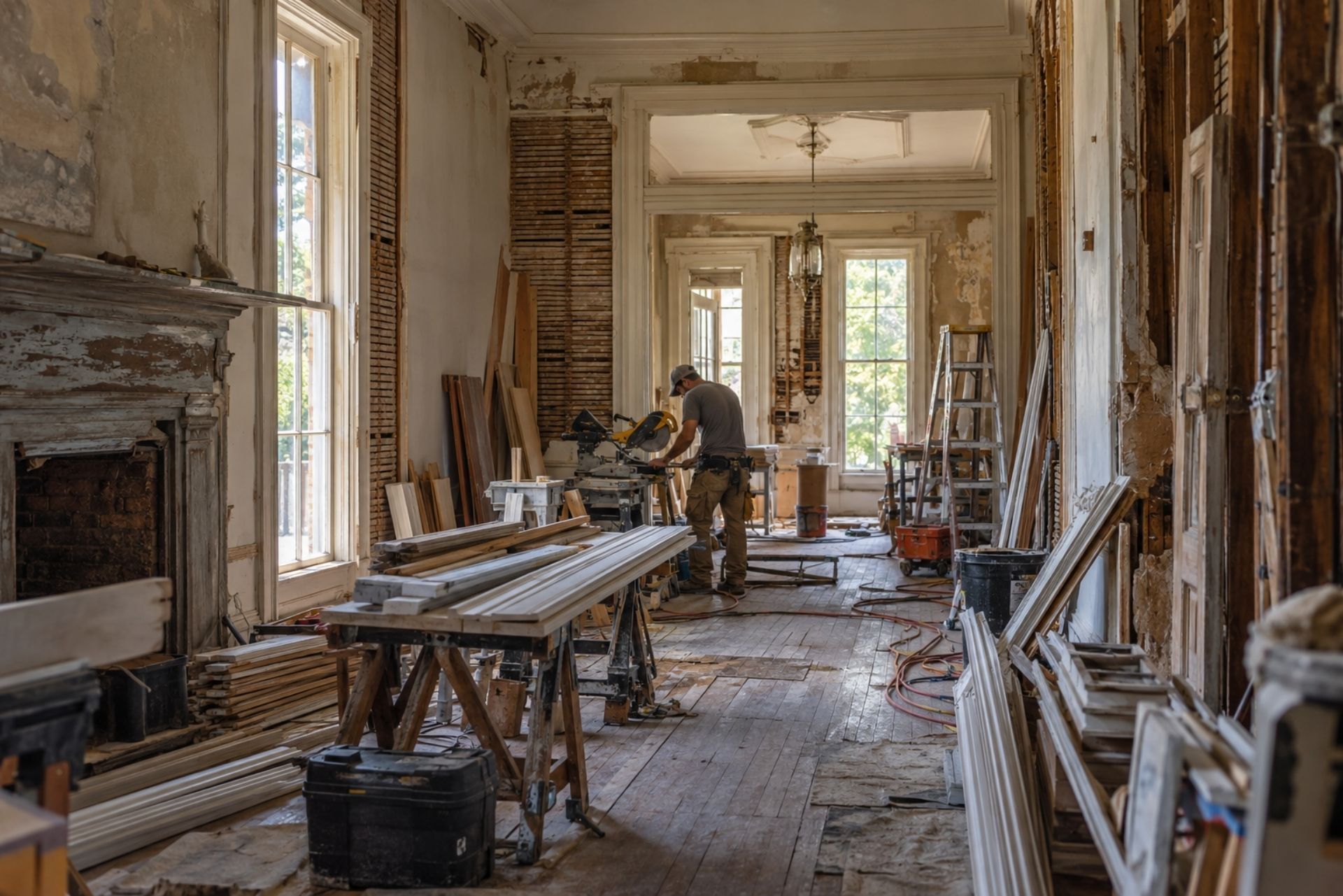
HDLC oversight changes the economics of a job before you swing a hammer. Design review can stretch timelines, and approved materials, such as true divided-light windows, cypress siding or specific millwork profiles, often cost more and take longer to source. Projects inside HDLC or Vieux Carré Commission jurisdictions also face a 50% surcharge on standard building permit fees.
All of that feeds into insurance. If a fire or storm damages a half-finished historic renovation, rebuilding means replacing work done to commission standards. That can mean hand-milled trim, restored plaster and wavy-glass windows, which often cost far more than standard materials. Builder's risk coverage sized to an ordinary renovation budget may fall short.
A few things to review with your agent:
- Builder's risk limits that reflect true historic replacement value, including specialty labor
- Coverage for materials stored on site or in transit, since custom pieces may sit for weeks waiting on approval
- Whether delays caused by a covered loss may extend your coverage period, because carriers handle this differently
One common mistake: contractors set builder's risk at the contract price and forget change orders. On historic jobs, change orders pile up fast once walls open and rot or termite damage turns up.

The jump from minimum limits to 100/300/100 often costs less than riders expect, because liability is typically priced per added layer rather than doubling with the limits. Ask for quotes at two or three levels side by side before you decide.
One tip: keep a dated list of serial numbers and photos of your tools. Claims with documentation move much faster than claims built on memory.
| Feature | Commercial Property | Inland Marine (Tool Floater) |
|---|---|---|
| Where it applies | Your fixed shop location | Jobsites, truck, in transit |
| Typical items | Stationary machines, inventory, building | Portable saws, nailers, hand tools |
| Theft from vehicle | Usually not covered | Often covered, with conditions |
| Fire or storm at shop | Typically covered | May be covered if tools are there |
| Who needs it | Carpenters with a shop | Nearly every working carpenter |
How Deductible Types Compare
Comparison of NFIP vs. Excess Flood Coverage
| Feature | NFIP Policy | Excess Flood Policy |
|---|---|---|
| Building limit | Up to $250,000 | Typically adds coverage above $250,000 |
| Who issues it | Federal program, sold through agents | Private carriers |
| Waiting period | Generally 30 days | May be shorter, varies by carrier |
| Additional living expenses | Not included | May be included, depending on policy |
| Basement coverage | Very limited | May be broader on some policies |
| CRS premium credit | Applies in Mandeville | Typically does not apply |
| Best fit for | Base layer for most homes | Higher-value or lakefront homes |
Specialized Risks for Shotgun and Camelback Rebuilds
Shotguns and camelbacks are the city's signature housing types, and they carry their own set of construction risks. Most sit on brick or masonry piers that were never designed for modern loads. Many have been patched, shimmed and partially rebuilt by different owners over a century.
Raising a shotgun or reworking its foundation puts the whole structure under stress. The long, narrow layout means rooms connect in a line, often with little interior bracing between front and back. A failure at one point can travel down the length of the house. For a camelback, adding or reinforcing the rear second story concentrates weight on framing that may already be undersized or water-damaged.
These jobs typically call for a careful look at a few policy features. First, check whether your general liability has exclusions for structural, foundation or elevation work. Some policies written for remodelers may limit these operations. Second, confirm how your policy treats damage to the client's existing structure versus your new work, since that distinction drives many disputes. Third, if you subcontract the house lifting or pier work, collect certificates from those subs and confirm they carry adequate limits.
Elevation projects in particular deserve a direct conversation with your agent before you bid. Some carriers may treat them as a separate class of work entirely.
General liability covers physical harm: fires, shocks, and property damage from your work. Professional liability, sometimes called errors and omissions, may cover financial loss from design mistakes or bad advice, such as an undersized service you specified on a load calculation. Electricians who do design-build work, panel sizing for solar, or consulting often need both, because a general liability policy typically will not respond to a pure financial loss.
The most common mistake is buying limits sized for the center you opened, not the center you run now. Enrollment grows, a second van shows up, an after-school program starts, and the policy stays the same. A yearly review against your actual operations catches that drift before a claim exposes it.
General Liability vs. Workers Compensation
Managing Tight-Lot Damage to Neighbors
In much of Uptown, the Marigny and Mid-City, houses sit a few feet apart, sometimes inches. Your work zone overlaps your neighbor's property whether you like it or not. Vibration from equipment, a ladder against the wrong wall, runoff from demolition or a dropped load of roofing can all damage the house next door.
Neighbor damage claims are among the most common headaches on dense urban jobs. Old plaster cracks easily under vibration, and neighbors who notice new cracks will reasonably point to the crew working next door. Without documentation, those claims are hard to dispute.
General liability is the core protection here, since it typically responds to third-party property damage. The catch is that many policies carry XCU exclusions that remove coverage for explosion, collapse and underground work. For tight-lot construction, XCU endorsements are often recommended to cover damage to neighboring property from pile driving or shoring. If your job involves driving piles, excavating near a shared property line or temporarily supporting a structure, check whether your policy may exclude those operations.
A practical habit: photograph and video the neighboring exteriors, and with permission, interiors facing your work, before you start. That record can make the difference when a claim comes in months later.
The jump from minimum limits to 100/300/100 often costs less than riders expect, because liability is typically priced per added layer rather than doubling with the limits. Ask for quotes at two or three levels side by side before you decide.
One tip: keep a dated list of serial numbers and photos of your tools. Claims with documentation move much faster than claims built on memory.
| Feature | Commercial Property | Inland Marine (Tool Floater) |
|---|---|---|
| Where it applies | Your fixed shop location | Jobsites, truck, in transit |
| Typical items | Stationary machines, inventory, building | Portable saws, nailers, hand tools |
| Theft from vehicle | Usually not covered | Often covered, with conditions |
| Fire or storm at shop | Typically covered | May be covered if tools are there |
| Who needs it | Carpenters with a shop | Nearly every working carpenter |
Comparing Essential Coverage for New Orleans Projects
Not every contractor needs every coverage. A painter working Gentilly ranches has different exposures from a crew raising camelbacks in Holy Cross. This table lays out the core options and where they matter most.
| Coverage | What It Typically Covers | Why It Matters in New Orleans |
|---|---|---|
| General Liability | Third-party injury and property damage | Required for City registration; $500,000 minimum for residential work |
| XCU Endorsement | Explosion, collapse, underground operations | Pile driving and shoring next to neighbors |
| Builder's Risk | The structure and materials during construction | High historic replacement costs and stored custom materials |
| Workers' Compensation | Employee injuries | Ladder and lifting risks on raised and two-story homes |
| Commercial Auto | Work vehicles | Narrow streets, tight parking, heavy loads |
| Inland Marine / Tools | Equipment on and off site | Theft from open job sites in dense neighborhoods |
| Umbrella | Extra limits above primary policies | Larger historic jobs and contracts with higher limit demands |
Treat this as a starting point. The right combination depends on your trade, crew size and the kinds of homes you work on.
General liability covers physical harm: fires, shocks, and property damage from your work. Professional liability, sometimes called errors and omissions, may cover financial loss from design mistakes or bad advice, such as an undersized service you specified on a load calculation. Electricians who do design-build work, panel sizing for solar, or consulting often need both, because a general liability policy typically will not respond to a pure financial loss.
The most common mistake is buying limits sized for the center you opened, not the center you run now. Enrollment grows, a second van shows up, an after-school program starts, and the policy stays the same. A yearly review against your actual operations catches that drift before a claim exposes it.
General Liability vs. Workers Compensation
Common Questions About Contracting in Orleans Parish
What insurance do I need for a New Orleans building permit?
You need general liability, and residential contractors must carry at least $500,000 under current state rules. For certain City registrations, your policy must also name the City of New Orleans as an additional insured.
Does my policy cover damage to the house next door?
General liability typically covers third-party property damage, including neighboring homes. If your work involves excavation, pile driving or shoring, your policy may exclude it unless you add an XCU endorsement.
How do HDLC rules affect my insurance needs?
HDLC standards raise material and labor costs, which raises replacement value. Your builder's risk limits should reflect what it would cost to redo the work to commission standards, not just a standard renovation price.
Can a lapsed contractor license affect my client's insurance claim?
Yes. Under Act 932, insurers must verify your license status through the LSLBC portal before paying for property damage repairs, so a lapsed license may delay payment.
Do I need to add the City as additional insured on every policy?
The requirement applies to liability policies for specific registrations. Ask your agent to confirm which registration you hold and add the endorsement before you submit paperwork.
Will a remodeler's policy cover house raising or foundation work?
Not always. Some policies may limit or exclude structural and elevation work, so review your exclusions before bidding these jobs.
The jump from minimum limits to 100/300/100 often costs less than riders expect, because liability is typically priced per added layer rather than doubling with the limits. Ask for quotes at two or three levels side by side before you decide.
One tip: keep a dated list of serial numbers and photos of your tools. Claims with documentation move much faster than claims built on memory.
| Feature | Commercial Property | Inland Marine (Tool Floater) |
|---|---|---|
| Where it applies | Your fixed shop location | Jobsites, truck, in transit |
| Typical items | Stationary machines, inventory, building | Portable saws, nailers, hand tools |
| Theft from vehicle | Usually not covered | Often covered, with conditions |
| Fire or storm at shop | Typically covered | May be covered if tools are there |
| Who needs it | Carpenters with a shop | Nearly every working carpenter |
Making the Right Choice for Your Local Business
Contracting in New Orleans means juggling state minimums, City paperwork, HDLC standards and the simple fact that your neighbor's wall may be closer than your toolbox. The contractors who stay out of trouble usually do the same few things: they keep limits current with the new $500,000 rule, get certificates right the first time, size builder's risk for historic replacement costs and check for XCU exclusions before tight-lot work begins.
Aubert Insurance Agency has helped Louisiana contractors protect their livelihoods since 1910, working out of Covington and Slidell. As an independent agency, we compare coverage from multiple carriers and take time to explain what your policy covers and what it excludes, so nothing surprises you after a loss.
If you're bidding a shotgun rebuild, a camelback addition or a French Quarter restoration, make sure your coverage matches the job. Start a Quote today, and get your business ready for whatever the next New Orleans project brings.

About the Author
Kyle Beerbohm
President
We've been independent since 1910, and four generations of local ownership have kept us that way. We're one of the oldest agencies in St. Tammany Parish and the fourth oldest business in the City of Covington. I treat that history as a responsibility rather than a plaque on the wall. My job is to keep us answering to the families and business owners who walk through our doors, and to keep serving this parish for another hundred years.
Louisiana Insurance Questions, Answered
Questions clients ask us
Short, plain answers to what people ask before they call. Anything else, phone the office and ask.
What does an independent insurance agency do?
We represent you, not one insurance company. We gather your information once, then compare coverage and price across the carriers we hold contracts with. You get choices, and one agent handles the paperwork.
Which types of insurance does Aubert offer?
We write 13 personal lines, including home, auto, flood, boat, and life. We write 15 commercial lines, including business owners policies, general liability, workers compensation, and commercial property.
Do I need flood insurance in St. Tammany Parish?
Your homeowners policy excludes flood, and much of the Northshore has flooded outside mapped high-risk zones. Lenders require it inside those zones. We check your flood zone and quote NFIP and private options.
Which states are you licensed in?
We hold licenses in Louisiana, Mississippi, Florida, and Texas. License numbers appear in the footer of every page on this site.
How do you find me a competitive rate?
We take your details once and market them to the carriers and wholesale brokers that fit your risk. We compare the offers, explain the differences in coverage, and recommend the strongest fit.
How do I file a claim or request a certificate?
Call the office or use the Client Center on this site. We report the claim, follow the adjuster, and send certificates of insurance to whoever needs them.

Personal Insurance in Louisiana
Coverage for your home, your vehicles, and your family
Thirteen personal lines sit under one roof. Start with the coverage you need most, and we price it across our markets.
Home Insurance
Protect your house, its contents, and your liability with a policy priced across many Louisiana homeowners carriers.
Car Insurance
Cover every driver and vehicle in your household, and compare limits and deductibles side by side before you buy.
Flood Insurance
Standard home policies exclude flood. We write NFIP and private flood coverage for St. Tammany Parish properties.
Umbrella Insurance
Add a layer of liability above your home and auto limits, so one serious claim never reaches your savings.
Boat Insurance
Cover your hull, motor, trailer, and liability on the lake, the river, and the Gulf, wherever you launch.
Life Insurance
Replace your income for the people who depend on it, with term and permanent options we quote across carriers.
Business Insurance in Louisiana
Coverage for the business you built
Fifteen commercial lines, written for the payrolls, fleets, and buildings that Louisiana carriers ask hard questions about.
Contractors Insurance
General contractors, trade contractors and specialty crews. We cover the liability, tools, vehicles and workers your jobs depend on.
Business Owners (BOP)
One policy bundling property and liability for a small business. Straightforward cover for the building, the contents and the risk.
Professional Liability
Protection when your advice or professional work is challenged. A staple of any commercial package for a service business.
Commercial Property
Landlords and commercial real estate investors. We insure the building, the habitation risk and the income it produces.
Workers Compensation
Protecting your employees protects your business. Medical costs and lost wages covered when someone is hurt on the job.
Commercial Auto
Trucks, vans and fleets. We shop a wide range of commercial auto markets to match your vehicles and your drivers.
Business Insurance by Industry
We protect hundreds of businesses of all shapes and sizes
We know the exposures, the contract language, and the markets that write these trades on the Northshore.

General Contractors
Builders risk, general liability, and comp for homebuilders and remodelers working across St. Tammany Parish.

Plumber Insurance
Plumbers, electricians, roofers, and painters get liability, tools, and auto coverage that satisfies job requirements.

Restaurants
Property, liquor liability, spoilage, and comp for kitchens, bars, and cafés, including Louisiana association programs.
5-Star Rated by St. Tammany Clients
What Our Clients Say
Neighbours, business owners, and families across Covington and Slidell tell the story better than we can.


Insurance Tips & Local News
Insurance tips for Louisiana homes and businesses
Practical reading on flood zones, hurricane deductibles, and the coverage questions local business owners raise.
Request Your Free Insurance Quote
Tell us what you need covered
Send the form or call the office. A licensed agent in Covington or Slidell answers you directly.
614 E. Boston St., Covington, LA 70433. (985) 892-3101
58418 Tyler Drive, Slidell, LA 70461 · (985) 641-0520
Call
614 E. Boston St., Covington, LA 70433
58418 Tyler Drive, Slidell, LA 70461













